4-Nitropyrrole-2-carboxylic Acid is a chemical compound widely utilized in organic synthesis reactions within laboratory settings. As a key building block in the field of heterocyclic chemistry, it plays a crucial role in the development of complex ring structures. This compound is valued for its versatility and reactivity, making it a fundamental component in the synthesis of various organic molecules. Its unique chemical structure enables it to participate in specific substitution and other chemical reactions, offering researchers precise control over synthetic pathways.
The compound is known for its chemical stability under controlled conditions, although it is sensitive to moisture and air exposure. These properties necessitate careful handling and storage to maintain its integrity and effectiveness. Its reactivity and specificity make it a preferred choice for applications requiring high precision and reproducibility in chemical synthesis. The compound's ability to form intermediates in complex molecular structures further enhances its utility in advanced research.
In Indonesian laboratories, 4-Nitropyrrole-2-carboxylic Acid is commonly used in organic chemistry research, particularly in pharmaceutical and materials science fields. It is a critical reagent for the development of new compounds with potential medical or industrial applications. Many research institutions and universities in Indonesia rely on this compound for the synthesis of novel materials and drug candidates. Its role in laboratory research underscores its importance in advancing scientific innovation and discovery.
Related TCI products
- TCI N0510 5930-92-7 Ethyl 4-Nitropyrrole-2-carboxylate
- TCI N0502 5930-94-9 3-Nitropyrrole
- TCI X0031 82-07-5 Xanthene-9-carboxylic Acid
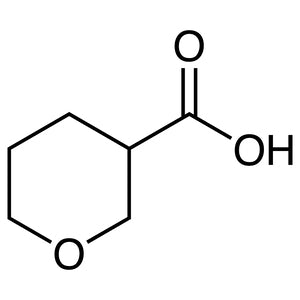
- TCI T4166 873397-34-3 Tetrahydro-2H-pyran-3-carboxylic Acid
- TCI T4112 51673-83-7 Tetrahydro-2H-pyran-2-carboxylic Acid
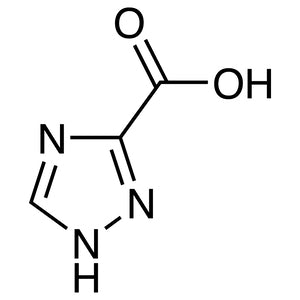
- TCI T3824 4928-87-4 1H-1,2,4-Triazole-3-carboxylic Acid
- Organic synthesis of heterocyclic compounds for pharmaceutical development due to its reactivity and structural versatility.
- Production of intermediate compounds in drug synthesis processes requiring precise chemical reactions and controlled conditions.
- Research in material science for the development of innovative chemical materials with specific functional properties.
- Investigation of pharmacological properties of new compounds through synthetic pathways involving heterocyclic structures.
- Exploration of chemical reactivity in laboratory settings where controlled and reproducible reactions are essential.
| Brand | TCI |
|---|---|
| CAS number | 5930-93-8 |
| Molecular formula | — |
| Purity | — |
| Category | Chemistry > Building Blocks > Heterocyclic Building Blocks |
| Pack sizes | Available in standard laboratory quantities as per supplier specifications |
| Physical form | Solid powder (as per standard product description) |
| Storage | Requires dry, cool, and dark conditions to prevent degradation |
This compound should be stored in a dry, cool, and dark environment to maintain its chemical stability and prevent degradation. It is recommended to use airtight containers to protect it from moisture and air exposure. Due to its sensitivity, it should be handled in a well-ventilated area with appropriate personal protective equipment. Avoid direct contact with skin and eyes, and ensure proper disposal procedures are followed. Regular monitoring of storage conditions is essential to ensure the compound remains suitable for use in laboratory applications.
—
Produk Terkait
-
Ethyl4-Nitropyrrole-2-carboxylate TCI N0510
Regular price Rp 2.227.050,00Regular priceRp 1.572.900,00Sale price Rp 2.227.050,00 -
3-Nitropyrrole TCI N0502
Regular price Rp 7.075.950,00Regular priceRp 4.963.350,00Sale price Rp 7.075.950,00 -
Xanthene-9-carboxylicAcid TCI X0031
Regular price Rp 1.060.500,00Regular priceRp 757.050,00Sale price Rp 1.060.500,00 -
Tetrahydro-2H-pyran-3-carboxylicAcid TCI T4166
Regular price Rp 1.458.450,00Regular priceRp 1.035.300,00Sale price Rp 1.458.450,00 -
Tetrahydro-2H-pyran-2-carboxylicAcid TCI T4112
Regular price Rp 1.618.050,00Regular priceRp 1.146.600,00Sale price Rp 1.618.050,00 -
1H-1,2,4-Triazole-3-carboxylicAcid TCI T3824
Regular price Rp 2.994.600,00Regular priceRp 2.109.450,00Sale price Rp 2.994.600,00 -
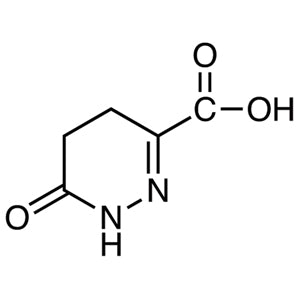
1,4,5,6-Tetrahydro-6-oxopyridazine-3-carboxylicAcid TCI T2955
Regular price Rp 795.900,00Regular priceRp 572.250,00Sale price Rp 795.900,00 -
Thiazole-5-carboxylicAcid TCI T2495
Regular price Rp 1.696.800,00Regular priceRp 1.202.250,00Sale price Rp 1.696.800,00