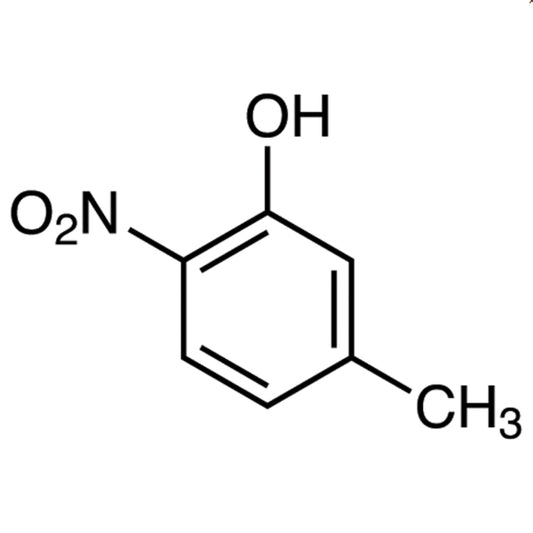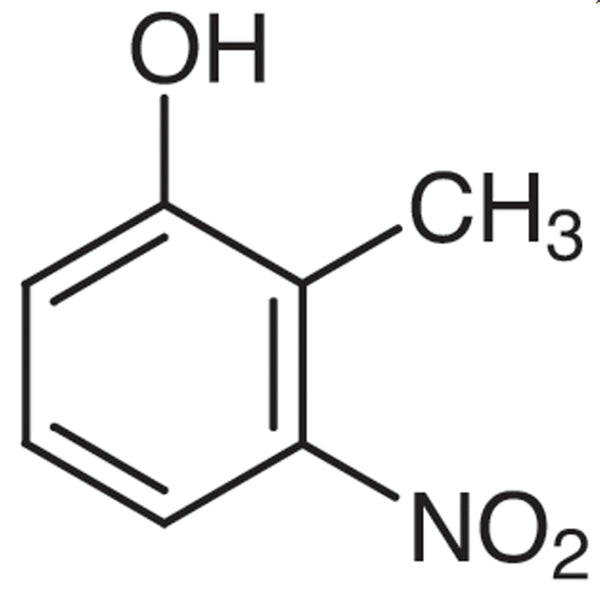
3-Nitro-o-cresol is a chemical compound widely used in laboratory settings for the synthesis of complex organic molecules. As a building block in organic chemistry, it serves as a versatile intermediate in various synthetic pathways. Its aromatic structure, combined with the nitro group at the o-position of cresol, provides unique reactivity and functional group compatibility. This makes it a valuable resource for chemists working on the development of new compounds. The compound is commonly used in substitution and oxidation reactions, where its chemical stability under controlled conditions supports precise and reproducible results.
The chemical properties of 3-Nitro-o-cresol make it a preferred choice for advanced synthetic applications. It exhibits stability in certain environments, which allows for extended handling and storage without significant degradation. However, it is sensitive to high temperatures and UV exposure, requiring careful handling and storage conditions. These characteristics make it ideal for applications that demand controlled chemical environments. Its ability to react with various functional groups enhances its utility in multi-step synthesis processes, offering flexibility in chemical design and modification.
In Indonesian laboratories, 3-Nitro-o-cresol is a commonly used reagent in organic chemistry research, particularly in pharmaceutical and materials science. Its availability and compliance with international quality standards make it a reliable choice for both academic and industrial research. Researchers in educational institutions and industry rely on this compound for experiments that require high precision and reproducibility. Its role in the synthesis of complex molecules underscores its importance in advancing chemical innovation in the region.
- Organic synthesis applications benefit from 3-Nitro-o-cresol due to its reactivity and compatibility with various functional groups, allowing for the creation of complex molecular structures.
- Pharmaceutical research utilizes this compound as a building block in the development of new drug molecules, leveraging its structural versatility for targeted chemical modifications.
- Material science experiments often incorporate 3-Nitro-o-cresol to synthesize advanced organic materials, taking advantage of its chemical stability and functional group reactivity.
- Analytical chemistry laboratories use this compound as a standard reference material for testing and calibration of chemical instruments and procedures.
- Environmental studies may employ 3-Nitro-o-cresol to investigate the behavior and degradation of organic pollutants in different environmental matrices.
| Brand | TCI |
|---|---|
| CAS number | 5460-31-1 |
| Molecular formula | — |
| Purity | — |
| Category | Chemistry > Building Blocks > Non-Heterocyclic Building Blocks |
| Pack sizes | Available in various quantities as per supplier specifications |
| Physical form | Solid, crystalline appearance |
| Storage | Store in a cool, dark place away from heat and UV light |
3-Nitro-o-cresol should be stored in a cool, dark environment to prevent degradation due to heat and UV exposure. It is recommended to use airtight containers made of glass or inert plastic to maintain chemical integrity. The compound is sensitive to high temperatures, so storage in a controlled temperature environment is essential. Laboratory personnel should handle it with care, using appropriate personal protective equipment to ensure safety. Proper labeling and secure storage are necessary to prevent accidental exposure or contamination. Regular monitoring of storage conditions helps maintain the compound’s stability and effectiveness for laboratory use.
—
Produk Terkait
-
4-Nitro-o-cresol TCI N0670
Regular price From Rp 875.700,00Regular price -
2-Nitro-m-cresol TCI N0552
Regular price From Rp 875.700,00Regular price -
4-Nitro-m-cresol TCI N0351
Regular price From Rp 769.650,00Regular price -
3-Nitro-p-cresol TCI N0210
Regular price From Rp 610.050,00Regular price -
5-Nitro-o-cresol TCI N0185
Regular price Rp 2.411.850,00Regular price -
6-Nitro-m-cresol TCI M1122
Regular price From Rp 1.538.250,00Regular price -
4-Chloro-6-nitro-m-cresol TCI C1684
Regular price From Rp 3.870.300,00Regular price -
3,4,5,6-Tetrabromo-o-cresol TCI T1528
Regular price Rp 610.050,00Regular price