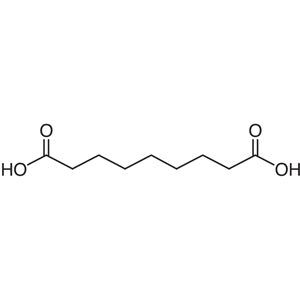
Nonadecanedioic Acid from TCI is a long-chain aliphatic dicarboxylic acid with nineteen carbon atoms and a carboxylic acid group at each end of the chain. TCI lists it as a monomer in its polymer and macromolecule reagents category. In the laboratory it is used mainly to synthesize long-chain aliphatic polyesters and polyamides. It also serves as a building block for molecules that need two connection points separated by a flexible hydrocarbon chain, so it is useful in both polymer synthesis and molecular design.
Researchers choose this compound because its two carboxylic acid groups allow condensation polymerization with diols or diamines, while the long methylene chain between them gives a flexible, hydrophobic polymer segment. Polymers made from long-chain dicarboxylic acids often behave much like polyethylene, with high crystallinity and low water uptake. Unlike polyethylene, they keep ester or amide linkages in the backbone, which makes biodegradation and chemical recycling possible. Its odd number of carbon atoms also makes it useful for studying odd–even effects on the thermal and crystalline behavior of polymers.
In Indonesia, this material is relevant to polymer science, chemical engineering, and materials science laboratories at universities and research institutions. Research groups working on biodegradable plastics, recyclable polymer design, or structure–property relationships in condensation polymers can use it as a well-defined long-chain monomer. It suits thesis projects, comparative studies against shorter or even-numbered dicarboxylic acids, and early-stage development of polyethylene-like materials with better end-of-life options. It gives Indonesian researchers a consistent reagent for building and testing new polymer structures.
- Synthesis of long-chain aliphatic polyesters: the two terminal carboxylic acid groups react with diols in condensation polymerization, giving polyesters with long flexible, hydrophobic methylene segments between the ester linkages.
- Preparation of long-chain aliphatic polyamides: reacting this diacid with diamines produces polyamides whose long hydrocarbon segments give polyethylene-like properties such as high crystallinity and low water uptake.
- Development of polyethylene-like materials that can be recycled or biodegraded: the ester or amide groups in the backbone create possible routes for chemical recycling and biodegradation, which is valuable in sustainable polymer research.
- Study of odd–even effects in polymers: the nineteen-carbon chain gives an odd carbon count, so researchers can compare thermal and crystalline behavior against polymers made from even-numbered dicarboxylic acids.
- Building block for bifunctional molecules: the compound provides two connection points separated by a flexible hydrocarbon chain, which is useful for designing linkers, spacers, and other molecules that need a long aliphatic bridge.
| Brand | TCI (product code N0663) |
|---|---|
| CAS number | 6250-70-0 |
| Molecular formula | — |
| Purity | — |
| Category | Materials Science > Polymer/Macromolecule Reagents > Monomers |
| Pack sizes | see the current product listing for available pack sizes |
| Physical form | see the TCI product label and Safety Data Sheet |
| Storage | keep tightly closed in a cool, dry place and follow the TCI label and SDS recommendations |
Store Nonadecanedioic Acid in its original, tightly sealed container in a cool, dry, well-ventilated area, away from moisture, direct sunlight, and incompatible materials such as strong bases and strong oxidizing agents. Always check the storage conditions on the TCI label and Safety Data Sheet before use. When handling the material, wear standard laboratory protective equipment, including safety glasses, gloves, and a lab coat, and avoid creating or breathing in dust. Weigh and transfer the reagent in a clean, ventilated workspace, and use clean, dry tools so the material stays pure for polymerization work. Close containers promptly after use, label any portions you transfer, and dispose of waste according to institutional and local chemical safety regulations.
—
Produk Terkait
-
DodecanedioicAcid TCI D0013
Regular price From Rp 637.350,00Regular priceRp 460.950,00Sale price From Rp 637.350,00 -
TetradecanedioicAcid TCI T0704
Regular price From Rp 2.173.500,00Regular priceRp 1.535.100,00Sale price From Rp 2.173.500,00 -
OctadecanedioicAcid TCI O0222
Regular price From Rp 2.889.600,00Regular priceRp 2.035.950,00Sale price From Rp 2.889.600,00 -
HeptadecanedioicAcid TCI H0972
Regular price Rp 2.464.350,00Regular priceRp 1.738.800,00Sale price Rp 2.464.350,00 -
HexadecanedioicAcid TCI H0293
Regular price From Rp 1.298.850,00Regular priceRp 924.000,00Sale price From Rp 1.298.850,00 -
AzelaicAcid TCI A0561
Regular price From Rp 557.550,00Regular priceRp 405.300,00Sale price From Rp 557.550,00 -
AdipicAcid TCI A0161
Regular price From Rp 452.550,00Regular priceRp 316.050,00Sale price From Rp 452.550,00 -
AzelaicAcid TCI A1318
Regular price From Rp 848.400,00Regular priceRp 609.000,00Sale price From Rp 848.400,00