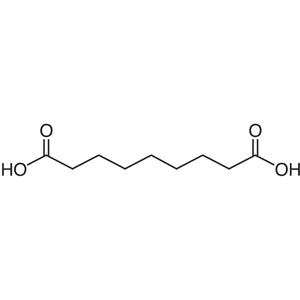
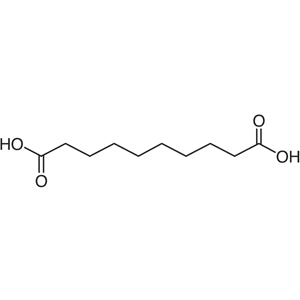
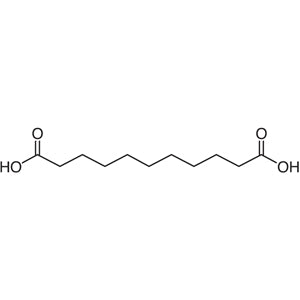
Azelaic Acid (TCI A1318, CAS 123-99-9) is a versatile organic compound widely used in chemical and pharmaceutical research. As a non-heterocyclic building block, it serves as a foundational material for the synthesis of more complex molecules. Its simple carbon chain structure provides a flexible framework that can be modified through various chemical reactions, making it essential for researchers aiming to develop new compounds. This compound is commonly found in laboratory settings where synthesis and experimentation are core activities.
Azelaic Acid is valued for its chemical stability under controlled conditions and its solubility in organic solvents such as ethyl acetate and acetone. These properties make it suitable for applications requiring high reactivity and controlled chemical behavior. Its solid, white appearance and ease of handling further contribute to its popularity in both academic and industrial laboratories. The compound’s sensitivity to moisture and air also means that proper storage is critical to maintaining its integrity and effectiveness.
In Indonesian laboratories, Azelaic Acid plays a crucial role in pharmaceutical, cosmetic, and industrial chemical research. It is a key component in the development of new drugs, skincare products, and chemical intermediates. Its availability in various packaging sizes allows for flexible use across different experimental scales, supporting both small-scale research and larger production processes.
TCI brochures (PDF)
- Lipids 2025-12-17 · p. 8
- Biomaterials Research Reagents 2025-02-19 · p. 21
- Monomers 2025-05-28 · p. 34
- Pharmaceutical synthesis: Azelaic Acid is used to create various drug compounds due to its reactivity and structural versatility.
- Cosmetic formulation: It is incorporated into skincare products for its potential skin-benefiting properties and chemical stability.
- Industrial chemical production: The compound serves as a building block for the development of specialty chemicals and intermediates.
- Organic chemistry research: Its simple structure makes it ideal for studying reaction mechanisms and synthetic pathways.
- Analytical testing: Azelaic Acid is utilized in quality control and analytical procedures to assess chemical purity and reactivity.
| Brand | TCI |
|---|---|
| CAS number | 123-99-9 |
| Molecular formula | — |
| Purity | — |
| Category | Chemistry > Building Blocks > Non-Heterocyclic Building Blocks |
| Pack sizes | Available in various sizes to suit different experimental needs |
| Physical form | Solid, white crystalline powder |
| Storage | Store in a cool, dry place away from moisture and air exposure |
Azelaic Acid should be stored in a cool, dry environment to prevent degradation due to moisture and air exposure. It is recommended to use airtight containers to minimize contact with atmospheric moisture. The compound should be kept away from direct sunlight and sources of heat to maintain its chemical integrity. In laboratory settings, proper labeling and storage conditions are essential to ensure safety and consistency in experimental results. Handling should be done with appropriate personal protective equipment to avoid direct contact with skin or inhalation of vapors. Regular monitoring of storage conditions helps in maintaining the quality and effectiveness of the compound for research purposes.
—
Product Categories
Produk Terkait
-
AzelaicAcid TCI A0561
Regular price From Rp 557.550,00Regular priceRp 405.300,00Sale price From Rp 557.550,00 -
AdipicAcid TCI A0161
Regular price From Rp 452.550,00Regular priceRp 316.050,00Sale price From Rp 452.550,00 -
SebacicAcid TCI S0022
Regular price From Rp 557.550,00Regular priceRp 405.300,00Sale price From Rp 557.550,00 -
1,9-NonanedicarboxylicAcid TCI N0333
Regular price From Rp 2.757.300,00Regular priceRp 1.943.550,00Sale price From Rp 2.757.300,00 -
GlutaricAcid(ca.50%inWater,ca.4.3mol/L) TCI G0245
Regular price Rp 2.121.000,00Regular priceRp 1.498.350,00Sale price Rp 2.121.000,00 -
trans-AconiticAcid TCI A0127
Regular price From Rp 2.121.000,00Regular priceRp 1.498.350,00Sale price From Rp 2.121.000,00 -
AcetylenedicarboxylicAcid TCI A0088
Regular price From Rp 1.220.100,00Regular priceRp 868.350,00Sale price From Rp 1.220.100,00 -
alpha,alpha,alpha',alpha'-Tetramethyl-1,3-benzenedipropionicAcid TCI T3420
Regular price Rp 3.472.350,00Regular priceRp 2.427.600,00Sale price Rp 3.472.350,00