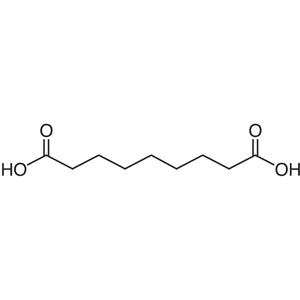
Sebacic Acid (TCI S0022, CAS 111-20-6) is a key organic compound used extensively in laboratory settings. It is a linear carbon chain molecule with a carboxyl group at one end, making it a versatile building block for chemical synthesis. This compound is widely utilized in various chemical reactions, particularly in the creation of complex molecules. Its structural simplicity and reactivity make it an essential component in many synthetic pathways. Sebacic Acid is commonly found in esterification reactions, surfactant production, and polymer formation, playing a crucial role in both academic and industrial research.
The chemical properties of Sebacic Acid contribute to its popularity in laboratory applications. It is a solid, white substance that dissolves easily in organic solvents such as ethyl acetate and acetone. Its high reactivity and stability make it suitable for a wide range of chemical processes. The compound's non-toxic nature and ease of handling also enhance its safety profile, making it a preferred choice for laboratory use. These characteristics ensure that it remains a reliable and effective reagent in both research and production environments.
In Indonesian laboratories, Sebacic Acid is widely used across various sectors, including chemistry, pharmaceuticals, and cosmetics. It is frequently employed in research and development projects, as well as in the manufacturing of products. Its availability and effectiveness make it a go-to material for scientists and researchers seeking to create new compounds or improve existing formulations. The compound's adaptability and reliability ensure its continued relevance in both academic and industrial settings.
TCI brochures (PDF)
- Difluoromethylation Reagents, Difluoromethylenation Reagents 2026-05-18 · p. 2
- Lipids 2025-12-17 · p. 8
- Biomaterials Research Reagents 2025-02-19 · p. 22
- Monomers 2025-05-28 · p. 36
- Esterification Reactions: Sebacic Acid is ideal for esterification due to its carboxylic acid group, enabling the formation of esters with alcohols.
- Surfactant Production: Its molecular structure allows it to act as a precursor in the synthesis of surfactants, which are essential in cleaning and emulsifying applications.
- Polymer Formation: Sebacic Acid is used in the creation of polymeric materials, contributing to the development of thermoplastics and other synthetic materials.
- Pharmaceutical Formulation: It serves as a building block in the synthesis of various pharmaceutical compounds, aiding in drug development and formulation.
- Cosmetic Ingredient Development: Its chemical properties make it suitable for use in cosmetic formulations, particularly in the creation of emollients and stabilizers.
| Brand | TCI |
|---|---|
| CAS number | 111-20-6 |
| Molecular formula | — |
| Purity | — |
| Category | Chemistry > Building Blocks > Non-Heterocyclic Building Blocks |
| Pack sizes | Available in various quantities as per supplier specifications |
| Physical form | Solid, white crystalline powder |
| Storage | Store in a cool, dry place away from moisture and direct sunlight |
Sebacic Acid should be stored in a cool, dry environment to maintain its chemical integrity and prevent degradation. It is recommended to keep it in a sealed container to avoid moisture exposure, which can affect its purity and reactivity. The compound is non-toxic and generally safe to handle, but standard laboratory safety protocols should still be followed. When working with Sebacic Acid, it is advisable to use appropriate personal protective equipment, such as gloves and safety goggles. Its solid form makes it easy to handle, but care should be taken to avoid direct contact with skin or inhalation of dust. Proper storage and handling ensure that the material remains effective and safe for use in laboratory applications.
—
Product Categories
- Polymer/Macromolecule ReagentsMonomersDicarboxylic Acid Monomers
- Polymer/Macromolecule ReagentsPolybenzoxazole Raw MaterialsDicarbonyl Chlorides and Dicarboxylic Acids [Polybenzoxazole Raw Materials]
- Biomaterials/Biocompatible Materials Research ReagentsMonomers and Macromonomers [Biomaterials/Biocompatible Materials Research Reagents]Dicarboxylic Acid Monomers [Biomaterials/Biocompatible Materials Research Reagents]
Produk Terkait
-
AdipicAcid TCI A0161
Regular price From Rp 452.550,00Regular priceRp 316.050,00Sale price From Rp 452.550,00 -
AzelaicAcid TCI A0561
Regular price From Rp 557.550,00Regular priceRp 405.300,00Sale price From Rp 557.550,00 -
AzelaicAcid TCI A1318
Regular price From Rp 848.400,00Regular priceRp 609.000,00Sale price From Rp 848.400,00 -
1,9-NonanedicarboxylicAcid TCI N0333
Regular price From Rp 2.757.300,00Regular priceRp 1.943.550,00Sale price From Rp 2.757.300,00 -
GlutaricAcid(ca.50%inWater,ca.4.3mol/L) TCI G0245
Regular price Rp 2.121.000,00Regular priceRp 1.498.350,00Sale price Rp 2.121.000,00 -
SebacoylChloride TCI S0030
Regular price From Rp 1.298.850,00Regular priceRp 924.000,00Sale price From Rp 1.298.850,00 -
GlutarylChloride TCI G0202
Regular price Rp 2.889.600,00Regular priceRp 2.035.950,00Sale price Rp 2.889.600,00 -
trans-AconiticAcid TCI A0127
Regular price From Rp 2.121.000,00Regular priceRp 1.498.350,00Sale price From Rp 2.121.000,00