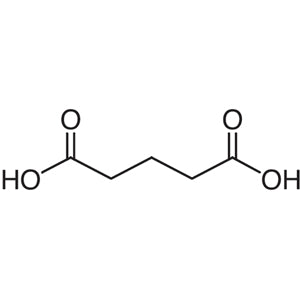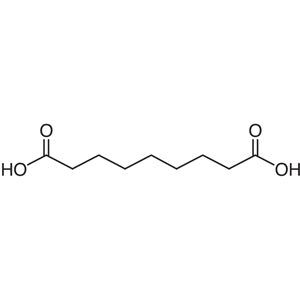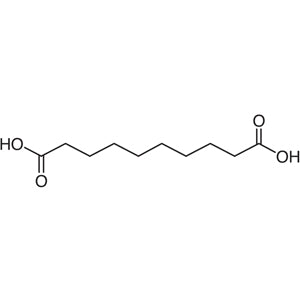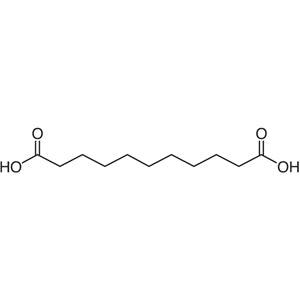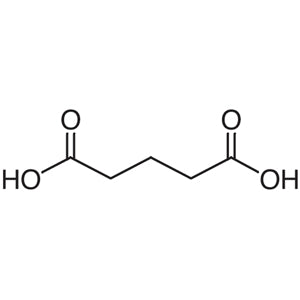
Glutaric Acid (TCI G0245), with a CAS number of 110-94-1, is a versatile chemical compound widely used in laboratory settings for its role in organic synthesis and chemical reactions involving carboxylic acids. It is a key building block in the creation of complex molecules such as polymers, esters, and amides. Its simple molecular structure makes it an essential component in various chemical processes, enabling the development of advanced materials and pharmaceuticals. This compound is particularly valuable for its reactivity and compatibility with a wide range of chemical reagents.
One of the main reasons for its popularity is its solubility in water and neutral pH, which simplifies handling and application in diverse laboratory conditions. The 4.3 mol/L concentration in aqueous solution ensures precise dosing without the need for additional dilution, making it highly convenient for both research and educational purposes. Its stability and resistance to degradation further enhance its reliability in chemical experiments, ensuring consistent results across multiple trials.
In Indonesian laboratories, Glutaric Acid is commonly used in chemical research, academic teaching, and industrial applications. It serves as a foundational material for the synthesis of other chemicals and is integral to experiments aimed at understanding fundamental chemical reactions. Due to its availability and broad utility, it is a staple in many laboratory environments, supporting both basic and advanced scientific investigations.
- Organic synthesis is a key application where Glutaric Acid serves as a building block for creating complex molecules like polymers and esters due to its carboxylic acid functionality.
- Esterification reactions benefit from Glutaric Acid’s solubility in water and its ability to act as a reactant in forming ester compounds under controlled conditions.
- Hidrolisis processes often utilize Glutaric Acid as a reagent to break down complex molecules into simpler components, leveraging its chemical stability and reactivity.
- Educational laboratories use Glutaric Acid to teach fundamental chemical reactions and molecular structure, offering a safe and effective learning tool for students.
- Industrial research applications rely on Glutaric Acid for developing new materials and chemical products, taking advantage of its versatility and cost-effectiveness.
| Brand | TCI |
|---|---|
| CAS number | 110-94-1 |
| Molecular formula | — |
| Purity | — |
| Category | Chemistry > Building Blocks > Non-Heterocyclic Building Blocks |
| Pack sizes | — |
| Physical form | — |
| Storage | Store in a cool, dry place away from direct sunlight and moisture |
Glutaric Acid should be stored in a cool, dry environment to maintain its chemical integrity and prevent degradation. It is recommended to use sealed containers to avoid exposure to moisture and air, which can affect its stability. When handling, it is important to ensure proper ventilation to minimize inhalation of vapors, and to use appropriate personal protective equipment such as gloves and safety goggles. Due to its water solubility, it is advisable to store it away from incompatible substances like strong bases or oxidizing agents. Regular inspection of storage conditions and containers is essential to ensure safety and maintain the quality of the product for laboratory use.
—
Product Categories
Produk Terkait
-
GlutaricAcid TCI G0069
Regular price From Rp 505.050,00Regular price -
AzelaicAcid TCI A0561
Regular price From Rp 505.050,00Regular price -
AdipicAcid TCI A0161
Regular price From Rp 452.550,00Regular price -
AzelaicAcid TCI A1318
Regular price From Rp 795.900,00Regular price -
SebacicAcid TCI S0022
Regular price From Rp 505.050,00Regular price -
1,9-NonanedicarboxylicAcid TCI N0333
Regular price From Rp 2.704.800,00Regular price -
trans-AconiticAcid TCI A0127
Regular price From Rp 2.068.500,00Regular price -
AcetylenedicarboxylicAcid TCI A0088
Regular price From Rp 1.167.600,00Regular price