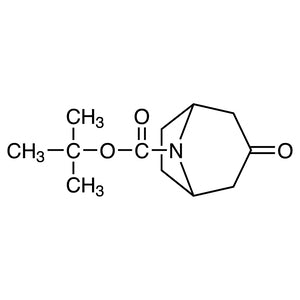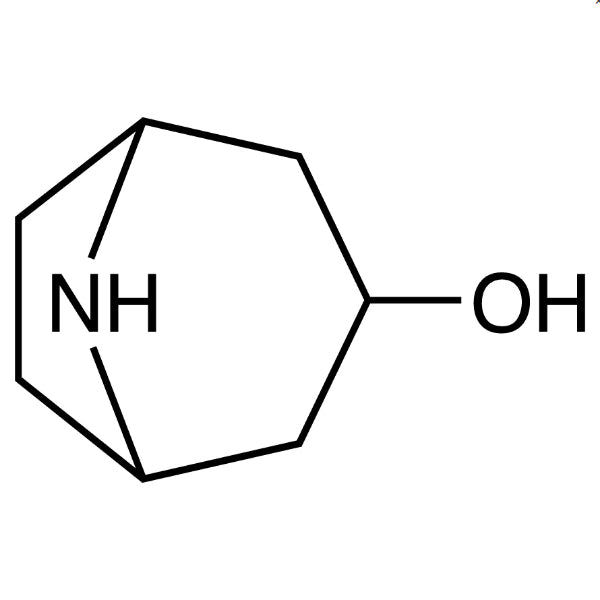
Nortropine, with CAS number 538-09-0, is a chemical compound widely used in various laboratory experiments. As a building block in organic chemistry, it plays a crucial role in the synthesis of more complex molecules through chemical reactions. Its simple molecular structure allows it to interact readily with a variety of reagents, making it a versatile component in chemical research. This compound is commonly found in laboratory settings where the development of new chemical compounds and the study of reaction mechanisms are essential. Its role extends to both academic and industrial research, supporting the advancement of chemical knowledge and innovation.
Nortropine is valued for its chemical stability under controlled conditions, which makes it reliable for use in laboratory experiments. However, it is highly reactive to environmental factors such as high temperatures and excessive humidity. This reactivity is advantageous in experiments that require precise control over reaction conditions. Additionally, its ability to participate in various types of reactions, including substitution and addition reactions, enhances its utility in chemical synthesis. These properties make it a preferred choice for researchers seeking to explore chemical reactivity and develop new compounds.
In Indonesian laboratories, Nortropine is extensively used in chemical research, particularly in academic and research institutions. It is a key component in the study of organic chemistry, supporting both educational and experimental activities. Its availability and chemical properties make it an essential material for students and researchers alike, contributing to the growth of scientific knowledge and practical skills in chemical synthesis.
- Organic synthesis experiments benefit from Nortropine’s reactivity and versatility, enabling the creation of complex compounds through various reaction pathways.
- Chemical reaction mechanism studies utilize Nortropine as a model compound to investigate how different reagents interact under controlled conditions.
- Educational laboratories use Nortropine to teach fundamental concepts in organic chemistry, including molecular structure and reaction types.
- Research institutions incorporate Nortropine into projects focused on developing new chemical compounds with specific functional properties.
- Industrial laboratories apply Nortropine in the production of specialty chemicals, leveraging its chemical properties for process optimization.
| Brand | TCI |
|---|---|
| CAS number | 538-09-0 |
| Molecular formula | — |
| Purity | — |
| Category | Chemistry > Building Blocks > Non-Heterocyclic Building Blocks |
| Pack sizes | Available in various quantities as per standard laboratory supply standards |
| Physical form | Solid, typically in crystalline form |
| Storage | Store in a cool, dry place away from direct sunlight and moisture |
Nortropine should be stored in a cool, dry environment to maintain its chemical stability and prevent degradation. It is recommended to keep the compound in a tightly sealed container to minimize exposure to moisture and air. Due to its reactivity, it is important to handle Nortropine with care, using appropriate personal protective equipment such as gloves and safety goggles. Storage should be in a location that is inaccessible to children and unauthorized personnel. Regular monitoring of storage conditions is advised to ensure the integrity of the material and to prevent any potential hazards in the laboratory setting.
—
Produk Terkait
-
N-Benzylnortropinone TCI B4058
Regular price From Rp 637.350,00Regular price -
N-(tert-Butoxycarbonyl)nortropinone TCI B3401
Regular price From Rp 1.590.750,00Regular price -
NortropinoneHydrochloride TCI N0844
Regular price From Rp 1.115.100,00Regular price -
N-(Ethoxycarbonyl)nortropinone TCI E0834
Regular price Rp 3.790.500,00Regular price