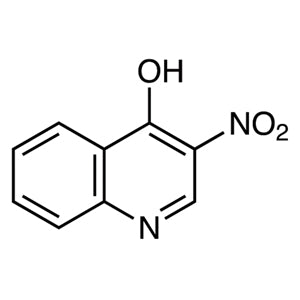
3-Nitro-4-quinolinol is a chemical compound classified under the heterocyclic category, commonly used as a building block in the synthesis of complex molecules. This compound plays a crucial role in organic chemistry research, particularly in the development of bioactive compounds. Its unique molecular structure, featuring a quinolinone ring with nitro groups at specific positions, makes it a versatile tool for chemical modification and functional group introduction. In laboratory settings, it is highly valued for its ability to participate in various chemical reactions, contributing to the creation of new compounds with potential pharmaceutical applications.
The compound is known for its chemical stability under controlled conditions, although it is sensitive to heat and ultraviolet light. This sensitivity necessitates careful handling and storage to maintain its integrity. Additionally, its high reactivity makes it suitable for reactions requiring specific activation conditions. The compound’s ability to undergo multiple chemical transformations makes it a preferred choice for researchers aiming to explore new synthetic pathways. Its chemical versatility and structural complexity further enhance its utility in advanced organic synthesis.
In Indonesian laboratories, 3-Nitro-4-quinolinol is widely used in organic chemistry research, especially in pharmacology and the synthesis of bioactive compounds. Researchers from academic institutions and research organizations frequently utilize this compound to develop new drugs and functional materials. Its role in creating molecules with specific biological activities makes it an essential component in the pursuit of scientific innovation within the chemical sciences.
- Organic synthesis applications benefit from 3-Nitro-4-quinolinol due to its reactivity and structural versatility, enabling the creation of complex molecules with desired biological properties.
- Pharmaceutical research relies on this compound for the development of bioactive compounds, as its molecular structure can be modified to target specific therapeutic applications.
- Bioactive compound synthesis is enhanced by the compound’s ability to participate in various chemical reactions, making it a key reagent in drug discovery processes.
- Academic research in chemistry utilizes this compound to explore new synthetic methodologies and understand the behavior of heterocyclic structures.
- Industrial chemical processes incorporate 3-Nitro-4-quinolinol for the production of specialized intermediates used in the manufacturing of pharmaceuticals and agrochemicals.
| Brand | TCI |
|---|---|
| CAS number | 50332-66-6 |
| Molecular formula | — |
| Purity | — |
| Category | Chemistry > Building Blocks > Heterocyclic Building Blocks |
| Pack sizes | As listed on the product page |
| Physical form | Solid |
| Storage | Store in a cool, dark place away from heat and UV light |
3-Nitro-4-quinolinol should be stored in a cool, dark environment to prevent degradation due to heat and UV exposure. It is recommended to use airtight containers made of glass or inert polymer materials to maintain its chemical stability. The compound should be kept away from sources of heat and direct sunlight to preserve its reactivity and structural integrity. In laboratory settings, it is essential to handle the compound with appropriate personal protective equipment, such as gloves and safety goggles, to ensure safe handling. Proper labeling of storage containers is also important to prevent accidental exposure and ensure safe access during routine use.
—
Produk Terkait
-
3-Quinolinol TCI Q0094
Regular price From Rp 1.167.600,00Regular price -
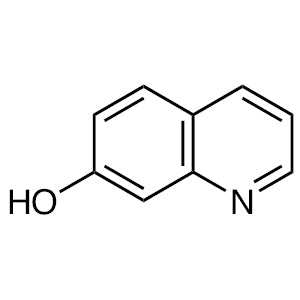
7-Quinolinol TCI Q0084
Regular price Rp 3.021.900,00Regular price -
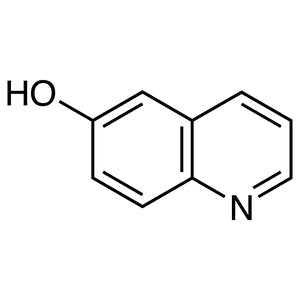
6-Quinolinol TCI Q0060
Regular price From Rp 1.670.550,00Regular price -
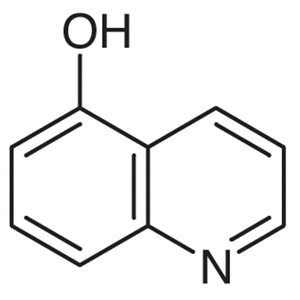
5-Quinolinol TCI Q0059
Regular price From Rp 1.273.650,00Regular price -
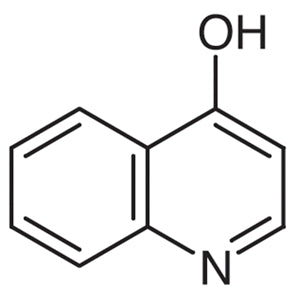
4-Quinolinol TCI Q0029
Regular price From Rp 1.776.600,00Regular price -
8-QuinolinolSulfateMonohydrate TCI Q0017
Regular price From Rp 1.060.500,00Regular price -
2-Methyl-4-quinolinol TCI M2620
Regular price From Rp 3.075.450,00Regular price -
7-Methoxy-4-quinolinol TCI M1966
Regular price From Rp 1.246.350,00Regular price