4-Nitrophenyl Trifluoromethanesulfonate is a versatile chemical compound widely used in organic laboratory settings. As a fluorinated building block, it plays a crucial role in the synthesis of fluorinated compounds, which are essential in various scientific fields. Its unique chemical structure, featuring a highly reactive trifluoromethanesulfonate group, makes it a valuable reagent in both academic and industrial research. This compound is particularly useful in reactions involving substitution and condensation, where its reactivity and stability contribute to the success of complex chemical transformations.
The compound's high polarity and good solubility in organic solvents make it an ideal choice for a wide range of chemical applications. Its ability to participate in multiple reaction pathways, combined with its chemical stability under controlled conditions, ensures reliable performance in laboratory experiments. These properties make it a preferred reagent for chemists working on advanced synthetic routes, especially those involving fluorinated heterocyclic compounds. The compound's effectiveness in diverse reaction conditions further enhances its utility in both research and development environments.
In Indonesian laboratories, 4-Nitrophenyl Trifluoromethanesulfonate is extensively used in organic chemistry research, particularly in the synthesis of fluorinated compounds. It is a key component in studies related to pharmaceuticals, materials science, and environmental chemistry. Its availability through reliable suppliers like AMI Scientific ensures that researchers have access to this essential reagent for their experimental needs.
Advantages (TCI brochure)
- Triflation reagent for protection of phenolic hydroxyl groups
TCI brochures (PDF)
- Sulfonylation Reagents 2023-01-20 · p. 2
- Condensing Agents 2025-11-18 · p. 8
- Protecting Agents 2025-03-25 · p. 11
Related TCI products
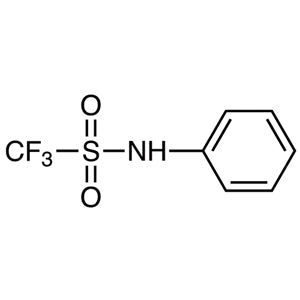
- TCI T2985 456-64-4 Trifluoromethanesulfonanilide
- TCI T3177 29540-81-6 1-(Trifluoromethanesulfonyl)imidazole
- TCI B2115 64465-34-5 2,2-Bis(3-nitrophenyl)hexafluoropropane
- TCI Z0057-5G 54010-75-2 Zinc(II) Trifluoromethanesulfonate [for Electrolyte]
- TCI T2606 29540-83-8 p-Tolyl Trifluoromethanesulfonate
- TCI T1709 109613-00-5 4-Acetylphenyl Trifluoromethanesulfonate
- Fluorinated Compound Synthesis: This compound is ideal for creating fluorinated derivatives due to its reactive trifluoromethanesulfonate group, enabling efficient functional group transformations.
- Heterocyclic Compound Development: Its ability to participate in substitution reactions makes it suitable for synthesizing complex heterocyclic structures commonly found in pharmaceuticals.
- Organic Reaction Optimization: The compound's stability and reactivity allow it to be used in various reaction conditions, aiding in the development of optimized synthetic protocols.
- Environmental Chemistry Research: Its use in fluorinated compound synthesis supports studies on environmental pollutants and their degradation pathways.
- Material Science Innovation: The compound's properties make it valuable in the development of new materials with enhanced chemical and physical characteristics.
From the TCI brochure
- Triflation of aryl hydroxyl (Ar-OH to Ar-OSO2CF3) with K2CO3
| Brand | TCI |
|---|---|
| CAS number | 17763-80-3 |
| Molecular formula | — |
| Purity | — |
| Category | Chemistry > Building Blocks > Fluorinated Building Blocks |
| Pack sizes | Available in various quantities as per supplier specifications |
| Physical form | Solid or liquid, depending on the specific product variant |
| Storage | Store in a cool, dry place away from moisture and direct sunlight |
This compound should be stored in a cool, dry environment to maintain its chemical stability. It is recommended to use airtight containers to prevent exposure to moisture and air, which may affect its reactivity. Due to its polar nature, it is best stored in glass or high-density polyethylene containers to avoid chemical interactions. In laboratory settings, it should be handled with appropriate personal protective equipment, including gloves and safety goggles, to ensure safe usage. Regular monitoring of storage conditions is advised to maintain the integrity of the compound during long-term storage. Proper labeling and segregation from incompatible materials are essential to prevent accidental exposure or contamination.
—
Product Categories
Produk Terkait
-
Trifluoromethanesulfonanilide TCI T2985
Regular price From Rp 2.093.700,00Regular priceRp 1.479.450,00Sale price From Rp 2.093.700,00 -
1-(Trifluoromethanesulfonyl)imidazole TCI T3177
Regular price From Rp 3.127.950,00Regular priceRp 2.202.900,00Sale price From Rp 3.127.950,00 -
2,2-Bis(3-nitrophenyl)hexafluoropropane TCI B2115
Regular price From Rp 2.466.450,00Regular priceRp 1.724.100,00Sale price From Rp 2.466.450,00 -
Zinc(II)Trifluoromethanesulfonate[forElectrolyte] TCI Z0057-5G
Regular price Rp 1.326.150,00Regular priceRp 927.150,00Sale price Rp 1.326.150,00 -
p-TolylTrifluoromethanesulfonate TCI T2606
Regular price Rp 2.491.650,00Regular priceRp 1.741.950,00Sale price Rp 2.491.650,00 -
4-AcetylphenylTrifluoromethanesulfonate TCI T1709
Regular price Rp 2.093.700,00Regular priceRp 1.479.450,00Sale price Rp 2.093.700,00 -
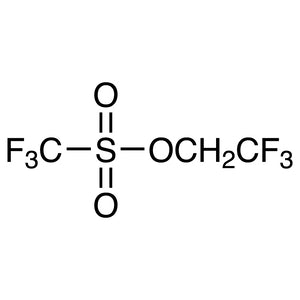
2,2,2-TrifluoroethylTrifluoromethanesulfonate TCI T1604
Regular price From Rp 3.232.950,00Regular priceRp 2.260.650,00Sale price From Rp 3.232.950,00 -
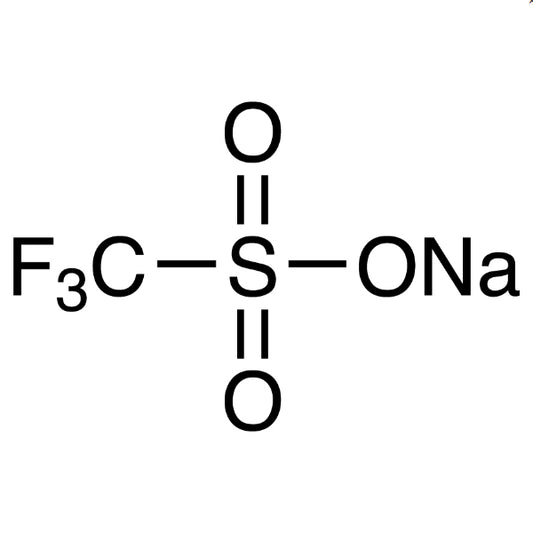
SodiumTrifluoromethanesulfonate TCI T1550
Regular price From Rp 637.350,00Regular priceRp 445.200,00Sale price From Rp 637.350,00



![54010-75-2 Zinc(II) Trifluoromethanesulfonate [for Electrolyte] - AMI Scientific](http://amiscientific.com/cdn/shop/files/TCI2510Z0057_9ad4d559-5f76-4c77-b1e0-21de52a28b66.jpg?v=1769181390&width=533)