Neobavaisoflavone is a flavonoid compound widely utilized in life science research for its diverse biological activities. This compound plays a crucial role in biochemical and pharmacological studies, particularly in the investigation of natural compounds' bioactive properties. Its presence in various natural sources, such as certain plants, makes it a valuable reagent for isolating and analyzing bioactive substances. Neobavaisoflavone is essential in the development of new therapeutic agents due to its potential as an antioxidant, anti-inflammatory, and even anti-cancer agent.
The compound’s chemical structure is stable, allowing it to be processed under various laboratory conditions. It exhibits good solubility in organic solvents like ethyl acetate and acetone, which facilitates its use in extraction and analytical procedures. This solubility profile enhances its applicability in both qualitative and quantitative analyses. Additionally, its consistent chemical properties make it a reliable reagent for reproducible experimental outcomes.
In Indonesian laboratories, Neobavaisoflavone is commonly used in pharmaceutical, biotechnology, and organic chemistry research. Its ability to yield accurate and reproducible data makes it a preferred choice for researchers studying natural products and their biological effects. It is particularly relevant in studies involving bioavailability, pharmacokinetics, and molecular interactions. The compound’s versatility supports its use in a wide range of scientific investigations.
TCI brochures (PDF)
- Phytochemicals 2025-12-17 · p. 12
- Bioactive Compound Screening: Neobavaisoflavone is ideal for screening natural compounds due to its known biological activities and stability.
- Pharmacological Research: It is used to study its potential as an antioxidant and anti-inflammatory agent in drug development.
- Analytical Chemistry: Its solubility in organic solvents makes it suitable for chromatographic and spectroscopic analyses.
- Natural Product Isolation: The compound is frequently used in the isolation and purification of bioactive substances from plant sources.
- Molecular Interactions Studies: Its chemical structure allows it to be used in studying molecular interactions and binding affinities.
| Brand | TCI |
|---|---|
| CAS number | 41060-15-5 |
| Molecular formula | — |
| Purity | — |
| Category | Life Science > Biochemicals and Reagents > Phenylpropanoids, Aromatic Polyketides |
| Pack sizes | Available in various quantities as per supplier specifications |
| Physical form | Solid (as per standard product description) |
| Storage | Store in a cool, dry place away from light |
Neobavaisoflavone should be stored in a cool, dry environment to maintain its chemical stability. It is recommended to keep the compound in airtight containers to prevent moisture absorption and contamination. Due to its solubility in organic solvents, it should be handled in a well-ventilated area to minimize exposure. Laboratory personnel should wear appropriate personal protective equipment, such as gloves and safety goggles, when handling this compound. It is important to ensure that storage conditions are consistent to preserve the compound’s integrity and effectiveness for research applications.
—
Produk Terkait
-
Isoflavone TCI I1024
Regular price Rp 4.823.700,00Regular price -
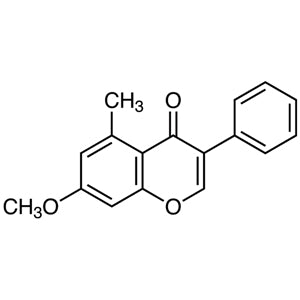
7-Methoxy-5-methylisoflavone TCI M3190
Regular price From Rp 1.087.800,00Regular price -
4',6,7-Trihydroxyisoflavone TCI T3473
Regular price From Rp 3.075.450,00Regular price -
4',6,7-Trimethoxyisoflavone TCI T3410
Regular price From Rp 3.446.100,00Regular price -
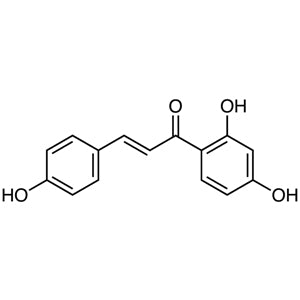
Isoliquiritigenin TCI I0822
Regular price From Rp 1.035.300,00Regular price -
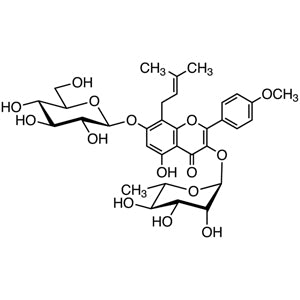
Icariin TCI I0862
Regular price From Rp 1.829.100,00Regular price -
Xanthohumol TCI X0068
Regular price Rp 13.249.950,00Regular price -
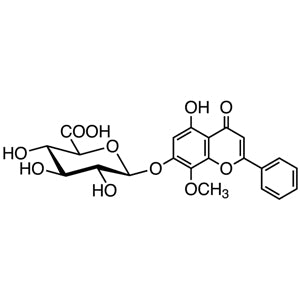
Wogonoside TCI W0012
Regular price From Rp 5.672.100,00Regular price