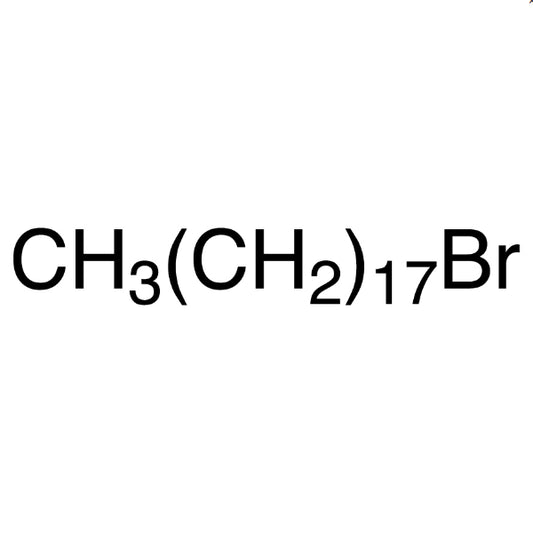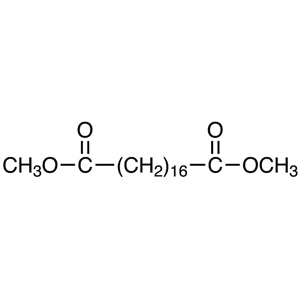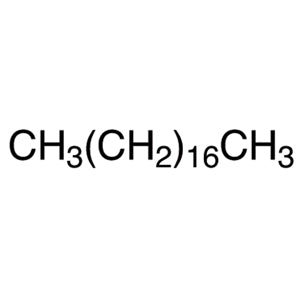
Octadecane, with CAS number 593-45-3, is a saturated hydrocarbon consisting of 18 carbon atoms. It is a key component in chemical experiments, serving as a foundational building block or auxiliary material in the synthesis of organic compounds. In laboratory settings, Octadecane functions as a non-polar solvent, offering stability and minimal reactivity with a wide range of substances. This makes it an essential tool for researchers aiming to maintain chemical integrity during complex reactions. Its inert nature ensures that it does not interfere with the desired chemical processes, making it a reliable choice for various synthetic applications.
Octadecane is prized for its high boiling point and excellent solvency for non-polar substances such as oils, fats, and other hydrocarbons. These properties make it particularly useful in applications requiring a stable and non-reactive solvent. Its consistent physical and chemical characteristics ensure predictable behavior under different experimental conditions, enhancing the reliability of laboratory results. Additionally, Octadecane is free from toxic or hazardous components, contributing to a safer working environment in the laboratory.
In Indonesian laboratories, Octadecane is commonly used in pure chemical research, complex compound synthesis, and chromatography testing. It is also found in educational experiments at both university and high school levels, supporting the teaching of organic chemistry principles. Its versatility and reliability make it a preferred material for a wide range of scientific investigations.
- Pure chemical research benefits from Octadecane’s stability and non-reactivity, allowing accurate synthesis and analysis without unwanted side reactions.
- Complex compound synthesis relies on Octadecane as a non-polar solvent, facilitating the dissolution and reaction of hydrocarbon-based materials.
- Chromatography testing utilizes Octadecane’s solvency properties to separate and analyze non-polar compounds effectively.
- University-level education incorporates Octadecane in experiments to demonstrate hydrocarbon behavior and solvent properties.
- High school chemistry programs use Octadecane to teach fundamental concepts of organic chemistry and molecular structure.
| Brand | TCI |
|---|---|
| CAS number | 593-45-3 |
| Molecular formula | — |
| Purity | — |
| Category | Chemistry > Building Blocks > Non-Heterocyclic Building Blocks |
| Pack sizes | — |
| Physical form | Liquid |
| Storage | Store in a cool, dry place away from heat and direct sunlight |
Octadecane should be stored in a cool, dry location, away from heat and direct sunlight to maintain its chemical stability. It is recommended to use airtight containers made of materials such as glass or stainless steel to prevent contamination and evaporation. Due to its non-reactive nature, it does not require special handling, but general laboratory safety protocols should still be followed. Ensure that the storage area is well-ventilated to avoid the accumulation of any vapors. Octadecane is not classified as hazardous, but it should be handled with care to prevent spills or exposure. Its inert properties make it safe for use in environments where chemical stability and non-reactivity are critical.
—
Produk Terkait
-
Octadecane[StandardMaterialforGC] TCI S0290
Regular price Rp 3.232.950,00Regular price -
1-Bromooctadecane TCI B0625
Regular price From Rp 452.550,00Regular price -
1,18-Octadecanediol TCI O0563
Regular price Rp 8.772.750,00Regular price -
1-Iodooctadecane TCI I0065
Regular price From Rp 3.021.900,00Regular price -
DimethylOctadecanedioate TCI D3540
Regular price From Rp 4.771.200,00Regular price -
1-Chlorooctadecane TCI C0235
Regular price From Rp 743.400,00Regular price -
OctadecanedioicAcid TCI O0222
Regular price From Rp 2.837.100,00Regular price -
Sodium1-Octadecanesulfonate TCI O0124
Regular price From Rp 4.957.050,00Regular price
![593-45-3 Octadecane [Standard Material for GC] - AMI Scientific](http://amiscientific.com/cdn/shop/files/TCI2510S0290.jpg?v=1767138621&width=533)