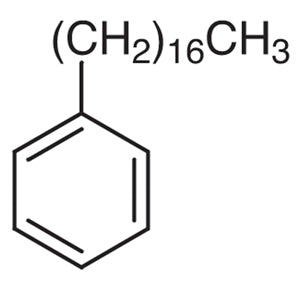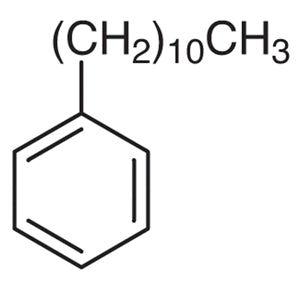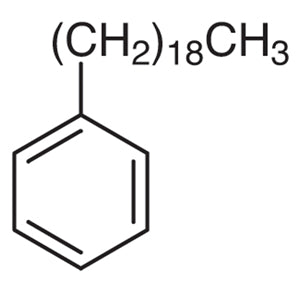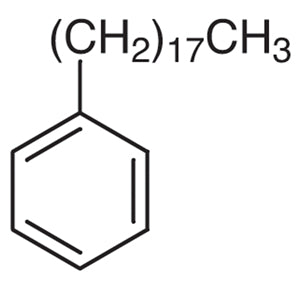
Octadecylbenzene is a chemical compound widely used in laboratory settings as a foundational material for various chemical reactions and the synthesis of complex molecules. It belongs to the category of non-heterocyclic building blocks, making it a versatile component in organic chemistry research. Its unique molecular structure, consisting of a long hydrocarbon chain attached to a benzene ring, gives it high non-polarity, which is essential for specific chemical interactions. This compound is commonly utilized in organic synthesis, particularly in the development of surfactants and pharmaceutical active ingredients, due to its ability to act as a solvent or a precursor in chemical processes.
The chemical stability of Octadecylbenzene is one of its key attributes, allowing it to remain inert in the presence of other reagents, which simplifies handling and storage. Its high boiling point ensures that it remains in liquid form under high-temperature conditions, reducing the risk of evaporation during prolonged experiments. These properties make it a reliable and efficient choice for laboratory applications, especially in environments where long-term stability and consistent performance are required.
In Indonesian laboratories, Octadecylbenzene is extensively used in organic chemistry research, particularly in the synthesis of complex molecular structures. It is also frequently found in the production of bioactive compounds and industrial chemicals, where its chemical inertness and solubility characteristics are highly valued. Its role in both academic and industrial research underscores its importance as a fundamental building block in chemical synthesis and development.
- Organic synthesis applications benefit from Octadecylbenzene's non-polar nature, enabling it to act as a solvent in reactions involving hydrophobic compounds.
- Pharmaceutical research utilizes this compound as a precursor in the development of surfactants and active pharmaceutical ingredients due to its chemical stability.
- Industrial chemical production relies on Octadecylbenzene for its ability to serve as a building block in the synthesis of complex molecules with specific functional groups.
- Surface chemistry studies use Octadecylbenzene to investigate interactions between hydrophobic and aromatic moieties in molecular systems.
- Environmental analysis applications incorporate this compound for its role in simulating hydrophobic contaminants in aqueous systems.
| Brand | TCI |
|---|---|
| CAS number | 4445-07-2 |
| Molecular formula | — |
| Purity | — |
| Category | Chemistry > Building Blocks > Non-Heterocyclic Building Blocks |
| Pack sizes | Available in various quantities as per supplier specifications |
| Physical form | Liquid |
| Storage | Store in a cool, dry place away from direct sunlight and incompatible materials |
Octadecylbenzene should be stored in a cool, dry environment to maintain its chemical stability and prevent degradation. It is recommended to use sealed, non-reactive containers such as glass or stainless steel to avoid contamination. Due to its non-polar nature, it is important to ensure proper ventilation in the laboratory to minimize exposure. Avoid contact with strong oxidizing agents or reactive materials to prevent unintended chemical interactions. Regular inspection of storage containers is advised to ensure integrity and safety. Always follow standard laboratory safety protocols when handling and storing this compound to ensure optimal performance and safety.
—
Produk Terkait
-
Decylbenzene TCI D0034
Regular price From Rp 1.087.800,00Regular priceRp 760.200,00Sale price From Rp 1.087.800,00 -
Pentadecylbenzene TCI P0665
Regular price From Rp 2.625.000,00Regular priceRp 1.835.400,00Sale price From Rp 2.625.000,00 -
Heptadecylbenzene TCI H0020
Regular price From Rp 2.279.550,00Regular priceRp 1.593.900,00Sale price From Rp 2.279.550,00 -
Undecylbenzene TCI U0010
Regular price From Rp 1.140.300,00Regular priceRp 796.950,00Sale price From Rp 1.140.300,00 -
Dodecylbenzene TCI D1074
Regular price From Rp 1.510.950,00Regular priceRp 1.056.300,00Sale price From Rp 1.510.950,00 -
Dodecylbenzene(hardtype)(mixtureofbranchedchainisomers) TCI D0988
Regular price From Rp 637.350,00Regular priceRp 445.200,00Sale price From Rp 637.350,00 -
Tetradecylbenzene TCI T0866
Regular price From Rp 1.458.450,00Regular priceRp 1.019.550,00Sale price From Rp 1.458.450,00 -
Nonadecylbenzene TCI N0349
Regular price Rp 3.738.000,00Regular priceRp 2.613.450,00Sale price Rp 3.738.000,00