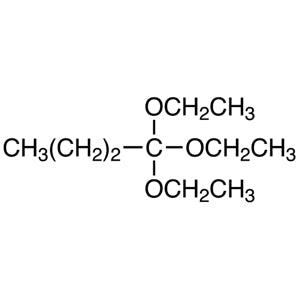
Triethyl Orthobutyrate, also known as 1,1,1-triethoxybutane, is the orthoester of butyric acid. Its terminal carbon atom carries three ethoxy groups at once. TCI lists this compound as a non-heterocyclic building block. In organic synthesis laboratories, orthoesters like this one are used as a source of a protected propyl-carbonyl group and as a reagent for the Johnson–Claisen rearrangement. They are also used to build heterocyclic rings, such as propyl-substituted benzimidazoles and oxazolines. It gives chemists a reliable way to introduce a four-carbon ester or amide-related fragment in multistep routes.
Chemists choose this material because its orthoester carbon is electrophilic under acidic conditions but fairly stable under basic conditions. This contrast allows controlled, predictable reactions. With a weak acid catalyst, triethyl orthobutyrate reacts with allylic alcohols to form γ,δ-unsaturated esters through a [3,3]-sigmatropic rearrangement. It can also condense with diamines, amino alcohols, or hydrazides to form heterocycles. In addition, orthoesters can act as water scavengers in moisture-sensitive reactions, because they hydrolyse to an ester and ethanol. This removes traces of water that would otherwise lower yields or cause side reactions.
In Indonesia, this reagent is useful for synthetic organic chemistry laboratories at universities, medicinal chemistry research centres, and industrial research and development laboratories. University groups use it in teaching and research on rearrangement chemistry and heterocycle synthesis. Medicinal chemistry teams use it to prepare propyl-substituted heterocyclic scaffolds for building compound libraries. Industrial laboratories value it as a versatile intermediate for route scouting and process development, where controlled reactivity and dependable supply from an established brand like TCI support reproducible results.
- Johnson–Claisen rearrangement: with a weak acid catalyst, it reacts with allylic alcohols to give γ,δ-unsaturated esters through a clean [3,3]-sigmatropic shift, which forms new carbon–carbon bonds.
- Benzimidazole synthesis: it condenses with aromatic diamines to form propyl-substituted benzimidazole rings, a scaffold commonly explored in medicinal chemistry and heterocycle research programmes.
- Oxazoline formation: its reaction with amino alcohols gives propyl-substituted oxazolines, which are useful as heterocyclic intermediates and as structural motifs in ligand and building-block synthesis.
- Heterocycle construction from hydrazides: condensing it with hydrazides gives nitrogen-containing heterocyclic rings, because the orthoester carbon acts as a one-carbon electrophile that carries a propyl group.
- Water scavenging in sensitive reactions: it hydrolyses to an ester and ethanol, so it can remove trace moisture from reactions that need anhydrous conditions to succeed.
| Brand | TCI (product code O0173) |
|---|---|
| CAS number | 24964-76-9 |
| Molecular formula | — |
| Purity | — |
| Category | Chemistry > Building Blocks > Non-Heterocyclic Building Blocks |
| Pack sizes | available in TCI standard pack sizes; see the product listing for current options |
| Physical form | see the TCI product label and supporting documentation |
| Storage | keep tightly sealed and protected from moisture, because the compound hydrolyses in the presence of water |
Store Triethyl Orthobutyrate in its original, tightly closed container in a cool, dry, well-ventilated area, away from heat sources, ignition sources, strong acids, and oxidising agents. The compound hydrolyses to an ester and ethanol when exposed to water, so protect it from humidity. After opening, reseal the container promptly, ideally under dry inert gas. Handle it in a fume hood and wear suitable gloves, safety glasses, and a laboratory coat. Use dry glassware and syringes when transferring it. Always read the supplier's Safety Data Sheet before use, and dispose of waste according to local regulations and institutional laboratory procedures.
—
Produk Terkait
-
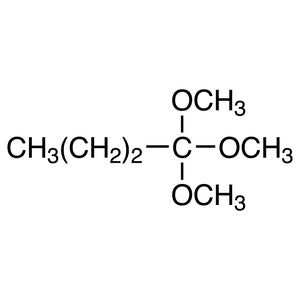
TrimethylOrthobutyrate TCI O0179
Regular price From Rp 980.700,00Regular price -
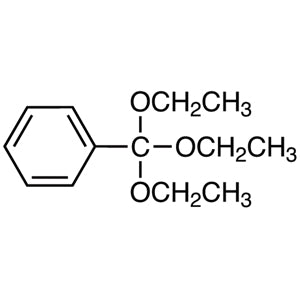
TriethylOrthobenzoate TCI T3070
Regular price From Rp 955.500,00Regular price -
TriethylOrthovalerate TCI T0977
Regular price From Rp 3.710.700,00Regular price -
TriethylOrthoacetate TCI O0105
Regular price From Rp 477.750,00Regular price -
TriethylOrthopropionate TCI O0067
Regular price From Rp 584.850,00Regular price -
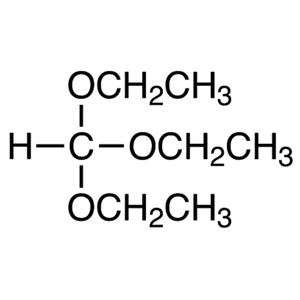
TriethylOrthoformate TCI O0066
Regular price From Rp 530.250,00Regular price -
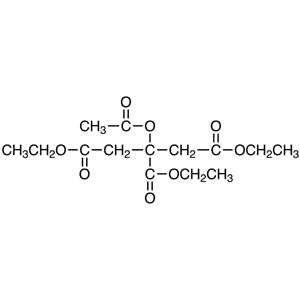
TriethylO-Acetylcitrate TCI A0086
Regular price From Rp 584.850,00Regular price -
Triethyl1,1,2-Ethanetricarboxylate TCI T2431
Regular price From Rp 743.400,00Regular price