


Triisopropyl Orthoformate from TCI (product code O0215) is an orthoester of formic acid: a compound with a single central carbon atom bonded to three isopropoxy groups. Orthoesters are versatile reagents in organic synthesis, used mainly to form acetals and ketals, in formylation reactions, and to scavenge water in moisture-sensitive reactions. In the laboratory, this material works both as an activated one-carbon source and as a way to shift reaction equilibria toward the desired product, which makes it a useful reagent for synthetic chemists.
Chemists choose this reagent because its isopropoxy groups are bulkier than the methoxy or ethoxy groups of smaller orthoformates, so it can react differently and more selectively when a synthesis calls for it. Orthoformates react with water to form a formate ester and an alcohol. This lets them bind the water released during acetalization and drive the reaction to completion. With amines, orthoformates can form formamidines or take part in heterocycle synthesis, for example of benzimidazoles. The reagent is sensitive to acid and moisture, so it must be handled correctly to stay effective.
In Indonesian laboratories, this reagent is relevant to research groups in organic synthesis and medicinal chemistry, and to teams developing synthetic routes to target compounds. University chemistry departments, pharmaceutical research units and industrial R&D laboratories may use it for protecting carbonyl groups, building heterocyclic scaffolds and carrying out water-sensitive transformations. Because the material comes from TCI, a well-known reagent brand, it is a consistent choice for teams that need reproducible results in routine and exploratory synthesis work.
TCI brochures (PDF)
- Alkylation Reagents for Ester Synthesis 2026-04-06 · p. 4
Related TCI products
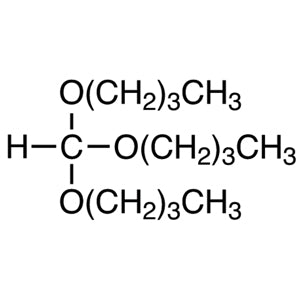
- TCI O0269 588-43-2 Tributyl Orthoformate
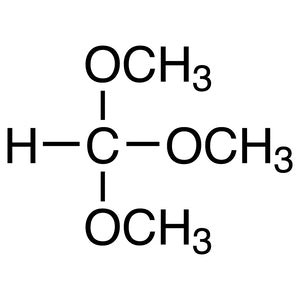
- TCI O0068 149-73-5 Trimethyl Orthoformate
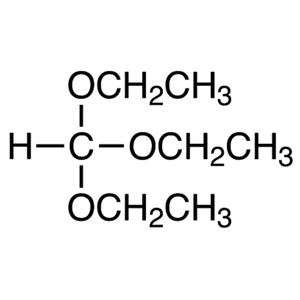
- TCI O0066 122-51-0 Triethyl Orthoformate
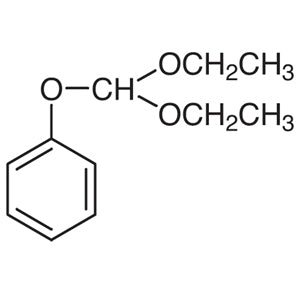
- TCI O0187 14444-77-0 Diethyl Phenyl Orthoformate
- TCI D2071 4637-24-5 N,N-Dimethylformamide Dimethyl Acetal [for Esterification]
- TCI D1595 4909-78-8 N,N-Dimethylformamide Dineopentyl Acetal [for Esterification]
- Acetal and ketal formation: the orthoester supplies the alkoxy groups and consumes the water released, pushing carbonyl protection reactions toward completion under mild acid catalysis.
- Water scavenging in moisture-sensitive reactions: because orthoformates react with water to form a formate ester and an alcohol, the reagent helps keep reaction mixtures dry and shifts equilibria toward products.
- Formylation reactions: as an activated one-carbon source, triisopropyl orthoformate can add a formyl-equivalent carbon to suitable substrates in multistep organic synthesis routes.
- Formamidine synthesis: reaction with amines can give formamidines, which are useful intermediates and functional groups in synthetic and medicinal chemistry research programs.
- Heterocycle construction, such as benzimidazoles: the orthoformate provides the single carbon needed to close the ring when it reacts with suitable diamine precursors in heterocyclic synthesis.
| Brand | TCI (product code O0215) |
|---|---|
| CAS number | 4447-60-3 |
| Molecular formula | — |
| Purity | — |
| Category | Chemistry > Building Blocks > Non-Heterocyclic Building Blocks |
| Pack sizes | available in the pack sizes offered by TCI for this product code; please check the product page for current options |
| Physical form | liquid |
| Storage | sensitive to moisture and acid; keep the container tightly sealed in a cool, dry place |
Store Triisopropyl Orthoformate in its original, tightly closed container in a cool, dry, well-ventilated area, away from moisture, acids and sources of ignition. Because the reagent reacts with water, reseal the container promptly after each use. Where possible, keep it under an inert atmosphere such as dry nitrogen or argon to preserve its reactivity. Use clean, dry glassware and syringes when dispensing it. Handle the material in a fume hood and wear appropriate personal protective equipment, including safety glasses, chemical-resistant gloves and a laboratory coat. Keep it separate from strong acids and oxidizing agents. Always read the supplier's Safety Data Sheet before use and follow your institution's chemical safety and waste disposal procedures.
—
Produk Terkait
-
TributylOrthoformate TCI O0269
Regular price Rp 3.976.350,00Regular price -
TrimethylOrthoformate TCI O0068
Regular price From Rp 477.750,00Regular price -
TriethylOrthoformate TCI O0066
Regular price From Rp 530.250,00Regular price -
DiethylPhenylOrthoformate TCI O0187
Regular price From Rp 1.776.600,00Regular price -
N,N-DimethylformamideDimethylAcetal[forEsterification] TCI D2071
Regular price Rp 1.856.400,00Regular price -
N,N-DimethylformamideDineopentylAcetal[forEsterification] TCI D1595
Regular price From Rp 1.140.300,00Regular price -
N,N-DimethylformamideDimethylAcetal[forEsterification](0.5mL*10) TCI D1332
Regular price Rp 2.068.500,00Regular price -
N,N-DimethylformamideDi-tert-butylAcetal[forEsterification] TCI D1303
Regular price From Rp 3.843.000,00Regular price
![N,N-Dimethylformamide Dimethyl Acetal [for Esterification] (CAS 4637-24-5) - TCI D2071 - AMI Scientific](http://amiscientific.com/cdn/shop/files/TCI2510D2071.jpg?v=1767104141&width=533)
![N,N-Dimethylformamide Dineopentyl Acetal [for Esterification] (CAS 4909-78-8) - TCI D1595 - AMI Scientific](http://amiscientific.com/cdn/shop/files/TCI2510D1595.jpg?v=1767103306&width=533)
![N,N-Dimethylformamide Dimethyl Acetal [for Esterification] (0.5mL*10) (CAS 4637-24-5) - TCI D1332 - AMI Scientific](http://amiscientific.com/cdn/shop/files/TCI2510D1332.jpg?v=1767102920&width=533)
![N,N-Dimethylformamide Di-tert-butyl Acetal [for Esterification] (CAS 36805-97-7) - TCI D1303 - AMI Scientific](http://amiscientific.com/cdn/shop/files/TCI2510D1303.jpg?v=1767102858&width=533)