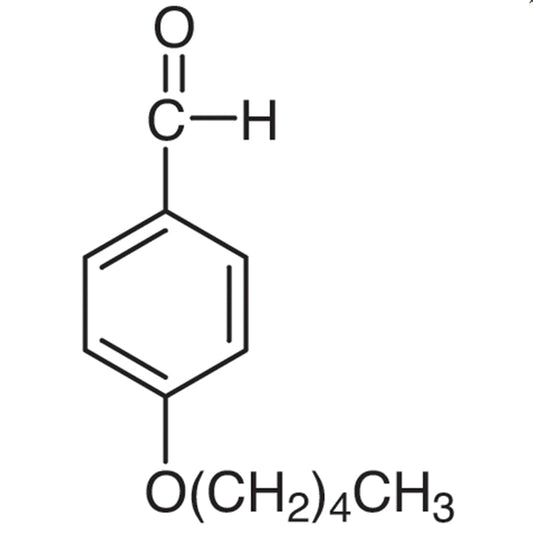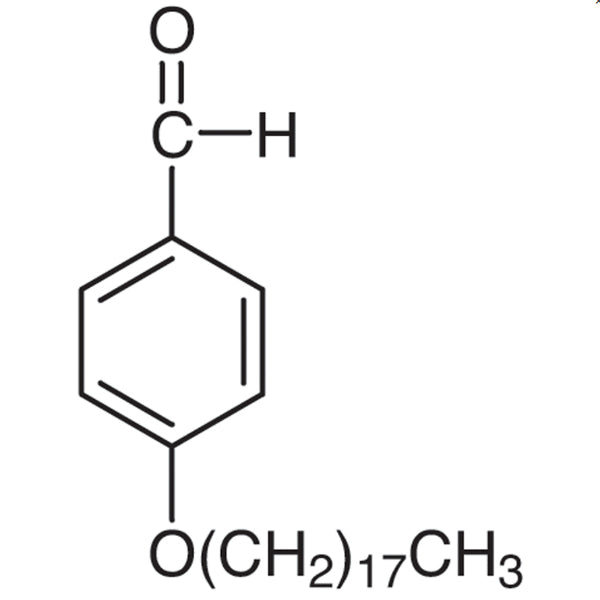
4-Octadecyloxybenzaldehyde is a chemical compound widely used as a building block in the synthesis of complex organic molecules. Its unique molecular structure features a benzaldehyde group attached to a long hydrocarbon chain, making it a versatile reagent in organic chemistry. This compound plays a crucial role in laboratory settings where the creation of functionalized molecules is required. Its reactivity and structural characteristics make it a valuable tool for researchers aiming to develop compounds with specific properties.
The compound is preferred for its low volatility and good chemical stability, which ensure consistent performance under controlled laboratory conditions. These properties contribute to its reliability in various chemical reactions, including substitution, oxidation, and sililation processes. Its ability to participate in multiple reaction types enhances its utility in synthetic chemistry, making it a go-to choice for scientists working on complex molecular designs.
In Indonesian laboratories, 4-Octadecyloxybenzaldehyde is commonly used in organic chemistry research, particularly in academic institutions and research centers. Its role in the development of bioactive and optically active compounds makes it an essential component in both educational and industrial research projects. The compound's stability and reactivity support its application in diverse chemical processes, contributing to the advancement of scientific knowledge in the region.
- Organic synthesis applications benefit from this compound’s reactivity and structural versatility, enabling the creation of complex molecules with desired properties.
- It is ideal for substitution reactions due to its benzaldehyde group, which can undergo various functional group transformations in synthetic pathways.
- Oxidation processes often utilize this compound as a starting material, allowing for the controlled introduction of oxygen functionalities into organic frameworks.
- Sililation reactions are enhanced by its ability to participate in silicon-based chemistry, supporting the development of advanced organic compounds.
- In bioactive compound research, its structural features make it a valuable tool for designing molecules with specific biological activities.
| Brand | TCI |
|---|---|
| CAS number | 4105-95-7 |
| Molecular formula | — |
| Purity | — |
| Category | Chemistry > Building Blocks > Non-Heterocyclic Building Blocks |
| Pack sizes | Available in various quantities as per supplier specifications |
| Physical form | Solid or liquid, depending on the specific product variant |
| Storage | Store in a cool, dry place away from light and moisture |
This compound should be stored in a cool, dry environment, away from direct light and moisture to maintain its chemical stability. It is recommended to use airtight containers to prevent exposure to air and contaminants. Due to its reactivity, it should be handled with appropriate personal protective equipment, such as gloves and safety goggles. In laboratory settings, it is important to ensure proper ventilation when working with this compound to minimize inhalation risks. Storage conditions should be consistent to avoid degradation and ensure the compound remains suitable for use in chemical reactions. Always follow standard laboratory safety protocols when handling and storing reactive chemicals.
—
Produk Terkait
-
4-Decyloxybenzaldehyde TCI D1124
Regular price From Rp 2.411.850,00Regular price -
4-Benzyloxybenzaldehyde TCI B1325
Regular price Rp 1.353.450,00Regular price -
4-Amyloxybenzaldehyde TCI A0707
Regular price From Rp 1.510.950,00Regular price -
4-n-Octyloxybenzaldehyde TCI O0116
Regular price Rp 5.300.400,00Regular price -
4-Heptyloxybenzaldehyde TCI H0238
Regular price Rp 4.479.300,00Regular price -
p-Anisaldehyde TCI A0480
Regular price From Rp 530.250,00Regular price -
4-BenzyloxybenzoicAcid TCI B1665
Regular price From Rp 1.485.750,00Regular price -
4-Butylbenzaldehyde TCI B1014
Regular price From Rp 3.551.100,00Regular price