![141029-75-6 4-n-Octyl-4H-dithieno[3,2-b:2',3'-d]pyrrole - AMI Scientific](http://amiscientific.com/cdn/shop/files/TCI2510O0431.jpg?v=1767131909&width=1946)
![141029-75-6 4-n-Octyl-4H-dithieno[3,2-b:2',3'-d]pyrrole - AMI Scientific](http://amiscientific.com/cdn/shop/files/TCI2510O0431.jpg?v=1767131909&width=1445)
4-n-Octyl-4H-dithieno[3,2-b:2',3'-d]pyrrole is a complex organic compound widely used in synthetic chemistry applications. This heterocyclic building block is essential for researchers working on the development of advanced materials and electronic compounds. Its unique molecular structure, consisting of two thiophene rings and one pyrrole ring, makes it a versatile tool in organic synthesis. Due to its chemical stability and reactivity, it is frequently utilized in laboratory settings for the creation of novel compounds with specific functional properties.
The compound's ability to form stable bonds with various functional groups makes it a preferred choice for chemical synthesis. Its solubility in organic solvents further enhances its utility, as it simplifies purification and reaction processes. This characteristic allows for greater flexibility in modifying molecular structures, which is crucial in the design of new materials with tailored properties. The compound’s chemical versatility supports its application in a wide range of research fields, including materials science and electronic chemistry.
In Indonesian laboratories, this compound is commonly used by chemists and material scientists for the development of new compounds with potential applications in electronics and optoelectronics. Its role in creating functional materials has made it a valuable resource for researchers seeking to innovate in these areas. The compound’s stability and reactivity make it a reliable choice for experimental work in both academic and industrial research settings.
TCI brochures (PDF)
- Thiophenes 2026-06-29 · p. 14
Related TCI products
- TCI D5587 67061-73-8 Dithieno[3,2-b:2',3'-d]thiophene-2,6-dicarboxaldehyde
- TCI D3641 3593-75-7 Dithieno[3,2-b:2',3'-d]thiophene
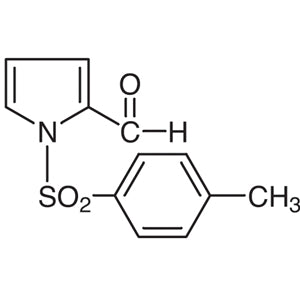
- TCI T1607 102619-05-6 1-(p-Toluenesulfonyl)pyrrole-2-carboxaldehyde
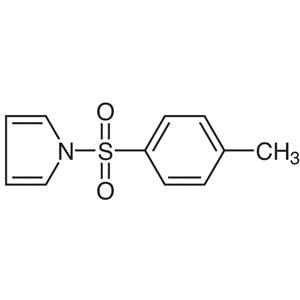
- TCI T1386 17639-64-4 1-(p-Toluenesulfonyl)pyrrole
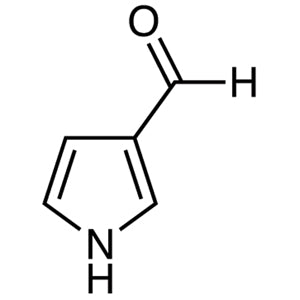
- TCI P2728 7126-39-8 Pyrrole-3-carboxaldehyde
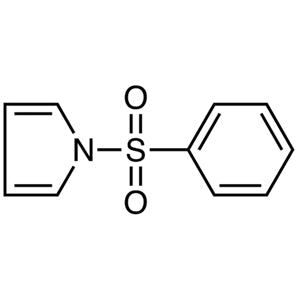
- TCI P2095 16851-82-4 1-(Phenylsulfonyl)pyrrole
- Organic synthesis research benefits from this compound's unique heterocyclic structure, enabling the creation of advanced functional materials.
- Material development projects utilize its reactivity and solubility for the synthesis of electronic compounds with tailored properties.
- Electronic material research leverages its chemical stability and bonding versatility for the design of novel conductive materials.
- Optoelectronic compound development relies on its ability to form stable functional groups, enhancing material performance.
- Chemical modification experiments take advantage of its flexibility in molecular structure, allowing for diverse synthetic pathways.
| Brand | TCI |
|---|---|
| CAS number | 141029-75-6 |
| Molecular formula | — |
| Purity | — |
| Category | Chemistry > Building Blocks > Heterocyclic Building Blocks |
| Pack sizes | Available in various quantities as per supplier specifications |
| Physical form | Solid or liquid, depending on the specific product variant |
| Storage | Store in a cool, dry place away from direct sunlight and moisture |
This compound should be stored in a cool, dry environment, away from direct sunlight and moisture to maintain its chemical stability. It is recommended to use airtight containers made of glass or high-density polyethylene to prevent contamination and degradation. When handling, it is important to wear appropriate personal protective equipment, including gloves and safety goggles, to avoid direct contact. Due to its reactivity, it should be kept separate from strong oxidizing agents and incompatible substances. Proper ventilation is essential during handling to minimize exposure to vapors. Regular inspection of storage conditions ensures the compound remains in optimal condition for laboratory use.
—
Produk Terkait
-
Dithieno[3,2-b:2',3'-d]thiophene-2,6-dicarboxaldehyde TCI D5587
Regular price Rp 6.201.300,00Regular price -
Dithieno[3,2-b:2',3'-d]thiophene TCI D3641
Regular price From Rp 2.677.500,00Regular price -
1-(p-Toluenesulfonyl)pyrrole-2-carboxaldehyde TCI T1607
Regular price Rp 4.268.250,00Regular price -
1-(p-Toluenesulfonyl)pyrrole TCI T1386
Regular price Rp 1.140.300,00Regular price -
Pyrrole-3-carboxaldehyde TCI P2728
Regular price From Rp 795.900,00Regular price -
1-(Phenylsulfonyl)pyrrole TCI P2095
Regular price From Rp 743.400,00Regular price -
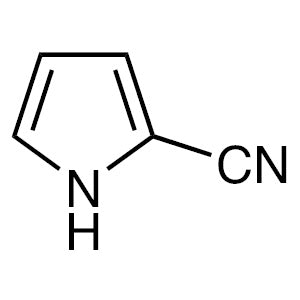
1H-Pyrrole-2-carbonitrile TCI P1926
Regular price From Rp 1.353.450,00Regular price -
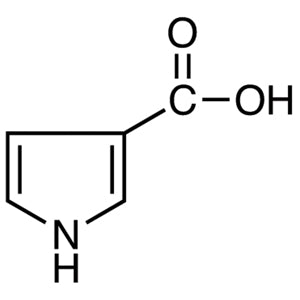
Pyrrole-3-carboxylicAcid TCI P1899
Regular price Rp 2.916.900,00Regular price
![Dithieno[3,2-b:2',3'-d]thiophene-2,6-dicarboxaldehyde (CAS 67061-73-8) - TCI D5587 - AMI Scientific](http://amiscientific.com/cdn/shop/files/TCI2510D5587.jpg?v=1767108928&width=533)
![Dithieno[3,2-b:2',3'-d]thiophene (CAS 3593-75-7) - TCI D3641 - AMI Scientific](http://amiscientific.com/cdn/shop/files/TCI2510D3641.jpg?v=1767106350&width=533)