

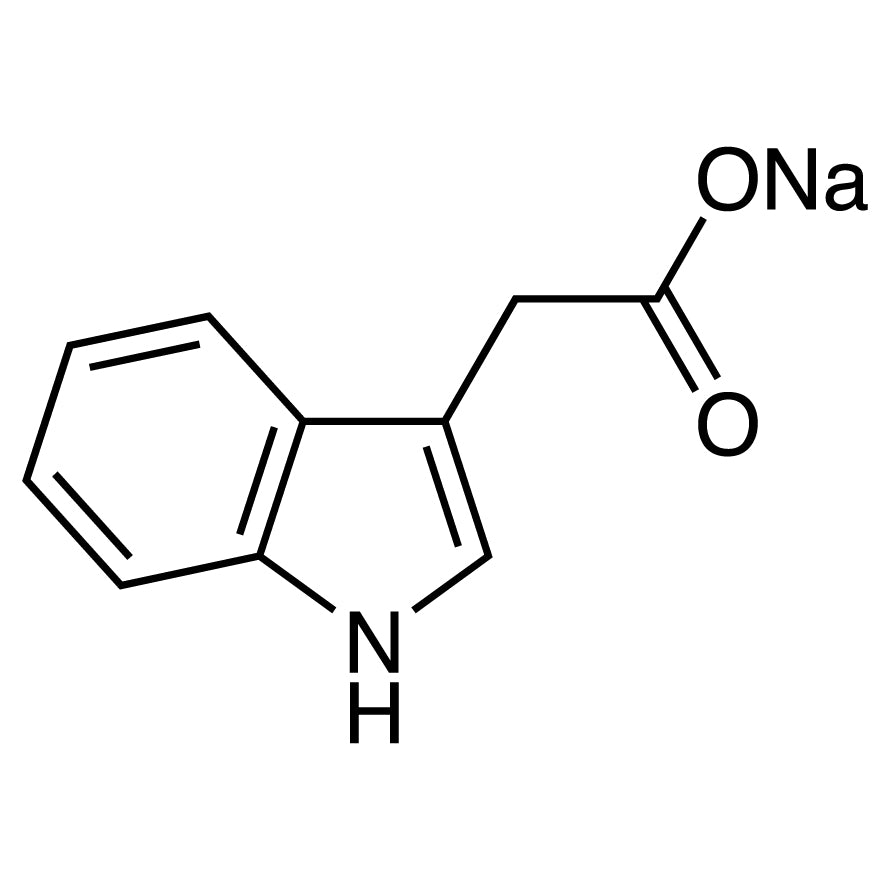
Sodium 2-(1H-Indol-3-yl)acetate is a chemical compound widely used in biotechnology research, particularly in plant-related studies. This compound plays a crucial role in laboratory settings by acting as a growth regulator, supporting various biological processes in plant development. It is commonly employed in tissue culture and plant propagation techniques, helping to enhance the efficiency and success rate of these procedures. Its ability to influence plant growth and development makes it an essential tool for researchers aiming to optimize plant growth conditions and improve agricultural outcomes.
The compound is chemically stable and water-soluble, which makes it easy to handle and integrate into different experimental setups. These properties contribute to its popularity among scientists working in plant biotechnology. Its solid form and compatibility with various biological substrates further enhance its usability in laboratory environments. The stability and solubility of Sodium 2-(1H-Indol-3-yl)acetate ensure consistent results and reliable performance in experiments, making it a preferred choice for researchers.
In Indonesian laboratories, Sodium 2-(1H-Indol-3-yl)acetate is frequently used in plant tissue culture, disease-resistant variety development, and agricultural productivity enhancement. Its role in studying the effects of chemical compounds on cell growth and differentiation makes it a valuable resource for both academic and applied research in biotechnology and agriculture.
TCI brochures (PDF)
- Agrochemical Ingredients for Research and Experimental Use 2026-01-08 · p. 7
- Plant Research Reagents 2026-02-24 · p. 13
Related TCI products
- TCI O0518 1917-97-1 Octan-2-yl (2,4-Dichlorophenoxy)acetate
- TCI M2605 1912-33-0 Methyl Indole-3-acetate
- TCI D6084 1928-38-7 Methyl (2,4-Dichlorophenoxy)acetate
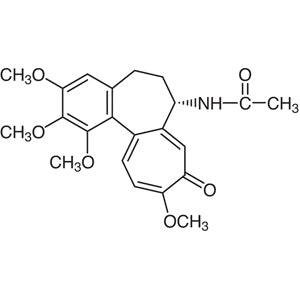
- TCI C0380 64-86-8 Colchicine (contains 5% Ethyl Acetate at maximum)
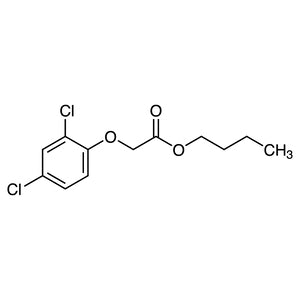
- TCI B6492 94-80-4 Butyl 2-(2,4-Dichlorophenoxy)acetate
- TCI T4294 63666-10-4 3-(1,1,2-Trimethyl-1H-benzo[e]indol-3-ium-3-yl)propane-1-sulfonate
- Plant Tissue Culture: This compound is ideal for promoting cell growth and differentiation in plant tissue culture, supporting the development of new plant varieties.
- Disease-Resistant Variety Development: It aids in the study of how chemical treatments can enhance plant resistance to pathogens, contributing to the creation of more resilient crops.
- Agricultural Productivity Enhancement: Researchers use it to optimize growth conditions and improve yield in various crops, supporting sustainable farming practices.
- Cell Differentiation Studies: Its ability to influence cellular processes makes it a key component in experiments examining how chemical signals affect plant cell development.
- Genetic Transformation Experiments: It supports the growth of transformed plant cells, facilitating the study of genetic modifications in plant biotechnology.
| Brand | TCI |
|---|---|
| CAS number | 6505-45-9 |
| Molecular formula | — |
| Purity | — |
| Category | Life Science > Molecular Biology > Plant Biotechnology |
| Pack sizes | Available in various quantities to suit different research needs |
| Physical form | Solid |
| Storage | Store in a cool, dry place away from direct sunlight |
Sodium 2-(1H-Indol-3-yl)acetate should be stored in a cool, dry place, away from direct sunlight and sources of heat. It is recommended to use airtight containers to prevent moisture absorption, which could affect its stability. Due to its water solubility, it should be handled with care to avoid contamination. In laboratory settings, it is important to maintain proper ventilation when working with this compound to ensure safe handling. Always follow standard laboratory safety protocols, including the use of personal protective equipment, to minimize exposure and ensure a safe working environment.
—
Product Categories
Produk Terkait
-
Octan-2-yl(2,4-Dichlorophenoxy)acetate TCI O0518
Regular price From Rp 2.227.050,00Regular price -
MethylIndole-3-acetate TCI M2605
Regular price From Rp 2.094.750,00Regular price -
Methyl(2,4-Dichlorophenoxy)acetate TCI D6084
Regular price From Rp 2.306.850,00Regular price -
Colchicine(contains5%EthylAcetateatmaximum) TCI C0380
Regular price From Rp 1.246.350,00Regular price -
Butyl2-(2,4-Dichlorophenoxy)acetate TCI B6492
Regular price Rp 2.969.400,00Regular price -
3-(1,1,2-Trimethyl-1H-benzo[e]indol-3-ium-3-yl)propane-1-sulfonate TCI T4294
Regular price From Rp 505.050,00Regular price -
4-(1,1,2-Trimethyl-1H-benzo[e]indol-3-ium-3-yl)butane-1-sulfonate TCI T4291
Regular price From Rp 505.050,00Regular price -
1,3,3-Trimethyl-2-[3-(1,3,3-trimethylindolin-2-ylidene)prop-1-en-1-yl]-3H-indol-1-iumIodide TCI T4273
Regular price From Rp 980.700,00Regular price


![63666-10-4 3-(1,1,2-Trimethyl-1H-benzo[e]indol-3-ium-3-yl)propane-1-sulfonate - AMI Scientific](http://amiscientific.com/cdn/shop/files/TCI2510T4294.jpg?v=1767145030&width=533)
![63149-24-6 4-(1,1,2-Trimethyl-1H-benzo[e]indol-3-ium-3-yl)butane-1-sulfonate - AMI Scientific](http://amiscientific.com/cdn/shop/files/TCI2510T4291.jpg?v=1767145022&width=533)
![25470-94-4 1,3,3-Trimethyl-2-[3-(1,3,3-trimethylindolin-2-ylidene)prop-1-en-1-yl]-3H-indol-1-ium Iodide - AMI Scientific](http://amiscientific.com/cdn/shop/files/TCI2510T4273.jpg?v=1771058870&width=533)