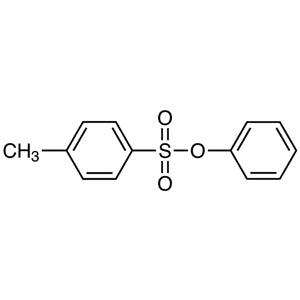
Phenyl p-Toluenesulfonate (PPTS) is a chemical compound widely utilized in laboratory settings as a key building block in organic synthesis. It serves as a versatile reagent for various chemical reactions, particularly in the formation of complex organic molecules. Its molecular structure enables it to participate effectively in electrophilic substitution reactions, making it a valuable tool for chemists working on synthetic pathways. PPTS is commonly used in both research and educational environments due to its reactivity and utility in diverse chemical processes.
The chemical properties of PPTS make it a preferred choice for laboratory applications. It exhibits stability under certain conditions while maintaining high reactivity towards electrophilic compounds. This balance allows it to be used in reactions requiring both precision and efficiency. Its solubility in organic solvents such as ethyl acetate and chloroform further enhances its usability, simplifying the preparation and execution of chemical experiments. These characteristics contribute to its widespread adoption in both academic and industrial research.
In Indonesian laboratories, PPTS is frequently employed in organic chemistry research, especially in the synthesis of complex compounds, drug development, and chemical analysis. It is also a common material in university-level chemistry courses, where it is used for practical experiments to teach fundamental chemical reaction mechanisms and synthesis techniques.
Related TCI products
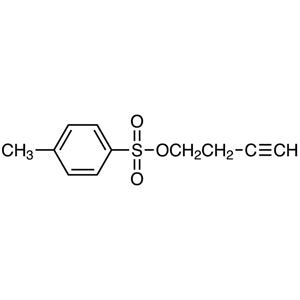
- TCI T2046 23418-85-1 3-Butynyl p-Toluenesulfonate
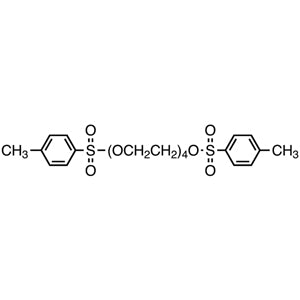
- TCI T1493 37860-51-8 Tetraethylene Glycol Bis(p-toluenesulfonate)
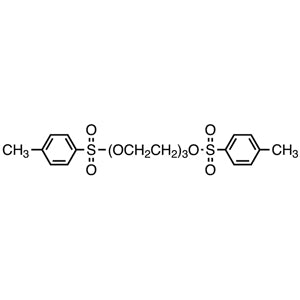
- TCI T1488 19249-03-7 Triethylene Glycol Bis(p-toluenesulfonate)
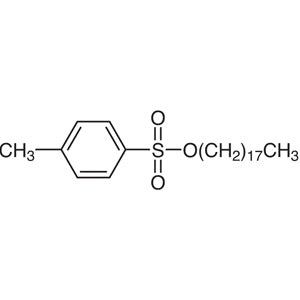
- TCI T1471 3386-32-1 Octadecyl p-Toluenesulfonate
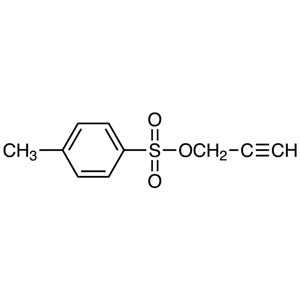
- TCI T1455 6165-76-0 Propargyl p-Toluenesulfonate
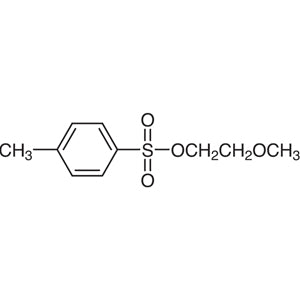
- TCI T1303 17178-10-8 2-Methoxyethyl p-Toluenesulfonate
- Organic synthesis is a primary application where PPTS is used to facilitate the formation of complex organic molecules through electrophilic substitution reactions.
- Drug development benefits from PPTS as it is involved in the synthesis of various pharmaceutical compounds and intermediates.
- Chemical analysis utilizes PPTS in reaction processes that require precise and controlled chemical transformations for accurate results.
- University-level chemistry education incorporates PPTS in practical experiments to demonstrate reaction mechanisms and synthetic techniques.
- Industrial research employs PPTS for its reactivity and versatility in creating new chemical compounds and materials.
| Brand | TCI |
|---|---|
| CAS number | 640-60-8 |
| Molecular formula | — |
| Purity | — |
| Category | Chemistry > Building Blocks > Non-Heterocyclic Building Blocks |
| Pack sizes | Available in various quantities as per supplier specifications |
| Physical form | Solid |
| Storage | Store in a cool, dry place away from moisture and direct sunlight |
PPTS should be stored in a cool, dry environment to maintain its chemical stability and prevent degradation. It is recommended to keep it in airtight containers to minimize exposure to moisture and air, which can affect its reactivity. Due to its chemical nature, it should be handled with appropriate personal protective equipment, such as gloves and safety goggles, to ensure laboratory safety. Storage away from incompatible substances is essential to prevent unwanted reactions. Proper labeling of containers is also important for safe handling and identification. Regular inspection of storage conditions ensures the material remains suitable for use in laboratory applications.
—
Produk Terkait
-
3-Butynylp-Toluenesulfonate TCI T2046
Regular price Rp 2.068.500,00Regular price -
TetraethyleneGlycolBis(p-toluenesulfonate) TCI T1493
Regular price Rp 3.949.050,00Regular price -
TriethyleneGlycolBis(p-toluenesulfonate) TCI T1488
Regular price From Rp 1.167.600,00Regular price -
Octadecylp-Toluenesulfonate TCI T1471
Regular price Rp 3.100.650,00Regular price -
Propargylp-Toluenesulfonate TCI T1455
Regular price Rp 2.995.650,00Regular price -
2-Methoxyethylp-Toluenesulfonate TCI T1303
Regular price From Rp 1.856.400,00Regular price -
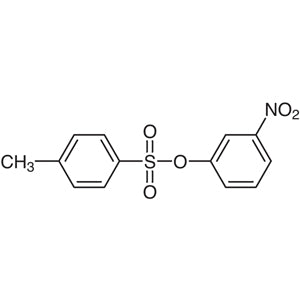
3-Nitrophenylp-Toluenesulfonate TCI T1210
Regular price Rp 4.611.600,00Regular price -
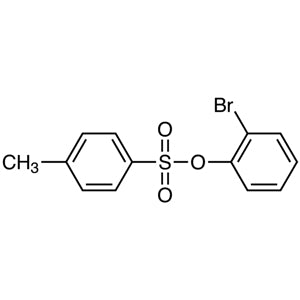
2-Bromophenylp-Toluenesulfonate TCI B4528
Regular price From Rp 1.353.450,00Regular price