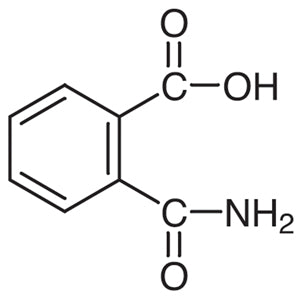
Phthalamic Acid (88-97-1) is a versatile chemical compound widely used in laboratory settings for its ability to participate in various chemical reactions. As a fundamental building block in organic chemistry, it serves as a key reagent in the synthesis of complex molecules. Its structural stability and moderate reactivity make it a reliable choice for chemists working on diverse projects. This compound is commonly found in both academic and industrial research environments due to its broad applicability and predictable behavior in chemical processes.
Phthalamic Acid is valued for its chemical neutrality and solubility in common organic solvents such as ethyl acetate and ethanol. These properties enhance its usability in a variety of experimental setups, making it easy to handle and incorporate into different reaction protocols. Its ability to undergo substitution reactions and interact with functional groups makes it an essential component in the development of new compounds. The compound’s stability and compatibility with various reagents further contribute to its popularity among laboratory professionals.
In Indonesian laboratories, Phthalamic Acid is frequently used in esterification reactions, heterocyclic compound synthesis, and industrial chemical production. It is a staple in both research and teaching labs due to its reliability and ease of use. Its role in supporting chemical synthesis and experimentation makes it an indispensable material for chemists in Indonesia. The compound’s predictable behavior and compatibility with standard laboratory procedures ensure its continued use in various scientific applications.
Related TCI products
- TCI N0067 132-66-1 N-(1-Naphthyl)phthalamic Acid
- TCI T1768 6051-43-0 Terephthalamic Acid
- TCI A2169 31127-80-7 5-Acetamido-N,N'-bis(2,3-dihydroxypropyl)-2,4,6-triiodoisophthalamide
- TCI A1951 203515-86-0 5-Amino-N,N'-bis(2,3-dihydroxypropyl)isophthalamide Hydrochloride
- TCI T0013 3010-82-0 Terephthalamide
- TCI P0283 88-96-0 Phthalamide
- Esterification Reactions: Phthalamic Acid is ideal for esterification due to its ability to form ester bonds with carboxylic acids, making it a valuable reagent in organic synthesis.
- Heterocyclic Compound Synthesis: Its structural versatility allows it to participate in the formation of heterocyclic rings, which are essential in pharmaceutical and medicinal chemistry.
- Industrial Chemical Production: The compound’s solubility and reactivity make it suitable for large-scale chemical manufacturing processes.
- Teaching Laboratory Experiments: Its stability and predictable behavior make it a preferred choice for educational purposes in undergraduate and graduate chemistry courses.
- Functional Group Manipulation: Phthalamic Acid’s ability to undergo substitution reactions makes it useful in modifying molecular structures during synthetic processes.
| Brand | TCI |
|---|---|
| CAS number | 88-97-1 |
| Molecular formula | — |
| Purity | — |
| Category | Chemistry > Building Blocks > Non-Heterocyclic Building Blocks |
| Pack sizes | Available in various quantities as per standard laboratory supply sizes |
| Physical form | Solid |
| Storage | Store in a cool, dry place away from direct sunlight |
Phthalamic Acid should be stored in a cool, dry environment to maintain its chemical stability and prevent degradation. It is recommended to use airtight containers to minimize exposure to moisture and air, which could affect its reactivity. Due to its chemical neutrality, it does not require special handling beyond standard laboratory safety protocols. When working with this compound, it is important to use appropriate personal protective equipment, such as gloves and safety goggles, to ensure safe handling. Its solubility in organic solvents means it should be handled in well-ventilated areas to avoid inhalation of vapors. Proper storage and handling practices help ensure the compound remains effective and safe for use in laboratory applications.
—
Produk Terkait
-
N-(1-Naphthyl)phthalamicAcid TCI N0067
Regular price Rp 6.386.100,00Regular price -
TerephthalamicAcid TCI T1768
Regular price From Rp 3.976.350,00Regular price -
5-Acetamido-N,N'-bis(2,3-dihydroxypropyl)-2,4,6-triiodoisophthalamide TCI A2169
Regular price Rp 7.473.900,00Regular price -
5-Amino-N,N'-bis(2,3-dihydroxypropyl)isophthalamideHydrochloride TCI A1951
Regular price Rp 2.279.550,00Regular price -
Terephthalamide TCI T0013
Regular price From Rp 2.809.800,00Regular price -
Phthalamide TCI P0283
Regular price From Rp 848.400,00Regular price -
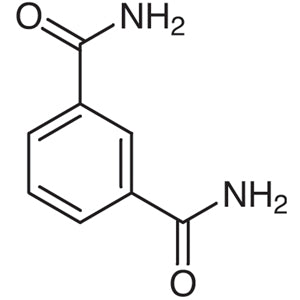
Isophthalamide TCI I0152
Regular price Rp 1.988.700,00Regular price -
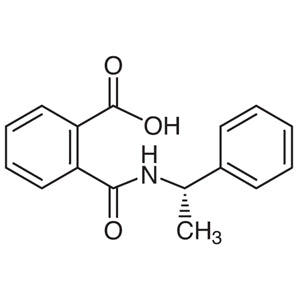
(S)-(-)-N-(alpha-Methylbenzyl)phthalamicAcid TCI M0824
Regular price Rp 1.140.300,00Regular price