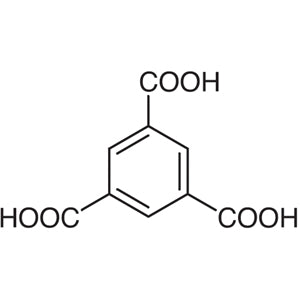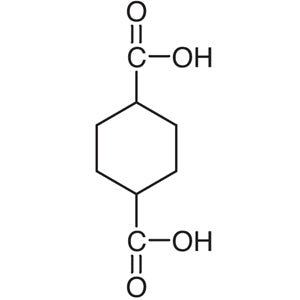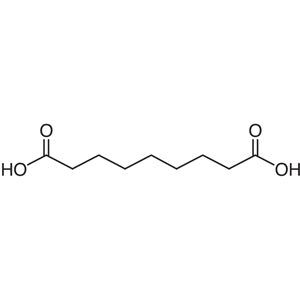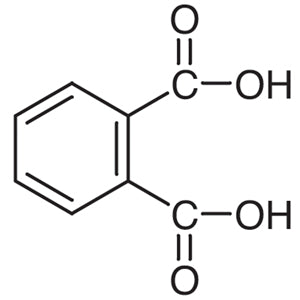
Phthalic Acid (TCI P0287, CAS 88-99-3) is a fundamental chemical compound widely used in laboratory settings for its versatility and reactivity. It serves as a key building block in organic synthesis, particularly in the formation of esters and anhydrides. Its simple molecular structure enables it to participate in various chemical reactions, making it essential for both research and educational purposes. Phthalic Acid is commonly found in chemical laboratories, where it is used in the development of dyes, resins, and polymers. Its role extends to the synthesis of heterocyclic compounds, contributing to the advancement of chemical sciences.
Phthalic Acid is valued for its chemical stability and moderate reactivity, which allows it to be a reliable reagent in multiple experimental conditions. It does not readily decompose under normal storage conditions, ensuring long-term usability and ease of handling. Its availability in various packaging formats further enhances its accessibility for both small-scale experiments and larger industrial applications. This combination of stability and reactivity makes it a preferred choice for chemists seeking a dependable and versatile compound for their experiments.
In Indonesian laboratories, Phthalic Acid is frequently used in chemical research, educational institutions, and industrial applications. It plays a crucial role in teaching fundamental chemical reactions and in the development of complex organic compounds. Its presence in both academic and industrial settings underscores its importance as a foundational material in the chemical sciences.
TCI brochures (PDF)
- Organic Linker Molecules for Metal Organic Frameworks (MOFs) 2026-05-11 · p. 3
- Biomaterials Research Reagents 2025-02-19 · p. 22
- Monomers 2025-05-28 · p. 35
Related TCI products
- TCI A0088 142-45-0 Acetylenedicarboxylic Acid
- TCI B0043 554-95-0 1,3,5-Benzenetricarboxylic Acid
- TCI I0155 121-91-5 Isophthalic Acid
- TCI C0856 3724-52-5 1,2,3,4-Cyclopentanetetracarboxylic Acid
- TCI C0788 1076-97-7 1,4-Cyclohexanedicarboxylic Acid (cis- and trans- mixture)
- TCI A0127 4023-65-8 trans-Aconitic Acid
- Organic synthesis is a primary application where Phthalic Acid is used to create esters and anhydrides due to its reactivity and structural versatility.
- Dye and pigment production benefits from Phthalic Acid's role in forming stable compounds that are essential for color development.
- Polymer manufacturing utilizes Phthalic Acid as a component in resin and polymer formulations, enhancing material properties.
- Educational laboratories use Phthalic Acid to demonstrate basic chemical reactions and teach students about organic chemistry fundamentals.
- Industrial research applications rely on Phthalic Acid for developing new materials and chemical processes in various sectors.
| Brand | TCI |
|---|---|
| CAS number | 88-99-3 |
| Molecular formula | — |
| Purity | — |
| Category | Chemistry > Building Blocks > Non-Heterocyclic Building Blocks |
| Pack sizes | Available in various sizes to suit different experimental needs |
| Physical form | Solid |
| Storage | Store in a cool, dry place away from direct sunlight and moisture |
Phthalic Acid should be stored in a cool, dry environment to maintain its chemical stability and prevent degradation. It is recommended to keep it in airtight containers to avoid moisture exposure, which could affect its properties. Suitable storage conditions include a controlled temperature range to ensure long-term usability. In laboratory settings, it is important to handle Phthalic Acid with care, using appropriate personal protective equipment to ensure safety. Proper labeling and storage practices help maintain the integrity of the compound and ensure safe handling in both educational and industrial environments.
—
Product Categories
- Organic-Inorganic Hybrid MaterialsMetal Organic Frameworks (MOF) and Their Raw MaterialsOrganic Linker Molecules [Metal Organic Frameworks (MOFs) Precursors]
- Polymer/Macromolecule ReagentsMetal Organic Frameworks (MOF) and Their Raw MaterialsOrganic Linker Molecules [Metal Organic Frameworks (MOFs) Precursors]
- Polymer/Macromolecule ReagentsMonomersDicarboxylic Acid Monomers
- Biomaterials/Biocompatible Materials Research ReagentsMonomers and Macromonomers [Biomaterials/Biocompatible Materials Research Reagents]Dicarboxylic Acid Monomers [Biomaterials/Biocompatible Materials Research Reagents]
Produk Terkait
-
AcetylenedicarboxylicAcid TCI A0088
Regular price From Rp 1.220.100,00Regular priceRp 868.350,00Sale price From Rp 1.220.100,00 -
1,3,5-BenzenetricarboxylicAcid TCI B0043
Regular price From Rp 1.035.300,00Regular priceRp 723.450,00Sale price From Rp 1.035.300,00 -
IsophthalicAcid TCI I0155
Regular price From Rp 477.750,00Regular priceRp 333.900,00Sale price From Rp 477.750,00 -
1,2,3,4-CyclopentanetetracarboxylicAcid TCI C0856
Regular price Rp 1.167.600,00Regular priceRp 815.850,00Sale price Rp 1.167.600,00 -
1,4-CyclohexanedicarboxylicAcid(cis-andtrans-mixture) TCI C0788
Regular price Rp 743.400,00Regular priceRp 519.750,00Sale price Rp 743.400,00 -
trans-AconiticAcid TCI A0127
Regular price From Rp 2.121.000,00Regular priceRp 1.498.350,00Sale price From Rp 2.121.000,00 -
AzelaicAcid TCI A0561
Regular price From Rp 557.550,00Regular priceRp 405.300,00Sale price From Rp 557.550,00 -
AdipicAcid TCI A0161
Regular price From Rp 452.550,00Regular priceRp 316.050,00Sale price From Rp 452.550,00