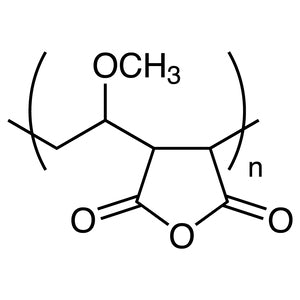
Poly(vinyl Alcohol) or PVA is a synthetic polymer widely used in both scientific and industrial applications. As a versatile material, it plays a crucial role in laboratories by serving as a reagent in chemical synthesis, coating agents, and as a component in composite materials. Its molecular structure allows for controlled physical properties, making it adaptable to various experimental needs. In research settings, PVA is valued for its ability to form stable aqueous solutions and its high hydrophilicity, which facilitates ease of handling and integration into different experimental protocols.
The properties that make PVA a preferred choice include its high hydrophilicity, which enables it to dissolve easily in water and form stable solutions. Additionally, its strong intermolecular bonds provide mechanical strength, making it suitable for applications requiring durability. PVA also exhibits good thermal stability, allowing it to maintain its properties under controlled laboratory conditions. These characteristics make it an essential material for a wide range of experiments, particularly in material science and environmental research.
In Indonesian laboratories, PVA is commonly used in chemical material research, industrial product development, and material testing. Its environmental friendliness and flexibility in application make it a popular choice for researchers in both academic and industrial settings. Its reliability and consistent performance contribute to its widespread use in various scientific disciplines.
TCI brochures (PDF)
- Biomaterials Research Reagents 2025-02-19 · p. 4
Related TCI products
- TCI P0804 9002-89-5 Poly(vinyl Alcohol) (n=approx. 2000) (degree of saponification ca. 80mol%)
- TCI P3007 9011-16-9 Poly(methyl vinyl ether-alt-maleic anhydride) (specific viscosity 27-39)
- TCI P3006 9011-16-9 Poly(methyl vinyl ether-alt-maleic anhydride) (specific viscosity 10-15)
- TCI P2884 9011-16-9 Poly(methyl vinyl ether-alt-maleic anhydride) (specific viscosity 01-05)
- TCI P0385 25086-89-9 Poly(1-vinylpyrrolidone-co-Vinyl Acetate) (Copolymer, 3:7) (50% in Ethanol)
- TCI P0382 25086-89-9 Poly(1-vinylpyrrolidone-co-Vinyl Acetate) (Copolymer, 7:3) (50% in Ethanol)
- Mechanical property testing of materials due to its strong intermolecular bonds and durability.
- Coating applications in material science for creating thin films and protective layers.
- Chemical synthesis processes as a reagent or binder in polymer-based reactions.
- Environmental research projects for biodegradable material development and pollution control.
- Industrial product development for creating composite materials and packaging solutions.
| Brand | TCI |
|---|---|
| CAS number | 9002-89-5 |
| Molecular formula | — |
| Purity | — |
| Category | Materials Science > Polymer/Macromolecule Reagents > Polymers |
| Pack sizes | Available in various quantities as per standard laboratory supply |
| Physical form | White powder or granules |
| Storage | Store in a cool, dry place away from direct sunlight |
PVA should be stored in a cool, dry environment to maintain its integrity and prevent degradation. It is recommended to use sealed containers to protect it from moisture and contaminants. Due to its hydrophilic nature, exposure to humidity can affect its performance. Always handle PVA with appropriate personal protective equipment to ensure safety. It is important to keep it away from incompatible substances and ensure proper ventilation in the laboratory. Regular inspection of storage conditions will help maintain the quality and usability of the material.
—
Produk Terkait
-
Poly(vinylAlcohol)(n=approx.2000)(degreeofsaponificationca.80mol%) TCI P0804
Regular price From Rp 477.750,00Regular price -
Poly(methylvinylether-alt-maleicanhydride)(specificviscosity27-39) TCI P3007
Regular price From Rp 2.174.550,00Regular price -
Poly(methylvinylether-alt-maleicanhydride)(specificviscosity10-15) TCI P3006
Regular price From Rp 2.174.550,00Regular price -
Poly(methylvinylether-alt-maleicanhydride)(specificviscosity01-05) TCI P2884
Regular price From Rp 1.565.550,00Regular price -
Poly(1-vinylpyrrolidone-co-VinylAcetate)(Copolymer,3:7)(50%inEthanol) TCI P0385
Regular price From Rp 557.550,00Regular price -
Poly(1-vinylpyrrolidone-co-VinylAcetate)(Copolymer,7:3)(50%inEthanol) TCI P0382
Regular price From Rp 557.550,00Regular price -
ULTROXA(regR)Poly(2-methyl-2-oxazoline)AmineTerminated(n=approx.50) TCI U0135
Regular price Rp 4.797.450,00Regular price -
ULTROXA(regR)Poly(2-methyl-2-oxazoline)AzideTerminated(n=approx50) TCI U0134
Regular price From Rp 2.625.000,00Regular price