Protamine Sulfate from Salmon sperm from TCI (product code P0675) is the sulfate salt of protamine, a small and strongly basic protein rich in arginine residues. The protein is obtained from salmon sperm. In nature, protamine packs DNA tightly inside the sperm cell nucleus. In the laboratory, its polycationic character is used to bind negatively charged molecules such as heparin, DNA, and RNA. This makes protamine an important reagent in biochemistry, molecular biology, and drug delivery research, where controlled binding of polyanions is often needed.
Its high arginine content gives protamine a strong positive charge at physiological pH. This property is why it forms stable electrostatic complexes with polyanions, and that ability is the basis of its main laboratory uses. Researchers use it to neutralise heparin activity in coagulation assays, to precipitate nucleic acids from cell extracts, and to help complex DNA in transfection studies. The sulfate salt form is widely used because it dissolves easily in water or buffer, so preparing working solutions is simple. These traits make it a practical and versatile choice for many protocols that involve charged biomolecules.
In Indonesian laboratories, Protamine Sulfate is relevant to molecular biology laboratories at universities and research institutions. It is also useful for pharmaceutical laboratories that study nanoparticles and gene delivery systems, and for research groups that run coagulation and heparin-related assays. AMI Scientific supplies this TCI reagent to support academic teaching, applied research, and product development. Users can rely on consistent brand sourcing when they plan long-term experiments or repeat established protocols across projects.
- Heparin neutralisation in coagulation assays: the strong positive charge of protamine binds heparin electrostatically, which reverses its anticoagulant activity under controlled experimental conditions.
- Nucleic acid precipitation from cell extracts: protamine forms stable complexes with negatively charged DNA and RNA, so these can be separated from other components of crude cell lysates.
- DNA complexation in transfection studies: its polycationic nature helps condense and complex DNA, which supports research into how genetic material is delivered into cells.
- Nanoparticle and gene delivery research: pharmaceutical laboratories use protamine's ability to bind polyanions when they design and study delivery systems for nucleic acids and other charged cargo.
- General biochemistry of polyanion interactions: as a well-characterised, arginine-rich basic protein, it is a useful model reagent for studying electrostatic binding between proteins and negatively charged biomolecules.
| Brand | TCI (product code P0675) |
|---|---|
| CAS number | 53597-25-4 |
| Molecular formula | — |
| Purity | — |
| Category | Life Science > Biochemicals and Reagents > Proteins and Derivatives |
| Pack sizes | available in TCI standard pack sizes; please confirm availability with AMI Scientific |
| Physical form | — |
| Storage | follow the conditions stated on the TCI label and Safety Data Sheet |
- Source: salmon sperm; sulfate salt of protamine
Store Protamine Sulfate in its original, tightly closed TCI container. Follow the storage conditions given on the product label and Safety Data Sheet. Protect the material from moisture, heat, and direct light, and close the container right after each use. Prepare working solutions in water or a suitable buffer as needed, and label them clearly with the contents and preparation date. Handle the product according to good laboratory practice: wear gloves, a laboratory coat, and eye protection, avoid creating dust or touching it with bare skin, and work in a clean area so biological samples are not contaminated. Dispose of waste in line with institutional and local regulations.
—
Produk Terkait
-
TCI B5774 5,10-Bis(4,4,5,5-tetramethyl-1,3,2-dioxaborolan-2-yl)naphtho[1,2-c:5,6-c']bis([1,2,5]oxadiazole)
Regular price Rp 10.255.350,00Regular price -
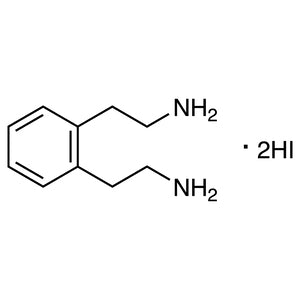
Dihydroiodide TCI B6569
Regular price From Rp 1.936.200,00Regular price -
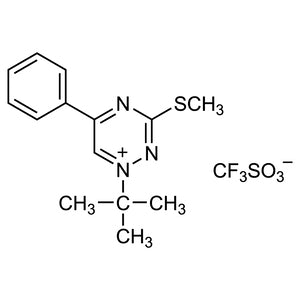
Trifluoromethanesulfonate TCI B7003
Regular price From Rp 1.936.200,00Regular price
![5,10-Bis(4,4,5,5-tetramethyl-1,3,2-dioxaborolan-2-yl)naphtho[1,2-c:5,6-c']bis([1,2,5]oxadiazole) - TCI B5774 - AMI Scientific](http://amiscientific.com/cdn/shop/files/TCI2510B5774.jpg?v=1769180228&width=533)