

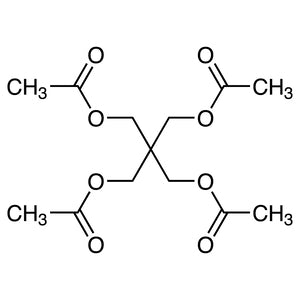
Pentaerythritol Tetraacetate (PET) is a chemical compound widely used in laboratory applications, particularly in the synthesis of organic compounds. As a building block, PET provides a stable molecular structure that serves as a precursor for the creation of more complex chemical structures. Its versatility makes it an essential material in chemical research, where precise control over molecular composition is crucial. This compound is commonly utilized in both academic and industrial laboratory settings due to its reliability and consistency in chemical reactions.
The properties of PET make it a preferred choice for laboratory use. It exhibits excellent chemical stability and can interact with various reagents under controlled conditions, making it ideal for reactions requiring structural integrity. Its resistance to degradation under normal conditions ensures a longer shelf life and minimizes the risk of contamination. Additionally, PET dissolves well in organic solvents, facilitating easy mixing and reaction processes. These characteristics contribute to its popularity among chemists working in diverse research environments.
In Indonesian laboratories, PET is frequently used in chemical synthesis and research projects. Its reliability and predictable behavior make it a go-to material for scientists aiming to achieve consistent results. The compound's stability and solubility properties are particularly valued in applications that require precise and repeatable chemical reactions. Its widespread use reflects its importance in both educational and industrial chemical research in Indonesia.
TCI brochures (PDF)
- Lipids 2025-12-17 · p. 13
Related TCI products
- TCI P0739 115-83-3 Pentaerythritol Tetrastearate (contains palmitate)
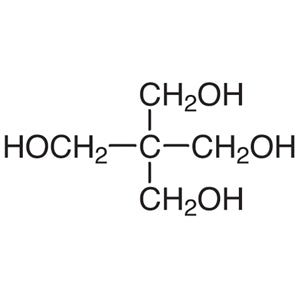
- TCI P0039 115-77-5 Pentaerythritol
- TCI T1687 1522-92-5 Pentaerythritol Tribromide
- TCI P0738 13081-97-5 Pentaerythritol Distearate (mixture)
- TCI T2845 126150-97-8 Tetrakis(acetoxymethyl) 1,2-Bis(2-aminophenoxy)ethane-N,N,N',N'-tetraacetate
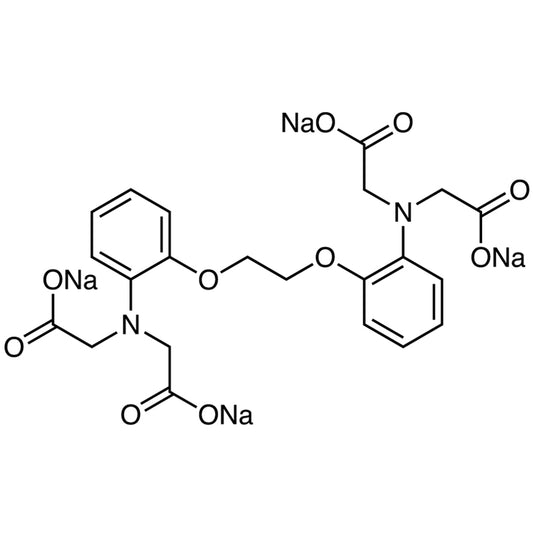
- TCI T2844 126824-24-6 Tetrasodium 1,2-Bis(2-aminophenoxy)ethane-N,N,N',N'-tetraacetate
- Organic synthesis is a primary application for PET, as it serves as a stable building block for creating complex molecules.
- It is commonly used in the preparation of esters and other functional derivatives due to its reactivity under controlled conditions.
- PET is ideal for catalytic reactions where structural integrity is critical, offering a reliable starting material for various chemical transformations.
- In analytical chemistry, PET is used as a standard reference material due to its purity and stability over time.
- It is also employed in the development of pharmaceutical intermediates, where precise chemical control is essential for drug synthesis.
| Brand | TCI |
|---|---|
| CAS number | 597-71-7 |
| Molecular formula | — |
| Purity | — |
| Category | Chemistry > Building Blocks > Non-Heterocyclic Building Blocks |
| Pack sizes | Available in various sizes as per supplier specifications |
| Physical form | Solid |
| Storage | Store in a cool, dry place away from direct sunlight |
PET should be stored in a cool, dry environment to maintain its chemical stability and prevent degradation. It is recommended to keep the compound in airtight containers to minimize exposure to moisture and air, which could affect its integrity. Due to its relatively inert nature, PET is generally safe to handle in standard laboratory conditions, but standard safety precautions should still be followed. It is important to ensure that storage areas are well-ventilated and free from potential contaminants. Proper labeling of containers is essential to avoid confusion and ensure safe handling in laboratory settings.
—
Produk Terkait
-
PentaerythritolTetrastearate(containspalmitate) TCI P0739
Regular price From Rp 1.298.850,00Regular price -
Pentaerythritol TCI P0039
Regular price From Rp 477.750,00Regular price -
PentaerythritolTribromide TCI T1687
Regular price From Rp 955.500,00Regular price -
PentaerythritolDistearate(mixture) TCI P0738
Regular price Rp 1.590.750,00Regular price -
Tetrakis(acetoxymethyl)1,2-Bis(2-aminophenoxy)ethane-N,N,N',N'-tetraacetate TCI T2845
Regular price From Rp 1.538.250,00Regular price -
Tetrasodium1,2-Bis(2-aminophenoxy)ethane-N,N,N',N'-tetraacetate TCI T2844
Regular price From Rp 1.405.950,00Regular price -
Tri-tert-butyl1,4,7,10-Tetraazacyclododecane-1,4,7,10-tetraacetate TCI T2642
Regular price From Rp 2.677.500,00Regular price -
Tetraethyl4-tert-Butylcalix[4]arene-O,O',O'',O'''-tetraacetate TCI T2563
Regular price From Rp 2.199.750,00Regular price




![97600-39-0 Tetraethyl 4-tert-Butylcalix[4]arene-O,O',O'',O'''-tetraacetate - AMI Scientific](http://amiscientific.com/cdn/shop/files/TCI2510T2563.jpg?v=1768206481&width=533)
![97600-39-0 Tetraethyl 4-tert-Butylcalix[4]arene-O,O',O'',O'''-tetraacetate - AMI Scientific](http://amiscientific.com/cdn/shop/files/TCI2510T2563_e10c88c9-6b4a-43bc-8a0d-8c54f5a3b459.jpg?v=1769058066&width=533)