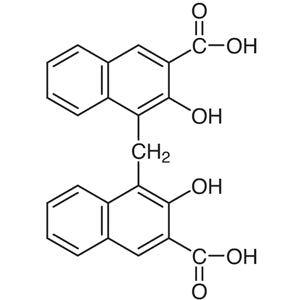
Pamoic Acid is a chemical compound widely used in laboratory settings for its versatile role in organic chemistry. As a building block in chemical synthesis, it serves as a key reagent in the development of more complex molecular structures. Its ability to act as both a proton donor and acceptor makes it adaptable to various reaction conditions, enhancing its utility in synthetic pathways. In the laboratory, it is commonly employed in acid-base reactions and pH regulation, making it an essential component for researchers working on organic synthesis and analytical chemistry.
Pamoic Acid is valued for its stable chemical structure and strong acidic properties, which make it suitable for a wide range of experimental applications. It dissolves well in organic solvents such as ethyl acetate and acetone, facilitating efficient processing and reaction conditions. Its solubility and reactivity contribute to its effectiveness in both preparative and analytical procedures. Additionally, Pamoic Acid is environmentally friendly, as it is easily biodegradable and non-toxic, ensuring safe handling and disposal in laboratory environments.
In Indonesian laboratories, Pamoic Acid is frequently used in chemical research, particularly in the synthesis of organic compounds and analytical procedures. Its availability and reliability make it a preferred choice for academic and industrial research. It is commonly found in chemical laboratories across Indonesia, supporting both educational and applied research projects. Its consistent performance and compatibility with various experimental setups make it a trusted reagent in the field.
Related TCI products
- Organic Synthesis: Pamoic Acid is used in the synthesis of complex organic molecules due to its reactivity and ability to participate in acid-base reactions.
- pH Regulation: Its strong acidic properties make it ideal for controlling pH in various chemical reactions and analytical processes.
- Analytical Chemistry: It serves as a reagent in analytical procedures, aiding in the detection and quantification of other compounds through acid-base titrations.
- Solvent Compatibility: Its solubility in organic solvents allows for efficient use in reactions requiring organic media, simplifying purification and reaction steps.
- Environmental Research: Its biodegradability and low toxicity make it suitable for studies involving eco-friendly chemical processes and sustainable laboratory practices.
| Brand | TCI |
|---|---|
| CAS number | 130-85-8 |
| Molecular formula | — |
| Purity | — |
| Category | Chemistry > Building Blocks > Non-Heterocyclic Building Blocks |
| Pack sizes | Available in various quantities as per standard laboratory supply |
| Physical form | Solid |
| Storage | Store in a cool, dry place away from direct sunlight |
Pamoic Acid should be stored in a cool, dry place, away from direct sunlight and moisture. It is recommended to use airtight containers to prevent exposure to air and humidity, which could affect its stability. Due to its acidic nature, it should be handled with appropriate personal protective equipment, such as gloves and safety goggles, to ensure laboratory safety. It is not classified as hazardous under standard laboratory conditions, but standard chemical handling procedures should be followed. Proper labeling and storage in designated chemical cabinets are essential to maintain a safe and organized laboratory environment.
—
Produk Terkait
-
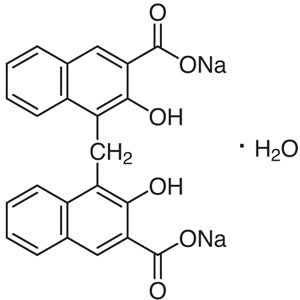
PamoicAcidDisodiumSaltMonohydrate TCI P1059
Regular price From Rp 2.491.650,00Regular price