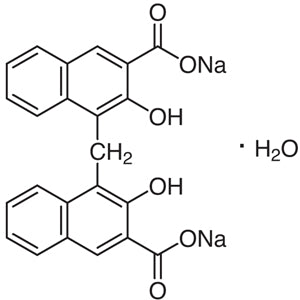
Pamoic Acid Disodium Salt Monohydrate is a chemical compound widely used in laboratory settings for its versatility and chemical stability. As a building block in organic chemistry, it plays a crucial role in the synthesis of complex molecules and functional group modifications. Its monohydrate form ensures consistent chemical properties, making it reliable for various experimental applications. This compound is commonly found in chemical research and industrial development, serving as a foundational material for further chemical transformations.
The compound is known for its neutral chemical properties and non-corrosive nature, which contribute to its safety in laboratory environments. It exhibits good solubility in both water and organic solvents, facilitating easy mixing and separation during chemical reactions. These characteristics make it an ideal choice for researchers seeking a stable and predictable reagent. Its resistance to degradation under normal conditions also enhances its reliability in long-term storage and repeated use.
In Indonesian laboratories, Pamoic Acid Disodium Salt Monohydrate is frequently utilized in organic chemistry research, pharmaceutical synthesis, and industrial chemical development. Its availability and cost-effectiveness make it a preferred material for both academic and industrial applications. Researchers in Indonesia rely on this compound for its consistent performance and compatibility with a wide range of chemical processes.
Related TCI products
- Organic chemistry research benefits from this compound due to its role in functional group modification and molecule synthesis.
- Pharmaceutical synthesis relies on its stability and solubility for the creation of complex drug compounds.
- Industrial chemical development uses it as a building block for the production of specialty chemicals.
- Analytical chemistry experiments utilize its predictable behavior for accurate chemical reactions and measurements.
- Environmental testing incorporates it in the analysis of chemical compounds in various sample matrices.
| Brand | TCI |
|---|---|
| CAS number | 6640-22-8 |
| Molecular formula | — |
| Purity | — |
| Category | Chemistry > Building Blocks > Non-Heterocyclic Building Blocks |
| Pack sizes | Available in various quantities as per supplier specifications |
| Physical form | Solid, crystalline powder |
| Storage | Store in a cool, dry place away from moisture and direct sunlight |
This compound should be stored in a cool, dry environment to maintain its chemical stability. It is recommended to use airtight containers to prevent moisture absorption and contamination. Due to its neutral nature, it does not require special handling beyond standard laboratory safety protocols. Avoid exposure to high temperatures or direct sunlight to preserve its integrity. Always ensure proper ventilation when handling to maintain a safe working environment. Regular inspection of storage conditions is advised to ensure the material remains suitable for use in laboratory applications.
—
Produk Terkait
-
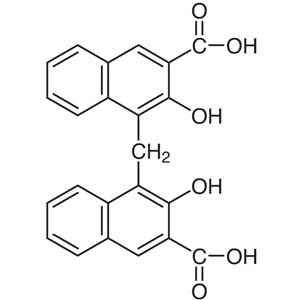
PamoicAcid TCI P0761
Regular price Rp 664.650,00Regular price -
Disodium1-Naphthol-3,6-disulfonateHydrate TCI V0037
Regular price Rp 584.850,00Regular price -
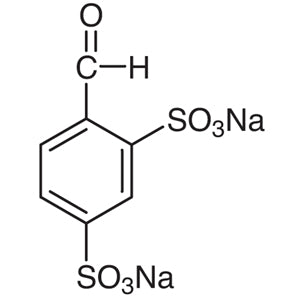
Disodium4-Formylbenzene-1,3-disulfonate TCI B0008
Regular price Rp 1.431.150,00Regular price -
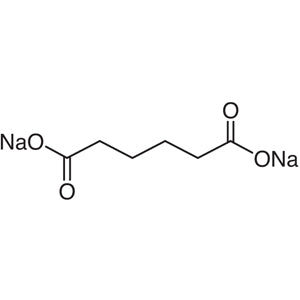
DisodiumAdipate TCI A0592
Regular price From Rp 1.803.900,00Regular price -
DisodiumTerephthalate TCI T1097
Regular price From Rp 1.510.950,00Regular price -
Tetrahydroxy-1,4-benzoquinoneDisodiumSalt TCI T0122
Regular price From Rp 1.115.100,00Regular price -
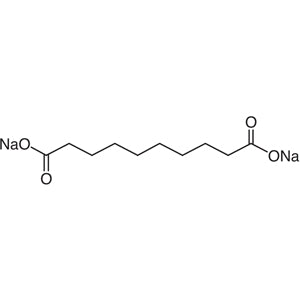
DisodiumSebacate TCI S0270
Regular price From Rp 848.400,00Regular price -
DisodiumSuccinateHexahydrate TCI S0105
Regular price From Rp 477.750,00Regular price