Disodium sebacate (TCI S0270), with CAS number 17265-14-4, is a chemical compound widely used in laboratory settings as a fundamental building block in organic chemistry. It serves as a versatile reagent in various synthetic reactions, particularly those involving esterification and amidation. Its role is critical in the development of new compounds and materials, making it an essential component in both academic and industrial research environments. Due to its chemical stability and reactivity, it is frequently employed in the synthesis of esters, amides, and other organic derivatives.
One of the key properties that make disodium sebacate a preferred choice is its solubility in organic solvents, which facilitates its use in a wide range of chemical reactions. Additionally, its ability to act as a sodium ion source enhances its utility in reactions requiring specific ionic conditions. These characteristics make it an ideal reagent for controlled chemical transformations, enabling researchers to achieve desired structural outcomes with greater precision. The compound’s reliability and consistency further contribute to its popularity in laboratory applications.
In Indonesian laboratories, disodium sebacate is extensively used in chemical research, particularly in higher education institutions and research organizations. It plays a crucial role in the development of new materials and pharmaceutical compounds, supporting both fundamental and applied research. Its availability and performance make it a go-to reagent for chemists working on a variety of projects, from basic synthesis to advanced material science. The compound’s importance in local research underscores its relevance in the Indonesian scientific community.
- Ester synthesis in organic chemistry reactions benefits from disodium sebacate’s solubility and reactivity, enabling efficient esterification processes.
- Amide production as a precursor in drug development relies on its ability to participate in amidation reactions, supporting pharmaceutical research.
- Esterification reactions for compound structure modification utilize its chemical properties to produce targeted organic derivatives.
- Organic synthesis in academic research leverages its role as a building block for creating complex molecular structures.
- Material development in chemical research uses its properties to create new compounds with specific functional characteristics.
| Brand | TCI |
|---|---|
| CAS number | 17265-14-4 |
| Molecular formula | — |
| Purity | — |
| Category | Chemistry > Building Blocks > Non-Heterocyclic Building Blocks |
| Pack sizes | Available in various quantities as per supplier specifications |
| Physical form | Solid |
| Storage | Store in a cool, dry place away from moisture and direct sunlight |
Disodium sebacate should be stored in a cool, dry environment to maintain its chemical integrity and prevent degradation. It is recommended to use airtight containers to protect it from moisture and humidity, which can affect its performance in reactions. Since it is a solid, it should be kept in a secure location away from incompatible substances. Laboratory personnel should handle it with care, using appropriate personal protective equipment when necessary. Regular inspection of storage conditions ensures that the compound remains suitable for use in chemical experiments. Proper storage practices help preserve the compound’s effectiveness and safety in laboratory applications.
—
Produk Terkait
-
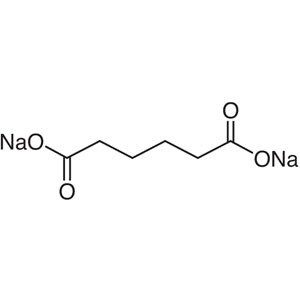
DisodiumAdipate TCI A0592
Regular price From Rp 1.803.900,00Regular priceRp 1.261.050,00Sale price From Rp 1.803.900,00 -
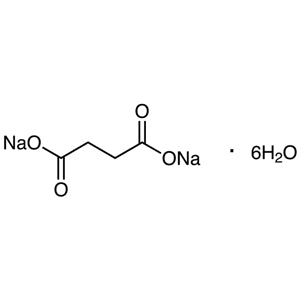
DisodiumSuccinateHexahydrate TCI S0105
Regular price From Rp 530.250,00Regular priceRp 386.400,00Sale price From Rp 530.250,00 -
DisodiumMalonate TCI M0031
Regular price From Rp 689.850,00Regular priceRp 497.700,00Sale price From Rp 689.850,00 -
DisodiumMaleate TCI M0014
Regular price From Rp 637.350,00Regular priceRp 460.950,00Sale price From Rp 637.350,00 -
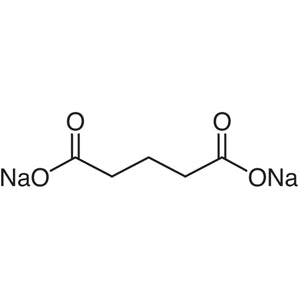
DisodiumGlutarate TCI G0070
Regular price From Rp 2.147.250,00Regular priceRp 1.517.250,00Sale price From Rp 2.147.250,00 -
DisodiumFumarate TCI F0070
Regular price From Rp 662.550,00Regular priceRp 478.800,00Sale price From Rp 662.550,00 -
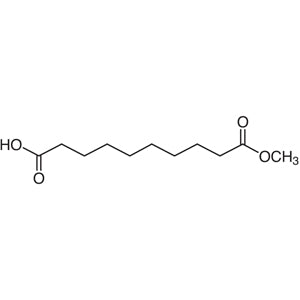
MonomethylSebacate TCI S0395
Regular price From Rp 3.603.600,00Regular priceRp 2.535.750,00Sale price From Rp 3.603.600,00 -
DibenzylSebacate TCI S0147
Regular price From Rp 1.246.350,00Regular priceRp 887.250,00Sale price From Rp 1.246.350,00