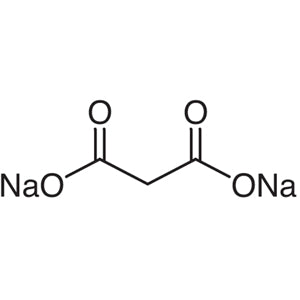
Disodium malonate (TCI M0031), with CAS number 141-95-7, is a versatile chemical compound widely used in laboratory settings for its role as a building block in organic synthesis. It serves as a key reagent in various chemical reactions, including condensation, substitution, and reactions with alkali metals. Its ability to participate in multiple reaction pathways makes it an essential component for chemists working on complex molecular structures. As a sodium salt of malonic acid, it provides a stable and reactive platform for the formation of new compounds.
The chemical properties of disodium malonate make it a preferred choice in laboratory applications. It exhibits stability under controlled conditions and can readily react with a variety of reagents. Its structure allows it to form carbonate ions in basic environments, making it ideal for reactions requiring alkaline conditions. This reactivity and adaptability ensure that it remains a reliable and efficient reagent in diverse chemical processes. The compound’s predictable behavior and compatibility with various solvents and reagents further enhance its utility in synthetic chemistry.
In Indonesian laboratories, disodium malonate is commonly used in research related to pharmaceutical development, polymer synthesis, and industrial chemical production. Its role in creating organic compounds with specific functional groups makes it a valuable tool for both academic and industrial researchers. The compound’s reliability and effectiveness have made it a standard choice for experiments requiring high reactivity and controlled chemical transformations. Its widespread use underscores its importance in the chemical research landscape of Indonesia.
- Organic synthesis applications benefit from disodium malonate's role in creating carbon-carbon bonds through condensation and substitution reactions.
- Pharmaceutical research utilizes this compound for the synthesis of heterocyclic compounds and drug molecules requiring specific structural features.
- Polymer science applications rely on disodium malonate for the development of plastic materials and other synthetic polymers.
- Industrial chemical production employs this reagent for the manufacture of various chemical intermediates and specialty compounds.
- Analytical chemistry experiments use disodium malonate as a standard reference material for testing reactivity and chemical behavior under different conditions.
| Brand | TCI |
|---|---|
| CAS number | 141-95-7 |
| Molecular formula | — |
| Purity | — |
| Category | Chemistry > Building Blocks > Non-Heterocyclic Building Blocks |
| Pack sizes | Available in various quantities as per standard laboratory supply |
| Physical form | White crystalline solid |
| Storage | Store in a cool, dry place away from moisture and direct sunlight |
Disodium malonate should be stored in a cool, dry environment to maintain its chemical stability and prevent degradation. It is recommended to keep the compound in airtight containers to minimize exposure to moisture and air, which can affect its reactivity. Suitable storage containers include glass or polyethylene vessels that are resistant to chemical interaction. In laboratory settings, it is important to handle the compound with appropriate personal protective equipment, such as gloves and safety goggles, to ensure safety during handling. Proper labeling of storage containers is essential for easy identification and safe access. Regular inspection of storage conditions ensures that the compound remains in optimal condition for use in chemical experiments.
—
Produk Terkait
-
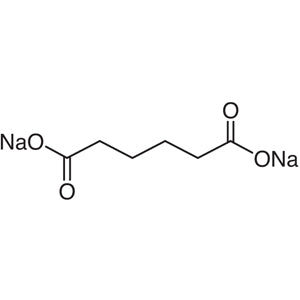
DisodiumAdipate TCI A0592
Regular price From Rp 1.803.900,00Regular price -
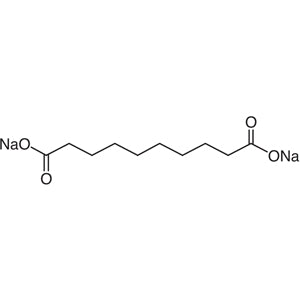
DisodiumSebacate TCI S0270
Regular price From Rp 848.400,00Regular price -
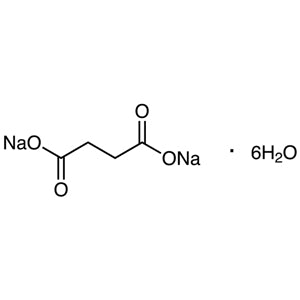
DisodiumSuccinateHexahydrate TCI S0105
Regular price From Rp 477.750,00Regular price -
DisodiumMaleate TCI M0014
Regular price From Rp 584.850,00Regular price -
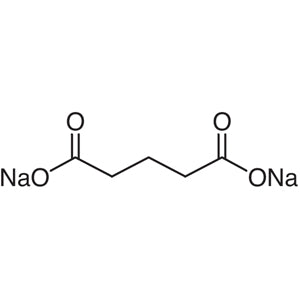
DisodiumGlutarate TCI G0070
Regular price From Rp 2.094.750,00Regular price -
DisodiumFumarate TCI F0070
Regular price From Rp 610.050,00Regular price -
tert-ButylEthylMalonate TCI B3720
Regular price From Rp 928.200,00Regular price -
tert-ButylMethylMalonate TCI B2747
Regular price From Rp 1.670.550,00Regular price