Disodium 4-Formylbenzene-1,3-disulfonate is a chemical compound widely used in laboratory settings for its versatility in organic synthesis. As a building block in chemical reactions, it serves as a key intermediate in the development of complex organic molecules. This compound is commonly found in research and industrial applications where precise chemical transformations are required. Its role in the laboratory is critical for the synthesis of various derivatives, making it an essential component in chemical research.
The compound's unique chemical properties make it a preferred choice for researchers. It exhibits stability under specific conditions and can participate in multiple reaction types, including substitution, redox, and condensation reactions. Its ability to act as both an electron donor and acceptor depending on the reaction environment enhances its reactivity. These characteristics allow it to be used in a wide range of chemical processes, contributing to its popularity among chemists.
In Indonesian laboratories, Disodium 4-Formylbenzene-1,3-disulfonate is frequently utilized in organic chemistry research. It is commonly found in academic institutions and research centers where synthetic chemistry is practiced. The compound plays a vital role in the development of new chemical compounds, supporting both educational and scientific advancement in the field.
Related TCI products
- TCI A0308 853-68-9 Disodium Anthraquinone-2,6-disulfonate
- TCI V0037 330581-20-9 Disodium 1-Naphthol-3,6-disulfonate Hydrate
- TCI N0268 525-05-3 Disodium 1-Nitroso-2-naphthol-3,6-disulfonate Monohydrate
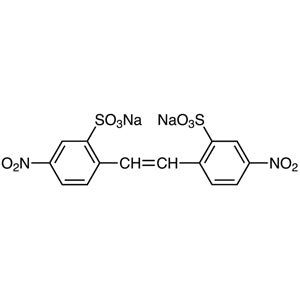
- TCI D0853 3709-43-1 Disodium 4,4'-Dinitrostilbene-2,2'-disulfonate
- TCI A0505 14938-42-2 Dipotassium Anthraquinone-1,8-disulfonate
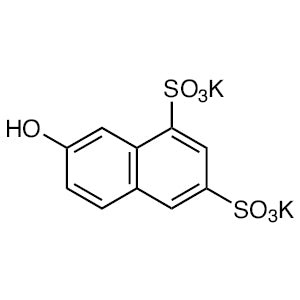
- TCI N0030 842-18-2 Dipotassium 2-Naphthol-6,8-disulfonate
- Organic synthesis applications benefit from this compound's reactivity and versatility in forming complex molecular structures.
- It is ideal for redox reactions due to its ability to act as both an electron donor and acceptor under varying conditions.
- Substitution reactions often utilize this compound as a key intermediate for the formation of new chemical entities.
- Condensation reactions can be effectively carried out using this compound, enabling the synthesis of various organic derivatives.
- It is frequently used in research settings for the development of new pharmaceutical and industrial compounds.
| Brand | TCI |
|---|---|
| CAS number | 33513-44-9 |
| Molecular formula | — |
| Purity | — |
| Category | Chemistry > Building Blocks > Non-Heterocyclic Building Blocks |
| Pack sizes | Available in various quantities as per standard laboratory requirements |
| Physical form | Solid |
| Storage | Store in a cool, dry place away from moisture and direct sunlight |
This compound should be stored in a cool, dry environment to maintain its chemical stability. It is recommended to use airtight containers to prevent exposure to moisture and air, which could affect its integrity. Proper labeling of containers is essential for safe handling and identification. Laboratory personnel should wear appropriate personal protective equipment when handling this material. It should be kept away from incompatible substances to avoid any potential chemical interactions. Regular inspection of storage conditions ensures the compound remains in optimal condition for use in research applications.
—
Produk Terkait
-
DisodiumAnthraquinone-2,6-disulfonate TCI A0308
Regular price From Rp 5.300.400,00Regular priceRp 3.722.250,00Sale price From Rp 5.300.400,00 -
Disodium1-Naphthol-3,6-disulfonateHydrate TCI V0037
Regular price Rp 584.850,00Regular priceRp 408.450,00Sale price Rp 584.850,00 -
Disodium1-Nitroso-2-naphthol-3,6-disulfonateMonohydrate TCI N0268
Regular price From Rp 1.035.300,00Regular priceRp 723.450,00Sale price From Rp 1.035.300,00 -
Disodium4,4'-Dinitrostilbene-2,2'-disulfonate TCI D0853
Regular price From Rp 3.472.350,00Regular priceRp 2.427.600,00Sale price From Rp 3.472.350,00 -
DipotassiumAnthraquinone-1,8-disulfonate TCI A0505
Regular price Rp 1.696.800,00Regular priceRp 1.202.250,00Sale price Rp 1.696.800,00 -
Dipotassium2-Naphthol-6,8-disulfonate TCI N0030
Regular price Rp 2.359.350,00Regular priceRp 1.649.550,00Sale price Rp 2.359.350,00 -
4'-Formylbenzo-15-crown5-Ether TCI F0448
Regular price From Rp 1.618.050,00Regular priceRp 1.146.600,00Sale price From Rp 1.618.050,00 -
3,5-Dichloro-4-formylbenzoicAcid TCI D6605
Regular price Rp 3.074.400,00Regular priceRp 2.165.100,00Sale price Rp 3.074.400,00