Disodium 4,4'-Dinitrostilbene-2,2'-disulfonate is a chemical compound widely used in laboratory settings for its versatility in chemical reactions and molecular synthesis. As a key component in the category of non-heterocyclic building blocks, it serves as a fundamental material for the development of complex organic compounds. This compound plays a crucial role in both academic and industrial research, enabling the creation of new substances with potential applications in pharmaceuticals, materials science, and chemical engineering. Its structural stability and predictable chemical behavior make it a reliable choice for researchers seeking consistent results in their experiments.
The compound's unique properties, including its solubility in aqueous solutions and its ability to act as an intermediate in various synthetic pathways, contribute to its popularity among chemists. The disodium salt form enhances its solubility, making it easier to handle and integrate into different reaction conditions. This form also facilitates its use in a wide range of chemical processes, from basic synthesis to more advanced molecular modifications. Its compatibility with various reagents and solvents further expands its utility in laboratory environments.
In Indonesian laboratories, this compound is commonly used in both pure and applied chemical research. It is a staple in research institutions and universities, where it supports the development of new compounds with potential pharmaceutical and industrial applications. Its availability and reliability make it an essential tool for scientists working on complex chemical projects in the region.
Related TCI products
- TCI N0268 525-05-3 Disodium 1-Nitroso-2-naphthol-3,6-disulfonate Monohydrate
- TCI A0308 853-68-9 Disodium Anthraquinone-2,6-disulfonate
- TCI V0037 330581-20-9 Disodium 1-Naphthol-3,6-disulfonate Hydrate
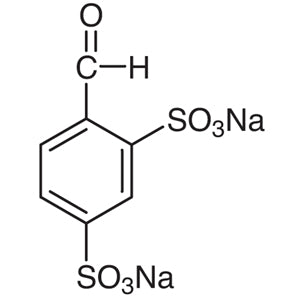
- TCI B0008 33513-44-9 Disodium 4-Formylbenzene-1,3-disulfonate
- TCI A0505 14938-42-2 Dipotassium Anthraquinone-1,8-disulfonate
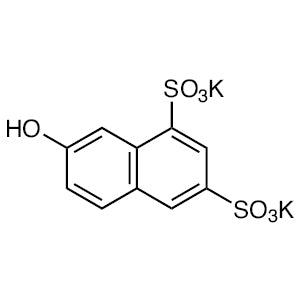
- TCI N0030 842-18-2 Dipotassium 2-Naphthol-6,8-disulfonate
- Used in pharmaceutical research for the synthesis of complex organic molecules due to its structural versatility and chemical stability.
- Applied in material science for the development of dyes and pigments because of its chromophore properties and solubility characteristics.
- Utilized in organic synthesis to create intermediates for further chemical modifications in drug development and industrial applications.
- Employed in analytical chemistry for the preparation of standard solutions and as a reference material in spectroscopic studies.
- Integrated into environmental chemistry research for the study of chemical behavior in aqueous systems and pollutant detection.
| Brand | TCI |
|---|---|
| CAS number | 3709-43-1 |
| Molecular formula | — |
| Purity | — |
| Category | Chemistry > Building Blocks > Non-Heterocyclic Building Blocks |
| Pack sizes | Available in various quantities as per supplier specifications |
| Physical form | Solid, typically in crystalline or powder form |
| Storage | Store in a cool, dry place away from direct sunlight and moisture |
This compound should be stored in a cool, dry environment to maintain its chemical integrity and prevent degradation. It is recommended to keep it in airtight containers to minimize exposure to moisture and air, which can affect its stability. Proper labeling of containers is essential to ensure safe handling and prevent accidental use. In laboratory settings, it should be handled with appropriate personal protective equipment, including gloves and safety goggles, to avoid direct contact. Due to its chemical nature, it should be stored separately from incompatible substances to ensure safety. Regular monitoring of storage conditions is advised to maintain the compound's quality and usability for research purposes.
—
Produk Terkait
-
Disodium1-Nitroso-2-naphthol-3,6-disulfonateMonohydrate TCI N0268
Regular price From Rp 1.035.300,00Regular price -
DisodiumAnthraquinone-2,6-disulfonate TCI A0308
Regular price From Rp 5.247.900,00Regular price -
Disodium1-Naphthol-3,6-disulfonateHydrate TCI V0037
Regular price Rp 584.850,00Regular price -
Disodium4-Formylbenzene-1,3-disulfonate TCI B0008
Regular price Rp 1.431.150,00Regular price -
DipotassiumAnthraquinone-1,8-disulfonate TCI A0505
Regular price Rp 1.644.300,00Regular price -
Dipotassium2-Naphthol-6,8-disulfonate TCI N0030
Regular price Rp 2.359.350,00Regular price -
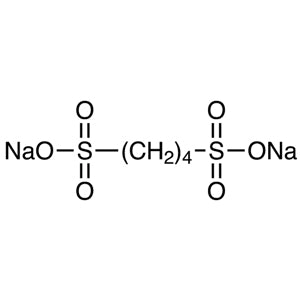
Disodium1,4-Butanedisulfonate TCI B0676
Regular price Rp 4.691.400,00Regular price -
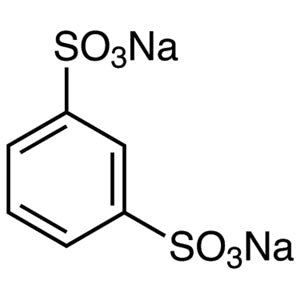
Disodium1,3-Benzenedisulfonate TCI B0023
Regular price From Rp 505.050,00Regular price