TCI T1097 is Disodium Terephthalate, CAS number 10028-70-3, the disodium salt of terephthalic acid (benzene-1,4-dicarboxylic acid). It belongs to the non-heterocyclic building blocks category and serves as a ready-made source of the terephthalate anion in salt form. In the laboratory, a material like this is used as a precursor or linker ligand in materials synthesis, as a starting material for forming terephthalic acid derivatives, and as a reference compound in analytical work involving aromatic dicarboxylic acids.
The main advantage of the salt over the free acid is how easily it can be used in aqueous systems. Terephthalic acid itself is known to dissolve poorly in many solvents, whereas its sodium salt is generally easier to work with in water-based media. This makes it well suited to ion-exchange reactions and to precipitation with metal ions. The benzene ring carrying two carboxylate groups in the para positions gives the molecule a symmetrical, linear geometry, a feature that has made it popular as a linker in research on porous materials and coordination polymers.
In Indonesian laboratories, this compound is relevant to research groups working in materials chemistry, inorganic chemistry and related chemical technology fields. It is typically requested by university research laboratories and development teams that need a reliable building block from an established brand such as TCI. Its use in aqueous synthesis routes suits laboratories that prefer simple, water-based procedures for preparing metal-organic and coordination-type materials.
Related TCI products
- TCI T1679 3645-00-9 2-Hydroxyethyl Methyl Terephthalate
- TCI B3429 959-26-2 Bis(2-hydroxyethyl) Terephthalate
- TCI T1083 42967-55-5 Potassium Monomethyl Terephthalate
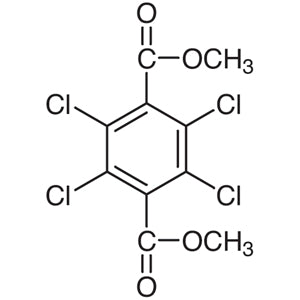
- TCI T1064 1861-32-1 Dimethyl Tetrachloroterephthalate
- TCI T0244 1679-64-7 Monomethyl Terephthalate
- TCI T0015 120-61-6 Dimethyl Terephthalate
- Linker ligand in material synthesis: the symmetrical, linear terephthalate anion can bridge metal centers, which makes this salt a suitable starting point for building porous frameworks and coordination polymers.
- Aqueous precipitation with metal ions: because the sodium salt is generally easier to handle in water than the free acid, it works well in reactions where terephthalate must combine with dissolved metal cations.
- Ion-exchange reactions: the salt supplies the terephthalate anion directly in solution, so researchers can exchange the sodium counter-ion for other cations without first having to neutralize the poorly soluble free acid.
- Starting material for terephthalic acid derivatives: as a non-heterocyclic building block, it provides the benzene-1,4-dicarboxylate core that synthetic chemists can convert into related compounds in further reaction steps.
- Analytical reference work: laboratories studying aromatic dicarboxylic acids can use this compound as a reference material, since it represents the terephthalate species in a defined, convenient salt form.
| Brand | TCI |
|---|---|
| CAS number | 10028-70-3 |
| Molecular formula | — |
| Purity | — |
| Category | Chemistry > Building Blocks > Non-Heterocyclic Building Blocks |
| Pack sizes | please refer to the current product listing or the supplier's documentation |
| Physical form | — |
| Storage | — |
- Product code: T1097
- Chemical name: Disodium Terephthalate (disodium salt of benzene-1,4-dicarboxylic acid)
Store the container tightly closed in a cool, dry, well-ventilated place, away from moisture, strong oxidizing agents and incompatible materials, and follow the storage instructions printed on the manufacturer's label and safety data sheet. Keep the material in its original container, or in a clean, dry, tightly sealing glass or suitable plastic bottle that is clearly labeled. As with all laboratory chemicals, wear standard personal protective equipment, including safety glasses, gloves and a laboratory coat. Avoid generating dust, work in a ventilated area or fume hood when weighing, and wash hands after handling. Consult the safety data sheet before use and dispose of waste according to your institution's regulations.
—
Produk Terkait
-
2-HydroxyethylMethylTerephthalate TCI T1679
Regular price From Rp 1.803.900,00Regular priceRp 1.261.050,00Sale price From Rp 1.803.900,00 -
Bis(2-hydroxyethyl)Terephthalate TCI B3429
Regular price From Rp 928.200,00Regular priceRp 648.900,00Sale price From Rp 928.200,00 -
PotassiumMonomethylTerephthalate TCI T1083
Regular price From Rp 875.700,00Regular priceRp 612.150,00Sale price From Rp 875.700,00 -
DimethylTetrachloroterephthalate TCI T1064
Regular price Rp 1.565.550,00Regular priceRp 1.094.100,00Sale price Rp 1.565.550,00 -
MonomethylTerephthalate TCI T0244
Regular price From Rp 2.147.250,00Regular priceRp 1.501.500,00Sale price From Rp 2.147.250,00 -
DimethylTerephthalate TCI T0015
Regular price From Rp 505.050,00Regular priceRp 352.800,00Sale price From Rp 505.050,00 -
DiethylTerephthalate TCI T0014
Regular price From Rp 1.881.600,00Regular priceRp 1.315.650,00Sale price From Rp 1.881.600,00 -
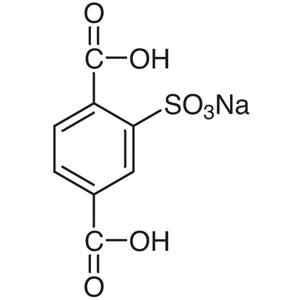
Monosodium2-Sulfoterephthalate TCI S0419
Regular price Rp 4.797.450,00Regular priceRp 3.354.750,00Sale price Rp 4.797.450,00