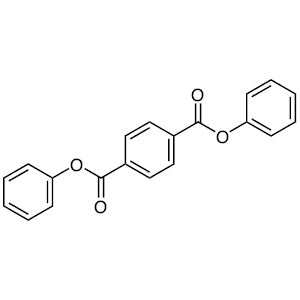
TCI T1064, Dimethyl Tetrachloroterephthalate, is the dimethyl ester of tetrachloroterephthalic acid: a benzene ring carrying four chlorine atoms and two methyl ester groups in the para positions. TCI's catalog lists it as a non-heterocyclic building block. In agrochemistry the compound is well known as the herbicide active ingredient often called DCPA. In the laboratory it is therefore commonly used as a reference material and as a comparison standard in analytical work.
The symmetrical, heavily chlorinated structure makes the compound easy to recognize in instrumental analysis, particularly in gas chromatography with halogen-sensitive detectors and in mass spectrometry. The ester groups on the ring can be hydrolyzed to give the corresponding tetrachloroterephthalic acid, so the material can also serve as a synthetic intermediate. Chlorinated aromatic compounds are generally stable, which makes it a dependable standard through solution preparation, provided it is stored as the manufacturer recommends.
In Indonesian laboratories, this material is most relevant to testing laboratories that analyze pesticide residues in agricultural products, to agrochemical research groups, and to environmental researchers who need a trusted reference compound. It also suits teaching laboratories that demonstrate chromatographic methods with halogenated analytes. Supplied through AMI Scientific under the TCI brand, it gives these users a documented, catalog-listed option for method development and routine comparison work.
- Pesticide residue analysis: the compound is a recognized herbicide active ingredient (DCPA), so it serves as a reference standard when laboratories test agricultural products for residues.
- Gas chromatography method development: its four chlorine atoms respond strongly on halogen-sensitive detectors, which makes it a practical test analyte for evaluating column performance and detector sensitivity.
- Mass spectrometry reference work: the symmetrical, highly chlorinated structure produces a recognizable pattern, helping analysts confirm identification and compare results between instruments or methods.
- Synthetic intermediate studies: the two methyl ester groups can be hydrolyzed to give tetrachloroterephthalic acid, so researchers can use the material as a starting point for building related compounds.
- Environmental and agrochemical research: research groups studying herbicide behavior can use it as a comparison material when preparing calibration solutions and checking analytical procedures.
| Brand | TCI |
|---|---|
| CAS number | 1861-32-1 |
| Molecular formula | — |
| Purity | — |
| Category | Chemistry > Building Blocks > Non-Heterocyclic Building Blocks |
| Pack sizes | please refer to the current TCI catalog listing or confirm with AMI Scientific |
| Physical form | — |
| Storage | follow the manufacturer's recommendation on the product label and safety data sheet |
- Product code: T1064
Store Dimethyl Tetrachloroterephthalate in its original, tightly closed container in a clean, dry, well-ventilated place, following the storage conditions on the manufacturer's label and safety data sheet. Keep it away from heat sources, direct sunlight, and incompatible materials. Glass or other chemically compatible containers with secure closures are suitable for prepared solutions, and these should be clearly labeled with the contents, concentration, and preparation date. As with any chlorinated organic compound, wear gloves, safety glasses, and a laboratory coat, and avoid generating dust. Work in a fume hood or well-ventilated area, prevent skin contact and inhalation, and dispose of waste according to institutional and local regulations.
—
Produk Terkait
-
2-HydroxyethylMethylTerephthalate TCI T1679
Regular price From Rp 1.803.900,00Regular priceRp 1.261.050,00Sale price From Rp 1.803.900,00 -
Bis(2-hydroxyethyl)Terephthalate TCI B3429
Regular price From Rp 928.200,00Regular priceRp 648.900,00Sale price From Rp 928.200,00 -
DisodiumTerephthalate TCI T1097
Regular price From Rp 1.510.950,00Regular priceRp 1.056.300,00Sale price From Rp 1.510.950,00 -
DimethylTerephthalate TCI T0015
Regular price From Rp 505.050,00Regular priceRp 352.800,00Sale price From Rp 505.050,00 -
DiethylTerephthalate TCI T0014
Regular price From Rp 1.881.600,00Regular priceRp 1.315.650,00Sale price From Rp 1.881.600,00 -
DibutylTerephthalate TCI D6074
Regular price Rp 2.227.050,00Regular priceRp 1.557.150,00Sale price Rp 2.227.050,00 -
DiphenylTerephthalate TCI D5995
Regular price From Rp 2.094.750,00Regular priceRp 1.464.750,00Sale price From Rp 2.094.750,00 -
2,3,5,6-TetrachloroterephthalicAcid TCI C3862
Regular price From Rp 2.571.450,00Regular priceRp 1.797.600,00Sale price From Rp 2.571.450,00