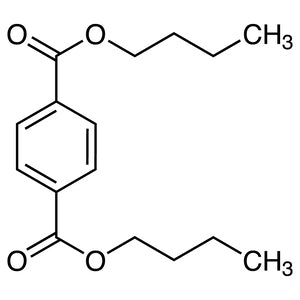
Dibutyl terephthalate is a chemical compound widely used in laboratory settings as a foundational material for various chemical reactions and molecular synthesis. It serves as a non-reactive and stable substance that supports the development of complex organic compounds. This compound is particularly valued for its non-polar nature, which makes it suitable for a range of experimental applications. Its role in the laboratory is primarily as a solvent or auxiliary material in the preparation of organic compounds, contributing to the efficiency and accuracy of chemical processes.
The properties of Dibutyl terephthalate make it a preferred choice in chemical laboratories. It exhibits chemical stability and does not easily decompose under normal conditions, ensuring consistent performance in experiments. Its high boiling point and low volatility allow for ease of handling and use in various laboratory environments. Additionally, the compound's non-heterocyclic nature ensures it meets the high chemical purity standards required in sensitive analytical and synthetic procedures. These characteristics make it a reliable and versatile material for both research and industrial applications.
In Indonesian laboratories, Dibutyl terephthalate is commonly used in chemical research, especially in organic synthesis and analytical chemistry. It is a staple in academic and industrial laboratories, supporting the development of new chemical compounds and the analysis of existing ones. Its consistent physical and chemical properties make it an ideal choice for a wide range of experiments, contributing to the advancement of chemical science in Indonesia.
Related TCI products
- TCI T1679 3645-00-9 2-Hydroxyethyl Methyl Terephthalate
- TCI B3429 959-26-2 Bis(2-hydroxyethyl) Terephthalate
- TCI T1097 10028-70-3 Disodium Terephthalate
- TCI T1083 42967-55-5 Potassium Monomethyl Terephthalate
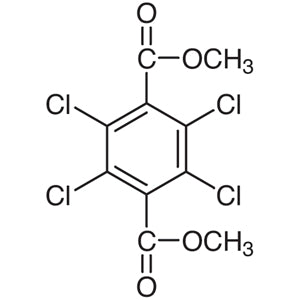
- TCI T1064 1861-32-1 Dimethyl Tetrachloroterephthalate
- TCI T0244 1679-64-7 Monomethyl Terephthalate
- Organic synthesis experiments benefit from Dibutyl terephthalate due to its stable chemical structure and non-reactive nature, making it a reliable solvent and auxiliary material.
- Analytical chemistry applications utilize this compound as a non-polar solvent, aiding in the separation and identification of organic compounds through chromatographic techniques.
- Industrial chemical processes incorporate Dibutyl terephthalate as a non-heterocyclic building block, supporting the production of complex organic molecules with high purity.
- Laboratory-grade chemical testing relies on this compound for its inert properties, ensuring accurate and reproducible results in chemical analysis.
- Research and development in chemical engineering often use Dibutyl terephthalate as a model compound for studying molecular interactions and reaction mechanisms.
| Brand | TCI |
|---|---|
| CAS number | 1962-75-0 |
| Molecular formula | — |
| Purity | — |
| Category | Chemistry > Building Blocks > Non-Heterocyclic Building Blocks |
| Pack sizes | Available in various sizes as per standard laboratory supply specifications |
| Physical form | Liquid |
| Storage | Store in a cool, dry place away from direct sunlight and incompatible materials |
Dibutyl terephthalate should be stored in a cool, dry environment to maintain its chemical stability and prevent degradation. It is recommended to keep the compound in a sealed container made of inert materials such as glass or stainless steel to avoid any chemical interactions. Due to its non-polar nature, it is important to ensure that storage containers are properly labeled and kept away from reactive substances. In laboratory settings, it is advisable to handle the compound with appropriate personal protective equipment to ensure safety. Regular monitoring of storage conditions will help maintain the integrity of the material for long-term use.
—
Produk Terkait
-
2-HydroxyethylMethylTerephthalate TCI T1679
Regular price From Rp 1.803.900,00Regular price -
Bis(2-hydroxyethyl)Terephthalate TCI B3429
Regular price From Rp 928.200,00Regular price -
DisodiumTerephthalate TCI T1097
Regular price From Rp 1.510.950,00Regular price -
PotassiumMonomethylTerephthalate TCI T1083
Regular price From Rp 875.700,00Regular price -
DimethylTetrachloroterephthalate TCI T1064
Regular price Rp 1.565.550,00Regular price -
MonomethylTerephthalate TCI T0244
Regular price From Rp 2.147.250,00Regular price -
DimethylTerephthalate TCI T0015
Regular price From Rp 505.050,00Regular price -
DiethylTerephthalate TCI T0014
Regular price From Rp 1.881.600,00Regular price