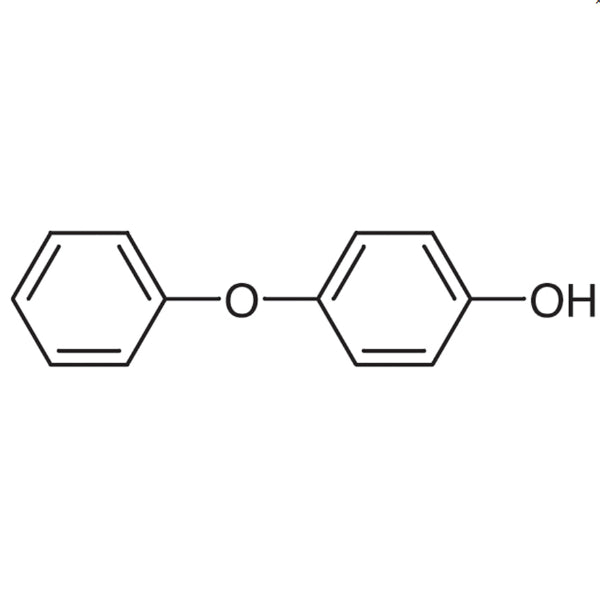
4-Phenoxyphenol is a chemical compound widely used in organic synthesis reactions within laboratory settings. As a key building block, it serves as a fundamental component for the development of complex molecules, including heterocyclic compounds and phenolic derivatives. Its simple yet versatile structure makes it a valuable tool for molecular modification in various synthetic pathways. This compound is commonly found in chemical laboratories, where it plays a critical role in the creation of new chemical entities and the advancement of research in multiple scientific disciplines.
The chemical properties of 4-Phenoxyphenol make it a preferred choice for synthetic chemists. It exhibits stability under a range of reaction conditions and can participate in essential reactions such as electrophilic substitution and condensation. The phenolic group in its structure provides a degree of stability, while the phenoxide group enhances its reactivity. These characteristics allow it to be a reliable reagent in both academic and industrial research environments, supporting the development of pharmaceuticals and specialty chemicals.
In Indonesian laboratories, 4-Phenoxyphenol is an essential material for organic chemistry research and the synthesis of new compounds. It is frequently used in pharmaceutical and environmental chemistry studies, as well as in the development of advanced materials. Its relevance extends to higher education institutions and research centers focused on the synthesis of complex molecules, making it a vital resource for scientific innovation in Indonesia.
- Organic synthesis of heterocyclic compounds for pharmaceutical development due to its reactivity and structural versatility.
- Preparation of phenolic derivatives in material science research for the creation of functional polymers and coatings.
- Environmental chemistry studies involving the analysis and modification of aromatic compounds in wastewater treatment.
- Academic research in chemical engineering for the development of new synthetic methodologies and reaction mechanisms.
- Industrial chemical production for the synthesis of specialty chemicals and intermediates in pharmaceutical manufacturing.
| Brand | TCI |
|---|---|
| CAS number | 831-82-3 |
| Molecular formula | — |
| Purity | — |
| Category | Chemistry > Building Blocks > Non-Heterocyclic Building Blocks |
| Pack sizes | Available in various quantities as per standard laboratory supply standards. |
| Physical form | Solid, typically in crystalline or powder form. |
| Storage | Store in a cool, dry place away from direct sunlight and moisture. |
4-Phenoxyphenol should be stored in a cool, dry environment to maintain its chemical stability. It is recommended to keep the compound in a tightly sealed container to prevent exposure to moisture and air. Due to its potential reactivity, it should be handled in a well-ventilated laboratory setting, with appropriate personal protective equipment such as gloves and safety goggles. Avoid contact with incompatible substances, and ensure proper disposal in accordance with local regulations. Regular monitoring of storage conditions is essential to ensure the integrity of the material and the safety of laboratory personnel.
—
Produk Terkait
-
2-Bromo-4,5-dimethoxyphenol TCI B5297
Regular price Rp 2.466.450,00Regular price -
2-Bromo-6-methoxyphenol TCI B5026
Regular price From Rp 1.246.350,00Regular price -
4-Bromo-2-methoxyphenol TCI B4056
Regular price From Rp 1.618.050,00Regular price -
5-Bromo-2-methoxyphenol TCI B3342
Regular price From Rp 1.008.000,00Regular price -
2-Bromo-4-methoxyphenol TCI B3135
Regular price From Rp 2.597.700,00Regular price -
4-Amino-2-methoxyphenol TCI A2883
Regular price From Rp 3.100.650,00Regular price -
3,5-Dimethoxyphenol TCI P0320
Regular price From Rp 4.293.450,00Regular price -
4-Methoxyphenol TCI M0123
Regular price From Rp 477.750,00Regular price