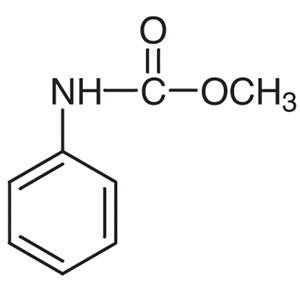
Methyl N-Phenylcarbamate from TCI is a carbamate compound in which a methoxycarbonyl group is bonded to the nitrogen atom of aniline. In the laboratory it serves as a non-heterocyclic building block and as a synthetic intermediate. Its main importance comes from phosgene-free routes to isocyanates. Methyl N-phenylcarbamate is a key compound in research on producing methylene diphenyl diisocyanate (MDI) and phenyl isocyanate by thermal decomposition of carbamates. Researchers developed this approach as a safer alternative to phosgene, which is highly toxic.
Chemists choose this material because its carbamate group combines amide and ester character. This makes it stable enough to store and handle under normal laboratory conditions. The group can still be activated under the right conditions, though. When heated with a suitable catalyst, the carbamate can release methanol and form an isocyanate, and this reaction underpins many catalysis studies. The phenyl ring can also undergo electrophilic substitution. One example is condensation with formaldehyde to form methylene-bridged dicarbamates. Because its structure is simple and well defined, the compound is also often used as a model substrate for studying carbamate reactivity.
In Indonesian laboratories, Methyl N-Phenylcarbamate is mainly used in university research groups, polymer and materials chemistry laboratories, and industrial research and development units. Researchers there study cleaner isocyanate chemistry, polyurethane precursors, and heterogeneous or homogeneous catalysis. It also suits teaching and advanced organic synthesis projects that call for a stable, well-characterised carbamate. Typical work includes exploring decomposition conditions, screening catalysts, or preparing substituted aromatic intermediates for further synthesis.
Related TCI products
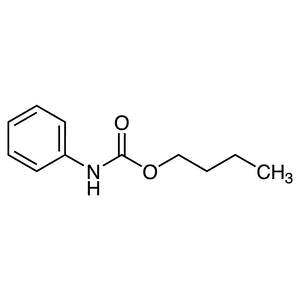
- TCI P3123 1538-74-5 Butyl Phenylcarbamate
- TCI B6524 3422-01-3 tert-Butyl Phenylcarbamate
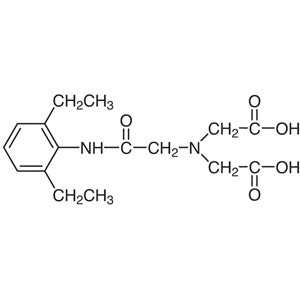
- TCI D1735 63245-28-3 N-(2,6-Diethylphenylcarbamoylmethyl)iminodiacetic Acid
- TCI D6082 42116-44-9 tert-Butyl Benzylcarbamate
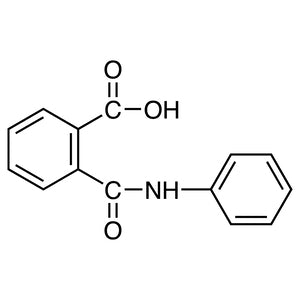
- TCI P2941 4727-29-1 2-(Phenylcarbamoyl)benzoic Acid
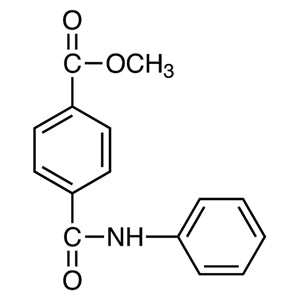
- TCI M2637 3814-10-6 Methyl 4-(Phenylcarbamoyl)benzoate
- Phosgene-free isocyanate research: the compound can release methanol on catalytic heating to form phenyl isocyanate, so it is a key substrate for developing safer non-phosgene routes.
- MDI precursor studies: condensing its phenyl ring with formaldehyde gives methylene-bridged dicarbamates, which are relevant intermediates in research on producing methylene diphenyl diisocyanate.
- Catalyst screening and catalysis studies: carbamate decomposition to isocyanate depends on the catalyst and conditions, so this compound works well as a benchmark reaction for comparing catalyst performance.
- Model compound for carbamate reactivity: its simple, well-defined structure lets researchers study how the carbamate group behaves without interference from complex substituents or additional functional groups.
- Non-heterocyclic building block in organic synthesis: its stable carbamate group and substitutable phenyl ring make it a useful intermediate for building more elaborate aromatic molecules in multistep synthetic work.
| Brand | TCI (product code P1010) |
|---|---|
| CAS number | 2603-10-3 |
| Molecular formula | — |
| Purity | — |
| Category | Chemistry > Building Blocks > Non-Heterocyclic Building Blocks |
| Pack sizes | available in the standard TCI pack sizes listed for this product |
| Physical form | — |
| Storage | follow the storage conditions on the TCI label and Safety Data Sheet |
- Chemical type: carbamate (methoxycarbonyl group on aniline nitrogen)
Keep Methyl N-Phenylcarbamate in its original, tightly closed TCI container in a cool, dry, well-ventilated place, away from heat sources, moisture, and incompatible substances. Always follow the storage conditions stated on the product label and Safety Data Sheet. Handle the material in a fume hood or well-ventilated area, and wear a laboratory coat, safety glasses, and chemical-resistant gloves. Avoid creating dust and avoid contact with skin and eyes. Remember that heating with catalysts can release methanol and produce reactive isocyanates, so carry out such reactions with appropriate controls. Label containers clearly, and dispose of waste according to local regulations.
—
Produk Terkait
-
ButylPhenylcarbamate TCI P3123
Regular price From Rp 2.386.650,00Regular price -
tert-ButylPhenylcarbamate TCI B6524
Regular price From Rp 1.115.100,00Regular price -
N-(2,6-Diethylphenylcarbamoylmethyl)iminodiaceticAcid TCI D1735
Regular price Rp 2.199.750,00Regular price -
tert-ButylBenzylcarbamate TCI D6082
Regular price From Rp 1.353.450,00Regular price -
2-(Phenylcarbamoyl)benzoicAcid TCI P2941
Regular price From Rp 2.359.350,00Regular price -
Methyl4-(Phenylcarbamoyl)benzoate TCI M2637
Regular price Rp 2.332.050,00Regular price -
N-(2,6-Dimethylphenylcarbamoylmethyl)iminodiaceticAcid TCI D1730
Regular price Rp 1.220.100,00Regular price -
DiphenylcarbamoylChloride TCI D0880
Regular price From Rp 610.050,00Regular price