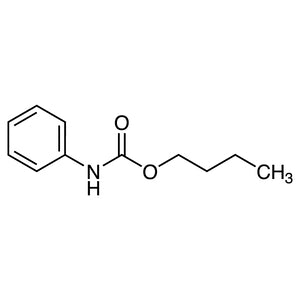
Butyl Phenylcarbamate (TCI P3123), with CAS number 1538-74-5, is a versatile chemical compound widely used in laboratory settings as a building block for organic synthesis. It serves as a key intermediate in various chemical reactions, offering stability and reactivity that make it suitable for a range of applications. This compound is particularly valuable in the development of complex organic molecules, where controlled reactivity is essential. Its role in the laboratory is to facilitate the synthesis of compounds with specific structural features, making it an essential tool for researchers in chemistry and related fields.
One of the key attributes of Butyl Phenylcarbamate is its chemical stability and controlled reactivity, which allow it to participate in a variety of synthetic pathways without undergoing unwanted side reactions. It exhibits good solubility in common organic solvents such as ethyl acetate and acetone, enhancing its utility in reaction systems. This solubility profile ensures that it can be effectively used in both small-scale and medium-scale laboratory experiments, providing flexibility in experimental design. Its consistent chemical properties also contribute to reproducibility in synthetic processes, which is crucial for scientific research.
In Indonesian laboratories, Butyl Phenylcarbamate is frequently utilized in organic chemistry research, particularly in the synthesis of pharmaceutical compounds and industrial chemicals. Its availability in various packaging options makes it accessible for both academic and industrial applications. The compound’s reliability and performance in laboratory settings have made it a preferred choice among researchers working on complex chemical syntheses and molecular design projects.
Related TCI products
- TCI P1010 2603-10-3 Methyl N-Phenylcarbamate
- TCI B6524 3422-01-3 tert-Butyl Phenylcarbamate
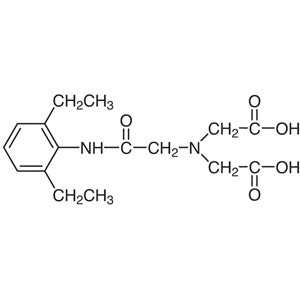
- TCI D1735 63245-28-3 N-(2,6-Diethylphenylcarbamoylmethyl)iminodiacetic Acid
- TCI D6082 42116-44-9 tert-Butyl Benzylcarbamate
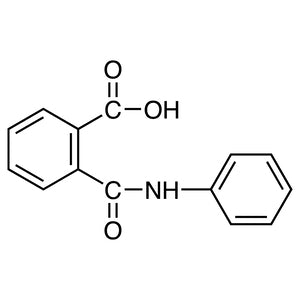
- TCI P2941 4727-29-1 2-(Phenylcarbamoyl)benzoic Acid
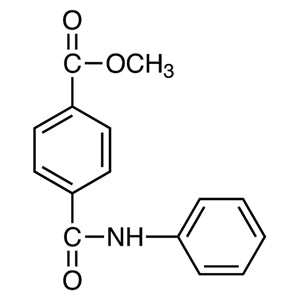
- TCI M2637 3814-10-6 Methyl 4-(Phenylcarbamoyl)benzoate
- Organic synthesis: Butyl Phenylcarbamate is ideal for organic synthesis due to its reactivity and stability, enabling the creation of complex molecular structures with high precision.
- Pharmaceutical research: It is commonly used in the development of pharmaceutical compounds, where controlled reactivity and solubility are essential for drug molecule synthesis.
- Industrial chemical production: Its solubility and chemical properties make it suitable for industrial chemical applications, supporting the production of specialty chemicals.
- Teaching and training: The compound is used in educational settings to demonstrate chemical reactivity and synthesis techniques in organic chemistry courses.
- Research and development: It is a valuable tool in R&D projects, supporting the exploration of new chemical pathways and molecular structures.
| Brand | TCI |
|---|---|
| CAS number | 1538-74-5 |
| Molecular formula | — |
| Purity | — |
| Category | Chemistry > Building Blocks > Non-Heterocyclic Building Blocks |
| Pack sizes | Available in various sizes to suit different laboratory needs |
| Physical form | Solid or liquid, depending on the specific product variant |
| Storage | Store in a cool, dry place away from direct sunlight and moisture |
Butyl Phenylcarbamate should be stored in a cool, dry environment to maintain its chemical integrity and prevent degradation. It is recommended to keep the compound in airtight containers to minimize exposure to moisture and air, which can affect its stability. Proper ventilation should be ensured in the laboratory when handling this material to reduce the risk of inhalation of vapors. It is important to avoid contact with skin and eyes, and protective gloves and goggles should be worn during handling. The compound should not be stored near incompatible materials such as strong acids or bases, as these can cause chemical reactions. Regular inspection of storage conditions is advised to ensure the material remains in optimal condition for use.
—
Produk Terkait
-
MethylN-Phenylcarbamate TCI P1010
Regular price From Rp 1.510.950,00Regular price -
tert-ButylPhenylcarbamate TCI B6524
Regular price From Rp 1.115.100,00Regular price -
N-(2,6-Diethylphenylcarbamoylmethyl)iminodiaceticAcid TCI D1735
Regular price Rp 2.199.750,00Regular price -
tert-ButylBenzylcarbamate TCI D6082
Regular price From Rp 1.353.450,00Regular price -
2-(Phenylcarbamoyl)benzoicAcid TCI P2941
Regular price From Rp 2.359.350,00Regular price -
Methyl4-(Phenylcarbamoyl)benzoate TCI M2637
Regular price Rp 2.332.050,00Regular price -
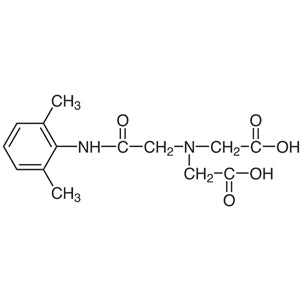
N-(2,6-Dimethylphenylcarbamoylmethyl)iminodiaceticAcid TCI D1730
Regular price Rp 1.220.100,00Regular price -
DiphenylcarbamoylChloride TCI D0880
Regular price From Rp 610.050,00Regular price