1-Phenyl-1-pentanol from TCI is a benzylic secondary alcohol. Its hydroxyl group sits on a carbon atom that is bonded directly to both a phenyl ring and a butyl chain. The compound belongs to the non-heterocyclic building blocks and is used in organic synthesis, reaction studies, and the development of analytical methods. In the laboratory, 1-Phenyl-1-pentanol is often used as a model substrate for oxidation, esterification, and substitution reactions. Because it has a single chiral centre, it is also used as a test compound in stereochemical studies.
What makes 1-Phenyl-1-pentanol interesting is the benzylic position of its hydroxyl group. In this position the alcohol reacts more readily than an ordinary aliphatic alcohol in many reactions. For example, it is easier to oxidise to an aromatic ketone or to convert into a halide. The chiral centre also makes it a popular substrate for testing enzymatic kinetic resolution and asymmetric catalysts. It is a liquid, as its millilitre-based packaging shows, so researchers can measure it accurately with a pipette or syringe. As a TCI reagent, it gives synthetic and analytical work a well-defined starting material.
In Indonesian laboratories, 1-Phenyl-1-pentanol is relevant to organic chemistry practical classes and research at universities. It also suits biocatalysis laboratories that study enzyme selectivity and research groups that develop new synthetic methods. Lecturers and students can use it to show how benzylic alcohols react in oxidation and substitution experiments. Research teams can use it as a benchmark substrate when they compare catalysts or chiral separation techniques. Its liquid form and small pack sizes make it practical for routine teaching experiments and for focused research projects.
- Oxidation studies: its benzylic secondary hydroxyl group oxidises readily to the matching aromatic ketone, so it is a convenient model substrate for comparing oxidising agents and reaction conditions.
- Esterification reactions: its single secondary alcohol group gives a clear, well-defined reaction site for studying ester formation, acylation reagents, and reaction progress in teaching and research.
- Substitution and halide conversion: its benzylic hydroxyl group can be replaced more easily than in aliphatic alcohols, so it is useful for showing and optimising conversion to halides.
- Enzymatic kinetic resolution: its single chiral centre makes it a popular test substrate for measuring how selectively lipases and other enzymes act in biocatalysis laboratories.
- Asymmetric catalysis and stereochemistry studies: its chiral benzylic structure lets researchers evaluate chiral catalysts and stereochemical outcomes, and develop analytical methods for separating its enantiomers.
| Brand | TCI |
|---|---|
| CAS number | 583-03-9 |
| Molecular formula | — |
| Purity | — |
| Category | Chemistry > Building Blocks > Non-Heterocyclic Building Blocks |
| Pack sizes | supplied in millilitre-based pack sizes (see the product listing for available options) |
| Physical form | liquid |
| Storage | keep the container tightly closed and follow the storage conditions on the TCI label and Safety Data Sheet |
Store 1-Phenyl-1-pentanol in its original, tightly closed container in a cool, dry, well-ventilated area away from direct sunlight, heat sources, and ignition sources. Keep it away from strong oxidising agents, because the benzylic alcohol reacts readily with them. If you transfer portions, use clean, dry glass containers with chemically resistant caps, and label each one clearly. Handle the compound in a fume hood or well-ventilated workspace. Wear standard personal protective equipment: safety glasses, chemical-resistant gloves, and a laboratory coat. Use clean pipettes or syringes to dispense it so you do not contaminate the stock. Always check the TCI Safety Data Sheet for specific hazard information, recommended storage temperature, and disposal requirements before use.
—
Produk Terkait
-
2,4,4-Trimethyl-2-pentanol TCI T1962
Regular price From Rp 2.571.450,00Regular price -
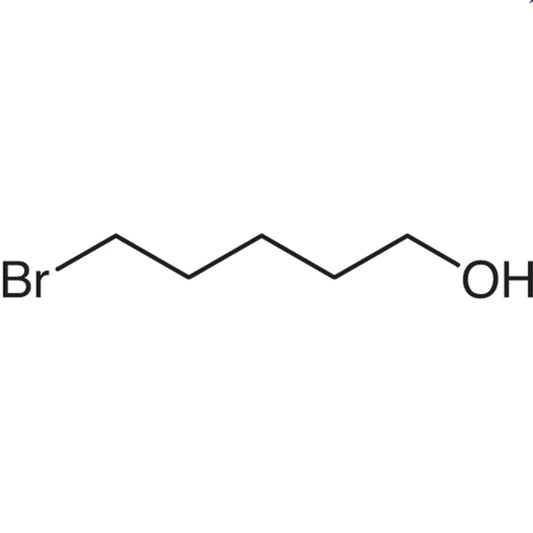
5-Bromo-1-pentanol TCI B1848
Regular price From Rp 1.485.750,00Regular price -
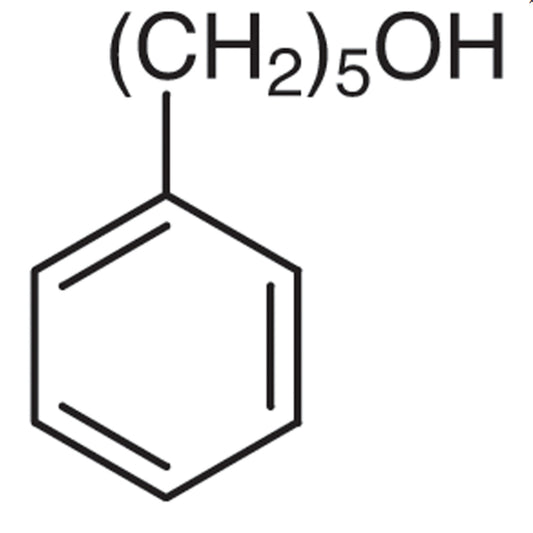
5-Phenyl-1-pentanol TCI P1325
Regular price From Rp 3.658.200,00Regular price -
4-Methyl-1-phenyl-2-pentanol TCI M2012
Regular price From Rp 848.400,00Regular price -
3-Methyl-1-phenyl-3-pentanol TCI M2011
Regular price From Rp 505.050,00Regular price -
3-Ethyl-2-methyl-3-pentanol TCI E0481
Regular price Rp 4.320.750,00Regular price -
2,3,4-Trimethyl-3-pentanol TCI D2436
Regular price From Rp 4.108.650,00Regular price -
1-Cyclohexyl-1-pentanol TCI C1569
Regular price Rp 1.008.000,00Regular price