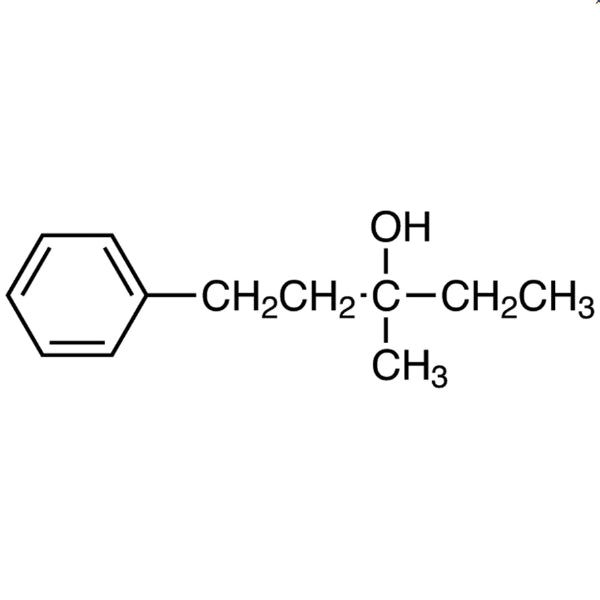
3-Methyl-1-phenyl-3-pentanol is an organic compound widely used as a foundational building block in the synthesis of complex molecules. Its unique molecular structure, combining an alkyl chain with a phenyl group, enables it to participate in a variety of chemical reactions. In the laboratory, this compound plays a crucial role in organic chemistry, serving as a versatile intermediate for the creation of more complex chemical structures. Its presence in research settings supports the development of new materials, pharmaceuticals, and specialty chemicals.
The compound is valued for its stable chemical structure and controlled reactivity, making it suitable for various synthetic processes. Its non-polar nature facilitates efficient separation and purification techniques commonly used in laboratory workflows. Additionally, its high purity ensures reliable results in experiments requiring precision and consistency. These properties make it an essential component in both academic and industrial research environments.
In Indonesian laboratories, 3-Methyl-1-phenyl-3-pentanol is frequently utilized in organic chemistry research, particularly in academic institutions and research centers. It is a key reagent in the development of new compounds for pharmaceutical and material science applications. Its availability and reliability make it a preferred choice for researchers aiming to achieve reproducible and high-quality experimental outcomes.
- Organic synthesis applications benefit from its versatile structure, allowing for the creation of complex molecules in pharmaceutical and material science research.
- It is commonly used in the development of new chemical compounds, supporting innovation in both academic and industrial settings.
- Its non-polar properties make it ideal for purification processes, aiding in the isolation of target compounds during chemical reactions.
- It serves as a building block in the synthesis of specialty chemicals, contributing to the advancement of chemical engineering projects.
- Its stability and controlled reactivity make it suitable for a wide range of chemical transformations, including oxidation and reduction reactions.
| Brand | TCI |
|---|---|
| CAS number | 10415-87-9 |
| Molecular formula | — |
| Purity | — |
| Category | Chemistry > Building Blocks > Non-Heterocyclic Building Blocks |
| Pack sizes | Available in various quantities as per supplier offerings |
| Physical form | Liquid |
| Storage | Store in a cool, dry place away from direct sunlight |
This compound should be stored in a cool, dry environment, away from direct sunlight and sources of heat. It is recommended to use airtight containers to prevent moisture absorption and contamination. Due to its non-polar nature, it is advisable to store it in a sealed container made of materials that are chemically inert, such as glass or polyethylene. In laboratory settings, it is important to handle the compound with appropriate personal protective equipment, including gloves and safety goggles, to ensure safe handling. Regular monitoring of storage conditions is essential to maintain its chemical integrity and ensure its usability for research purposes.
—
Produk Terkait
-
2,4,4-Trimethyl-2-pentanol TCI T1962
Regular price From Rp 2.571.450,00Regular price -
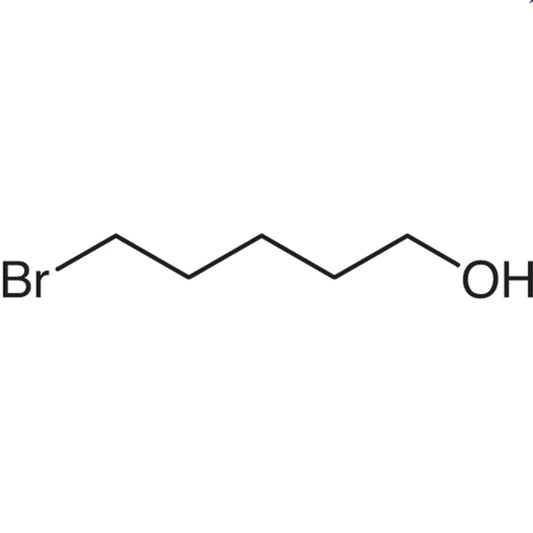
5-Bromo-1-pentanol TCI B1848
Regular price From Rp 1.485.750,00Regular price -
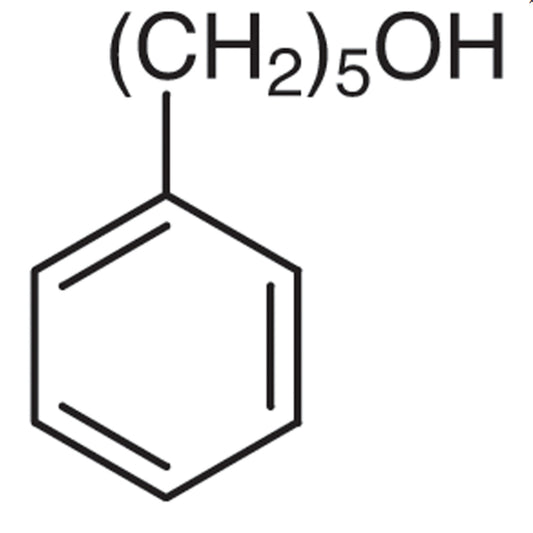
5-Phenyl-1-pentanol TCI P1325
Regular price From Rp 3.658.200,00Regular price -
1-Phenyl-1-pentanol TCI P1086
Regular price From Rp 1.298.850,00Regular price -
4-Methyl-1-phenyl-2-pentanol TCI M2012
Regular price From Rp 848.400,00Regular price -
3-Ethyl-2-methyl-3-pentanol TCI E0481
Regular price Rp 4.320.750,00Regular price -
2,3,4-Trimethyl-3-pentanol TCI D2436
Regular price From Rp 4.108.650,00Regular price -
1-Cyclohexyl-1-pentanol TCI C1569
Regular price Rp 1.008.000,00Regular price