
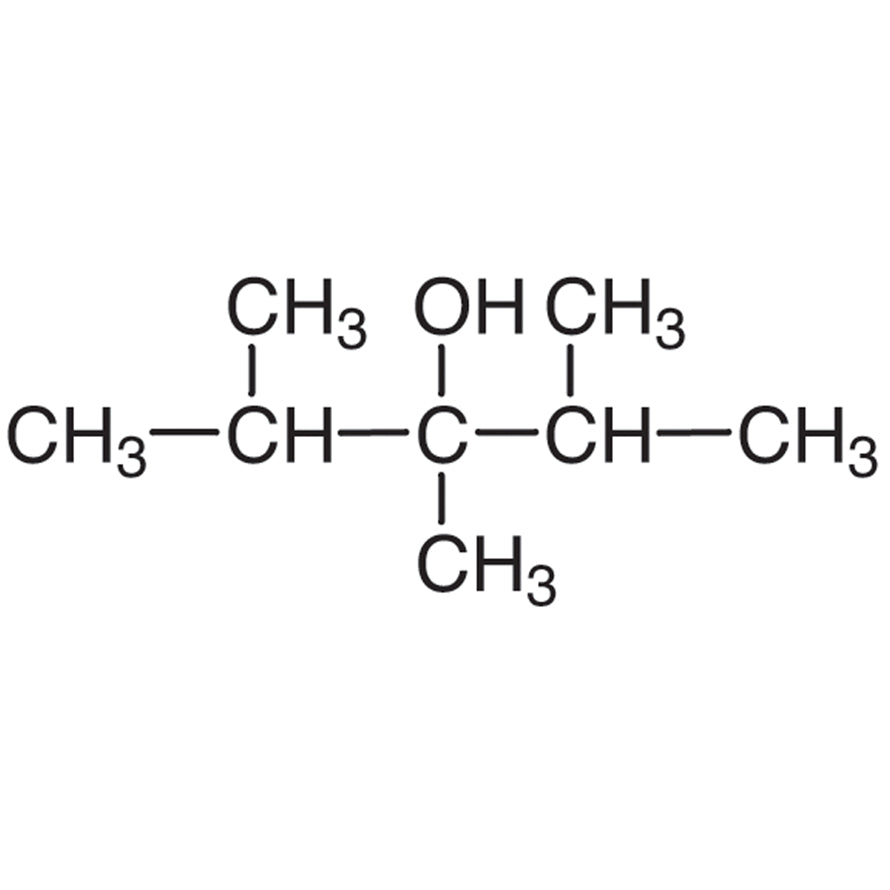
2,3,4-Trimethyl-3-pentanol from TCI is a highly branched aliphatic tertiary alcohol. Its hydroxyl group sits on a carbon atom surrounded by methyl and isopropyl groups. As a non-heterocyclic building block, it is used in organic synthesis laboratories as a source of branched hydrocarbon frameworks. It also serves as a model substrate for studying reactions governed by steric hindrance. Its compact, crowded structure makes it a useful example in studies of tertiary alcohol chemistry, elimination reactions and carbocation formation.
Researchers mainly choose this compound for the steric hindrance around its hydroxyl group. Unlike primary or secondary alcohols, tertiary alcohols do not oxidize easily. They tend instead to undergo dehydration or substitution through a tertiary carbocation. This lets researchers observe skeletal rearrangements, elimination selectivity and the effect of branching on how a reaction proceeds. Because the compound is fully aliphatic, it is also easy to analyze by gas chromatography and NMR spectroscopy, so reaction products and mixtures can be followed clearly.
In Indonesian laboratories, this material suits research groups working in physical organic chemistry, reaction mechanism studies and synthesis that needs branched alkyl fragments. University chemistry departments can use it in advanced organic chemistry research and in graduate projects on carbocation behavior. Synthesis laboratories can use it when they need a crowded tertiary alcohol as a starting material or reference compound. Its well-defined structure also makes it a good choice for method development in GC and NMR analysis.
- Carbocation chemistry studies: the compound readily forms a tertiary carbocation, so researchers can use it to study how carbocations form, how stable they are and how they rearrange in a crowded environment.
- Dehydration and elimination selectivity research: as a tertiary alcohol, it tends to dehydrate rather than oxidize, which makes it a good model for comparing which alkene products form under different acid or thermal conditions.
- Steric hindrance investigations: methyl and isopropyl groups crowd the hydroxyl-bearing carbon, so it is a clear model substrate for measuring how steric bulk slows or redirects substitution and elimination reactions.
- Synthesis of branched hydrocarbon frameworks: as a non-heterocyclic building block, it supplies a compact, highly branched alkyl skeleton for synthetic routes that need bulky aliphatic fragments in the target molecule.
- Analytical method development with GC and NMR: its simple aliphatic structure gives clean, readable signals, so it works well for practicing and validating gas chromatography and NMR methods for product mixtures.
| Brand | TCI (product code D2436) |
|---|---|
| CAS number | 3054-92-0 |
| Molecular formula | — |
| Purity | see the TCI product specification and certificate of analysis supplied with each lot. |
| Category | Chemistry > Building Blocks > Non-Heterocyclic Building Blocks |
| Pack sizes | as listed for TCI product D2436. Please confirm availability with AMI Scientific when ordering. |
| Physical form | — |
| Storage | follow the storage conditions on the TCI label and safety data sheet. |
Keep 2,3,4-Trimethyl-3-pentanol in its original, tightly closed TCI container, or in a clean, compatible glass container with a secure cap. Store it in a cool, dry, well-ventilated place away from heat, sparks, open flames and strong oxidizing agents or acids. Follow any specific storage temperature on the TCI label. Handle the compound in a fume hood and wear safety glasses, chemical-resistant gloves and a laboratory coat. Do not inhale vapors or let the material touch your skin or eyes. Before use, read the safety data sheet and follow your institution's chemical hygiene and waste disposal procedures.
—
Produk Terkait
-
2,4,4-Trimethyl-2-pentanol TCI T1962
Regular price From Rp 2.517.000,00Regular priceRp 1.712.000,00Sale price From Rp 2.517.000,00 -
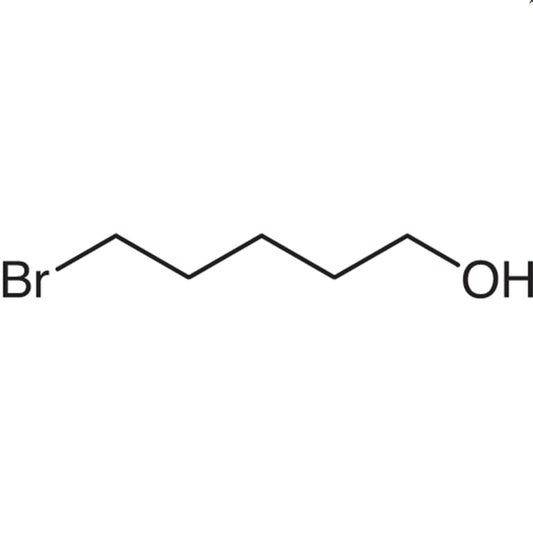
5-Bromo-1-pentanol TCI B1848
Regular price From Rp 1.453.000,00Regular priceRp 989.000,00Sale price From Rp 1.453.000,00 -
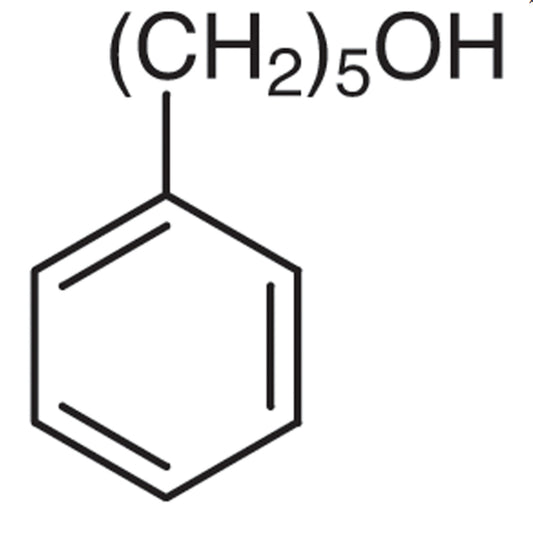
5-Phenyl-1-pentanol TCI P1325
Regular price From Rp 3.580.000,00Regular priceRp 2.436.000,00Sale price From Rp 3.580.000,00 -
1-Phenyl-1-pentanol TCI P1086
Regular price From Rp 1.272.000,00Regular priceRp 865.000,00Sale price From Rp 1.272.000,00 -
4-Methyl-1-phenyl-2-pentanol TCI M2012
Regular price From Rp 831.000,00Regular priceRp 565.000,00Sale price From Rp 831.000,00 -
3-Methyl-1-phenyl-3-pentanol TCI M2011
Regular price From Rp 494.000,00Regular priceRp 336.000,00Sale price From Rp 494.000,00 -
3-Ethyl-2-methyl-3-pentanol TCI E0481
Regular price Rp 4.229.000,00Regular priceRp 2.877.000,00Sale price Rp 4.229.000,00 -
1-Cyclohexyl-1-pentanol TCI C1569
Regular price Rp 1.037.000,00Regular priceRp 721.000,00Sale price Rp 1.037.000,00