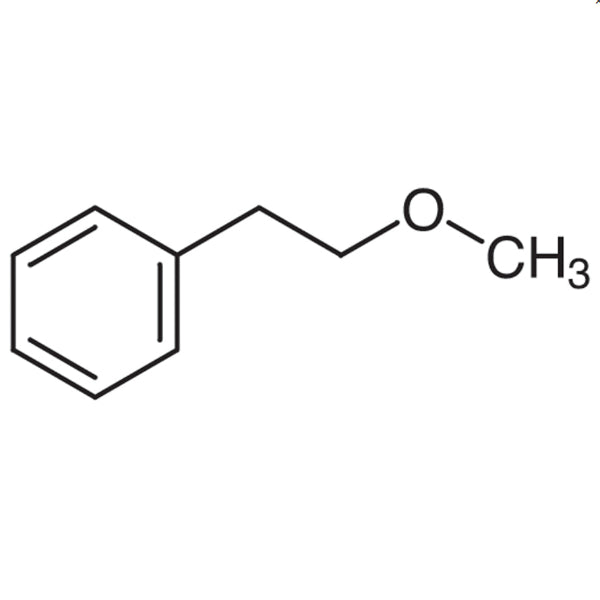
2-Phenylethyl Methyl Ether is a chemical compound widely used as a foundational building block in the synthesis of complex organic compounds. Its simple molecular structure plays a crucial role in the development of more intricate molecular frameworks. In laboratory settings, this compound serves as a precursor for the creation of aromatic and heterocyclic compounds, making it an essential component in synthetic chemistry workflows. Its stability under normal conditions ensures ease of handling and storage, contributing to its reliability in research environments.
The compound's non-heterocyclic structure provides a controlled level of reactivity, making it a preferred choice for researchers seeking predictable chemical behavior. This stability allows for precise manipulation in various synthetic reactions, supporting the development of new compounds with potential applications in pharmaceuticals and materials science. Its predictable nature also enhances the reproducibility of experimental results, which is vital for scientific research.
In Indonesian laboratories, 2-Phenylethyl Methyl Ether is extensively used in organic chemistry, pharmaceutical research, and material development. Researchers leverage its properties to synthesize new compounds with medical or industrial applications. Its availability and reliability make it a go-to choice for local research institutions aiming to advance scientific innovation.
- Aromatic Compound Synthesis: This compound is ideal for creating aromatic structures due to its stable and predictable molecular framework.
- Organic Chemistry Research: Its non-heterocyclic nature makes it a versatile tool for building complex organic molecules in laboratory settings.
- Pharmaceutical Development: It is frequently used in the synthesis of drug-related compounds, supporting the creation of new therapeutic agents.
- Material Science Applications: Its chemical stability allows it to be incorporated into the development of advanced materials with specific functional properties.
- Educational Research: It is commonly used in academic laboratories to teach and demonstrate fundamental organic synthesis techniques.
| Brand | TCI |
|---|---|
| CAS number | 3558-60-9 |
| Molecular formula | — |
| Purity | — |
| Category | Chemistry > Building Blocks > Non-Heterocyclic Building Blocks |
| Pack sizes | As per supplier specifications |
| Physical form | Liquid |
| Storage | Store in a cool, dry place away from direct sunlight |
This compound should be stored in a cool, dry environment, away from direct sunlight and sources of heat. It is recommended to use airtight containers to prevent exposure to moisture and air, which could affect its stability. Due to its chemical nature, it should be handled with appropriate personal protective equipment, such as gloves and safety goggles, to ensure laboratory safety. Proper ventilation is essential when working with this compound to minimize inhalation risks. It should not be stored near incompatible substances, such as strong oxidizers or acids, to prevent any potential chemical reactions. Regular inspection of storage conditions is advised to maintain the integrity of the compound over time.
—
Produk Terkait
-
TCI B5774 5,10-Bis(4,4,5,5-tetramethyl-1,3,2-dioxaborolan-2-yl)naphtho[1,2-c:5,6-c']bis([1,2,5]oxadiazole)
Regular price Rp 10.255.350,00Regular price -
Dihydroiodide TCI B6569
Regular price From Rp 1.936.200,00Regular price -
Trifluoromethanesulfonate TCI B7003
Regular price From Rp 1.936.200,00Regular price
![5,10-Bis(4,4,5,5-tetramethyl-1,3,2-dioxaborolan-2-yl)naphtho[1,2-c:5,6-c']bis([1,2,5]oxadiazole) - TCI B5774 - AMI Scientific](http://amiscientific.com/cdn/shop/files/TCI2510B5774.jpg?v=1769180228&width=533)