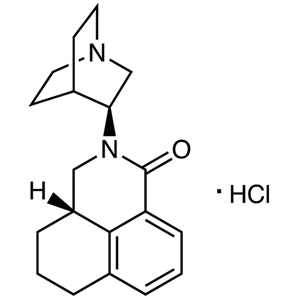
Palonosetron Hydrochloride is a chemical compound widely used in pharmacological and biochemical research. It serves as a key reagent in experimental studies aimed at understanding and developing antiemetic drugs. This compound is a derivative of serotonin and plays a crucial role in the mechanism of action of medications designed to prevent nausea and vomiting. In laboratory settings, it is essential for the formulation and testing of pharmaceutical products intended for post-operative or chemotherapy-related use. Its significance lies in its ability to support research into effective therapeutic interventions for various medical conditions.
The compound is known for its chemical stability and high purity, making it a preferred choice for precise and accurate experimental work. Its solubility in organic solvents facilitates easy processing and integration into diverse chemical reactions. These properties ensure reliable results in laboratory experiments, contributing to the advancement of pharmaceutical research. The consistent quality and predictable behavior of Palonosetron Hydrochloride enhance its utility in both academic and industrial research environments.
In Indonesian laboratories, Palonosetron Hydrochloride is commonly used in applied research projects. It is integral to drug efficacy testing, pharmaceutical formulation development, and studies on the mechanisms of active compounds. Its presence in these research areas highlights its importance in the scientific community, supporting the development of new and improved therapeutic solutions.
- Antiemetic Drug Development: Palonosetron Hydrochloride is ideal for researching medications that prevent nausea and vomiting, especially in post-operative and chemotherapy settings.
- Pharmaceutical Formulation Testing: Its high purity and stability make it suitable for evaluating the effectiveness of drug formulations in controlled environments.
- Mechanism of Action Studies: It supports investigations into how serotonin derivatives interact with biological systems, aiding in the understanding of pharmacological responses.
- Drug Efficacy Evaluation: The compound is used to test the effectiveness of new drugs in reducing nausea and vomiting, providing critical data for clinical trials.
- Research on Neurotransmitter Pathways: Its role as a serotonin derivative makes it valuable for studying the pathways involved in nausea and vomiting responses.
| Brand | TCI |
|---|---|
| CAS number | 135729-62-3 |
| Molecular formula | — |
| Purity | — |
| Category | Life Science > Biochemicals and Reagents > Pharmaceutical Research Reagents |
| Pack sizes | Available in various quantities as per standard laboratory requirements |
| Physical form | Solid powder |
| Storage | Store in a cool, dry place away from light |
Palonosetron Hydrochloride should be stored in a cool, dry environment, away from direct sunlight and moisture. It is recommended to keep the compound in a sealed container to prevent contamination and maintain its chemical integrity. Laboratory personnel should handle the substance with care, using appropriate personal protective equipment such as gloves and safety goggles. Since it is a pharmaceutical reagent, it should be stored separately from incompatible materials to avoid any potential chemical interactions. Proper labeling of storage containers is essential to ensure safe handling and easy identification. Regular monitoring of storage conditions will help preserve the compound’s quality and effectiveness for research purposes.
—
Produk Terkait
-
TCI B5774 5,10-Bis(4,4,5,5-tetramethyl-1,3,2-dioxaborolan-2-yl)naphtho[1,2-c:5,6-c']bis([1,2,5]oxadiazole)
Regular price Rp 10.255.350,00Regular price -
Dihydroiodide TCI B6569
Regular price From Rp 1.936.200,00Regular price -
Trifluoromethanesulfonate TCI B7003
Regular price From Rp 1.936.200,00Regular price
![5,10-Bis(4,4,5,5-tetramethyl-1,3,2-dioxaborolan-2-yl)naphtho[1,2-c:5,6-c']bis([1,2,5]oxadiazole) - TCI B5774 - AMI Scientific](http://amiscientific.com/cdn/shop/files/TCI2510B5774.jpg?v=1769180228&width=533)