Pyrazole-3-carboxaldehyde is a chemical compound with a heterocyclic structure, commonly used as a building block in the synthesis of complex molecules. It plays a crucial role in laboratory settings, particularly in organic chemistry, where it serves as a versatile intermediate for the development of new compounds. Its ability to participate in various chemical reactions makes it an essential tool for researchers aiming to create novel pharmaceuticals, industrial chemicals, and organic materials. This compound is widely utilized in Indonesian laboratories for its adaptability and effectiveness in synthetic processes.
The chemical properties of Pyrazole-3-carboxaldehyde make it a preferred choice for laboratory applications. It exhibits reactivity towards alcohols, acids, and bases, which allows it to engage in substitution and condensation reactions. Its stability under specific conditions ensures that it remains a reliable reagent in controlled environments. Additionally, its molecular structure enables it to participate in important organic reactions such as the Diels-Alder and Michael reactions, further expanding its utility in synthetic chemistry. These characteristics make it a valuable resource for chemists working on complex molecular designs.
In Indonesian laboratories, Pyrazole-3-carboxaldehyde is extensively used in organic chemistry research, especially in pharmaceutical and material science fields. Researchers rely on this compound to develop new drugs, modify molecular structures, and explore innovative chemical pathways. Its availability and effectiveness make it a top choice for scientists aiming to advance their work in synthetic chemistry and related disciplines.
Related TCI products
- TCI B5404 63874-95-3 1-Benzyl-1H-pyrazole-4-carboxaldehyde
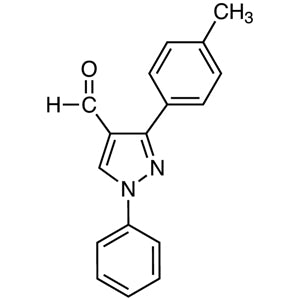
- TCI P2657 36640-52-5 1-Phenyl-3-(p-tolyl)-1H-pyrazole-4-carboxaldehyde
- TCI P2473 54605-72-0 1-Phenyl-1H-pyrazole-4-carboxaldehyde
- TCI M2902 199682-73-0 3-(4-Methoxyphenyl)pyrazole-4-carboxaldehyde
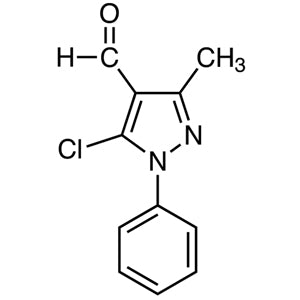
- TCI C3559 947-95-5 5-Chloro-3-methyl-1-phenyl-1H-pyrazole-4-carboxaldehyde
- TCI T3668 1040377-03-4 1-(Tetrahydro-2H-pyran-4-yl)-4-(4,4,5,5-tetramethyl-1,3,2-dioxaborolan-2-yl)-1H-pyrazole
- Organic synthesis applications benefit from Pyrazole-3-carboxaldehyde due to its reactivity and ability to form carbon-nitrogen bonds, making it ideal for constructing complex heterocyclic compounds.
- Pharmaceutical research utilizes this compound to develop new drug molecules, as its structure can be modified to create bioactive compounds with therapeutic potential.
- Material science applications leverage its chemical versatility for the synthesis of advanced organic materials, including polymers and functional coatings.
- Analytical chemistry uses Pyrazole-3-carboxaldehyde as a standard reference compound for identifying and quantifying similar heterocyclic structures in complex mixtures.
- Industrial chemical production incorporates this compound in the synthesis of specialty chemicals, where its reactivity supports efficient and scalable manufacturing processes.
| Brand | TCI |
|---|---|
| CAS number | 3920-50-1 |
| Molecular formula | — |
| Purity | — |
| Category | Chemistry > Building Blocks > Heterocyclic Building Blocks |
| Pack sizes | Available in various quantities as per supplier specifications |
| Physical form | Liquid or crystalline, depending on the specific formulation |
| Storage | Store in a cool, dry place away from direct light and incompatible substances |
Pyrazole-3-carboxaldehyde should be stored in a cool, dry environment, away from direct sunlight and sources of heat. It is recommended to use airtight containers made of glass or inert plastic to prevent contamination and degradation. Due to its reactivity, it should be kept separate from strong acids, bases, and oxidizing agents to avoid unwanted chemical interactions. In laboratory settings, proper personal protective equipment, such as gloves and safety goggles, should always be worn when handling this compound. Regular monitoring of storage conditions ensures the compound remains stable and suitable for use in chemical synthesis processes.
—
Produk Terkait
-
1-Benzyl-1H-pyrazole-4-carboxaldehyde TCI B5404
Regular price From Rp 1.273.650,00Regular price -
1-Phenyl-3-(p-tolyl)-1H-pyrazole-4-carboxaldehyde TCI P2657
Regular price From Rp 1.060.500,00Regular price -
1-Phenyl-1H-pyrazole-4-carboxaldehyde TCI P2473
Regular price From Rp 2.466.450,00Regular price -
3-(4-Methoxyphenyl)pyrazole-4-carboxaldehyde TCI M2902
Regular price From Rp 1.298.850,00Regular price -
5-Chloro-3-methyl-1-phenyl-1H-pyrazole-4-carboxaldehyde TCI C3559
Regular price From Rp 1.485.750,00Regular price -
1-(Tetrahydro-2H-pyran-4-yl)-4-(4,4,5,5-tetramethyl-1,3,2-dioxaborolan-2-yl)-1H-pyrazole TCI T3668
Regular price From Rp 769.650,00Regular price -
1-(Tetrahydro-2H-pyran-2-yl)-1H-pyrazole TCI T3408
Regular price From Rp 743.400,00Regular price -
5-Amino-1-(p-tolyl)pyrazole-4-carbonitrile TCI A3039
Regular price Rp 3.312.750,00Regular price