1-Phenyl-1H-pyrazole-4-carboxaldehyde from TCI is a heterocyclic compound built on a pyrazole ring, with a phenyl substituent on the nitrogen at position 1 and an aldehyde group at position 4. In organic synthesis laboratories it serves as a building block, meaning a starting material used to construct more complex molecules. The pyrazole ring is a motif often found in bioactive compounds. For this reason, pyrazole derivatives are widely used in medicinal chemistry, agrochemical research and functional materials research.
The main reason chemists choose this compound is its aldehyde group, which is highly versatile. It can undergo many standard transformations, including condensation with amines to form imines, reductive amination, Knoevenagel reactions and Wittig reactions. It can also be reduced to an alcohol or oxidised to a carboxylic acid. The phenyl substituent on nitrogen adds stability and a degree of lipophilicity to the pyrazole framework. Together, these features let researchers introduce the 1-phenylpyrazole unit into a wide range of target structures in only a few well-established reaction steps.
For laboratories in Indonesia, this compound is useful to research groups working in synthetic organic chemistry and medicinal chemistry at universities, research institutes and industrial research and development units. Groups that design and synthesise new heterocyclic compounds for biological screening can use it as a dependable entry point to pyrazole-based structures. It also suits student research projects and theses that explore condensation and carbon–carbon bond-forming reactions. Because it is supplied under the TCI brand, laboratories can work with a recognised reagent source for their synthesis programmes.
Related TCI products
- TCI B5404 63874-95-3 1-Benzyl-1H-pyrazole-4-carboxaldehyde
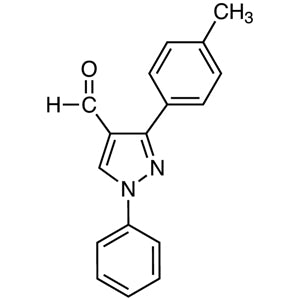
- TCI P2657 36640-52-5 1-Phenyl-3-(p-tolyl)-1H-pyrazole-4-carboxaldehyde
- TCI P2261 3920-50-1 Pyrazole-3-carboxaldehyde
- TCI M2902 199682-73-0 3-(4-Methoxyphenyl)pyrazole-4-carboxaldehyde
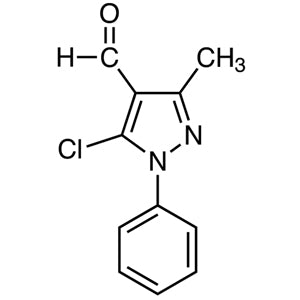
- TCI C3559 947-95-5 5-Chloro-3-methyl-1-phenyl-1H-pyrazole-4-carboxaldehyde
- TCI T3668 1040377-03-4 1-(Tetrahydro-2H-pyran-4-yl)-4-(4,4,5,5-tetramethyl-1,3,2-dioxaborolan-2-yl)-1H-pyrazole
- Medicinal chemistry scaffold synthesis: the 1-phenylpyrazole core is a motif common in bioactive compounds, so this aldehyde is a practical starting point for building candidate molecules.
- Imine formation and reductive amination: the reactive aldehyde group condenses readily with amines, which lets researchers attach amine-containing fragments to the pyrazole ring in a few steps.
- Knoevenagel and Wittig reactions: the aldehyde takes part in these classic carbon–carbon bond-forming reactions, extending the molecular framework to give alkene-linked pyrazole derivatives.
- Functional group interconversion studies: the aldehyde can be reduced to the corresponding alcohol or oxidised to the carboxylic acid, giving access to related pyrazole building blocks.
- Agrochemical and functional materials research: pyrazole derivatives are widely explored in these fields, and this compound offers a convenient way to introduce the 1-phenylpyrazole unit.
| Brand | TCI (product code P2473) |
|---|---|
| CAS number | 54605-72-0 |
| Molecular formula | — |
| Purity | — |
| Category | Chemistry > Building Blocks > Heterocyclic Building Blocks |
| Pack sizes | according to the TCI pack options listed on the product page |
| Physical form | refer to the TCI product specification and certificate of analysis |
| Storage | follow the storage conditions on the TCI label and safety data sheet (SDS) |
Store this compound in its original, tightly closed container in a cool, dry and well-ventilated place, away from direct sunlight, heat sources and strong oxidising agents. Aldehydes can slowly oxidise in air, so reseal the container promptly after each use. If an inert atmosphere is specified on the label, flush the container with inert gas before closing it. Always check the TCI label and SDS for the recommended storage temperature. Handle the material in a fume hood while wearing a laboratory coat, chemical-resistant gloves and safety glasses. Avoid inhaling dust or vapour, and avoid contact with skin and eyes. Clean up spills promptly and dispose of waste according to local chemical waste regulations.
—
Produk Terkait
-
1-Benzyl-1H-pyrazole-4-carboxaldehyde TCI B5404
Regular price From Rp 1.273.650,00Regular price -
1-Phenyl-3-(p-tolyl)-1H-pyrazole-4-carboxaldehyde TCI P2657
Regular price From Rp 1.060.500,00Regular price -
Pyrazole-3-carboxaldehyde TCI P2261
Regular price From Rp 1.724.100,00Regular price -
3-(4-Methoxyphenyl)pyrazole-4-carboxaldehyde TCI M2902
Regular price From Rp 1.298.850,00Regular price -
5-Chloro-3-methyl-1-phenyl-1H-pyrazole-4-carboxaldehyde TCI C3559
Regular price From Rp 1.485.750,00Regular price -
1-(Tetrahydro-2H-pyran-4-yl)-4-(4,4,5,5-tetramethyl-1,3,2-dioxaborolan-2-yl)-1H-pyrazole TCI T3668
Regular price From Rp 769.650,00Regular price -
1-(Tetrahydro-2H-pyran-2-yl)-1H-pyrazole TCI T3408
Regular price From Rp 743.400,00Regular price -
5-Amino-1-(p-tolyl)pyrazole-4-carbonitrile TCI A3039
Regular price Rp 3.312.750,00Regular price