Potassium (Phthalimidomethyl)trifluoroborate is a chemical compound widely used in laboratory settings for its role in organometallic reactions. As a reagent in the organoboron category, it serves as a versatile source of boron, enabling the formation of new organic compounds through various chemical interactions. Its unique molecular structure, featuring a phthalimidomethyl group attached to a trifluoroborate moiety, contributes to its reactivity and utility in synthetic chemistry. This compound is particularly valuable in reactions that require precise control over molecular structure and functional group modification.
The compound's high reactivity and stability make it a preferred choice for researchers working in organic and inorganic synthesis. Its ability to participate in nucleophilic and substitution reactions allows it to be a key player in the development of complex molecules. The presence of the trifluoroborate group enhances its compatibility with a range of substrates, making it suitable for a variety of chemical transformations. These properties ensure that it remains a reliable and effective reagent in both academic and industrial research environments.
In Indonesian laboratories, this compound is commonly used in organic chemistry research, compound development, and studies focused on the reactivity of organoboron species. Its availability in international markets ensures that it is accessible to researchers in Indonesia, supporting ongoing scientific investigations and innovation. Its role in advancing chemical synthesis makes it an essential component of modern laboratory practices in the region.
Advantages (TCI brochure)
- Stable in air at room temperature
- Applicable to the introduction of hydroxymethyl and aminomethyl groups
TCI brochures (PDF)
- Trifluoroborate Salts for Direct Introduction of Hydroxymethyl Group and Aminomethyl Group 2026-01-05 · p. 1
- Organotrifluoroborate Salts 2024-08-27 · p. 1
- Suzuki-Miyaura Cross Coupling Reaction 2025-12-01 · p. 21
- Boron Compounds 2025-10-07 · p. 27
Related TCI products
- TCI P3292 2254447-10-2 Potassium [[1-(tert-Butoxycarbonyl)azetidin-3-yl]methyl]trifluoroborate
- TCI B2707 40101-31-3 N-(4-Bromophenyl)phthalimide
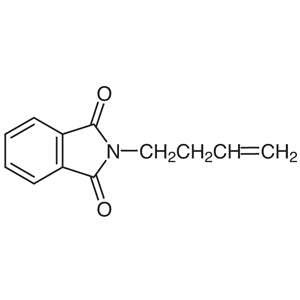
- TCI B1881 52898-32-5 N-(3-Buten-1-yl)phthalimide
- TCI P0403 1074-82-4 Phthalimide Potassium Salt
- TCI P0402 85-41-6 Phthalimide
- TCI H0245 3891-07-4 N-(2-Hydroxyethyl)phthalimide
- Organic synthesis applications benefit from this compound's ability to facilitate the formation of complex molecular structures through its reactivity and compatibility with various substrates.
- It is ideal for nucleophilic and substitution reactions due to its unique molecular structure, allowing it to act as a versatile reagent in synthetic pathways.
- In the development of new compounds, its role as a boron source enables the creation of novel chemical entities with tailored properties.
- It supports research into the reactivity of organoboron compounds, providing insights into chemical behavior and reaction mechanisms.
- Indonesian laboratories use it extensively in academic and industrial research to advance chemical synthesis and molecular modification techniques.
From the TCI brochure
- Introduction of aminomethyl (phthalimidomethyl) group by coupling with (Het)Ar chlorides, giving N-(arylmethyl)phthalimide products
| Brand | TCI |
|---|---|
| CAS number | 1001671-72-2 |
| Molecular formula | — |
| Purity | — |
| Category | Chemistry > Organometallic Reagents > Organoboron [Organometallic Reagents] |
| Pack sizes | — |
| Physical form | — |
| Storage | Store in a cool, dry place away from moisture and direct sunlight |
Data from the TCI brochure
| Equivalents | 1.2 eq. (PdCl2(CH3CN)2 [B1676] cat., XPhos [D5038] cat., K2CO3 [P1748], tBuOH/H2O) |
|---|
Source: TCI brochure RR124 (2026-01-05)
This compound should be stored in a cool, dry environment to maintain its chemical integrity and prevent degradation. It is recommended to use airtight containers to protect it from moisture and air exposure. Due to its reactivity, it should be handled with care, using appropriate personal protective equipment such as gloves and safety goggles. Storage should be in a well-ventilated area to minimize the risk of inhalation of any vapors. Avoid contact with incompatible substances to ensure safe handling and long-term stability. General laboratory precautions should be followed to maintain a safe working environment.
References cited in the TCI brochure
- Rammohan Devulapally. Synthesis and cross-coupling reactions of imidomethyltrifluoroborates with aryl chlorides Tetrahedron Letters, 2012. doi:10.1016/j.tetlet.2011.12.062
Produk Terkait
-
Potassium[[1-(tert-Butoxycarbonyl)azetidin-3-yl]methyl]trifluoroborate TCI P3292
Regular price Rp 8.480.850,00Regular price -
N-(4-Bromophenyl)phthalimide TCI B2707
Regular price From Rp 2.730.000,00Regular price -
N-(3-Buten-1-yl)phthalimide TCI B1881
Regular price Rp 7.897.050,00Regular price -
PhthalimidePotassiumSalt TCI P0403
Regular price From Rp 557.550,00Regular price -
Phthalimide TCI P0402
Regular price From Rp 530.250,00Regular price -
N-(2-Hydroxyethyl)phthalimide TCI H0245
Regular price From Rp 689.850,00Regular price -
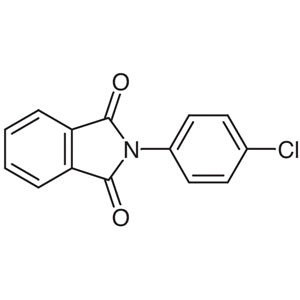
N-(4-Chlorophenyl)phthalimide TCI C1958
Regular price From Rp 1.378.650,00Regular price -
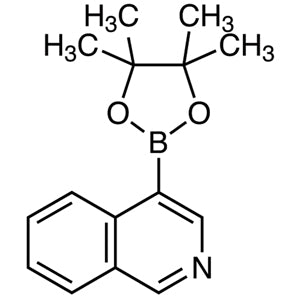
4-(4,4,5,5-Tetramethyl-1,3,2-dioxaborolan-2-yl)isoquinoline TCI I0739
Regular price From Rp 2.386.650,00Regular price
![2254447-10-2 Potassium [[1-(tert-Butoxycarbonyl)azetidin-3-yl]methyl]trifluoroborate - AMI Scientific](http://amiscientific.com/cdn/shop/files/TCI2510P3292.jpg?v=1768362899&width=533)