![2254447-10-2 Potassium [[1-(tert-Butoxycarbonyl)azetidin-3-yl]methyl]trifluoroborate - AMI Scientific](http://amiscientific.com/cdn/shop/files/TCI2510P3292.jpg?v=1768362899&width=1946)
![2254447-10-2 Potassium [[1-(tert-Butoxycarbonyl)azetidin-3-yl]methyl]trifluoroborate - AMI Scientific](http://amiscientific.com/cdn/shop/files/TCI2510P3292.jpg?v=1768362899&width=1445)
Potassium [[1-(tert-Butoxycarbonyl)azetidin-3-yl]methyl]trifluoroborate (CAS 2254447-10-2) is a potassium organotrifluoroborate salt that carries a Boc-protected azetidine unit. Organotrifluoroborate salts, often called Molander salts, are a class of organoboron reagents developed as alternatives to boronic acids in Suzuki–Miyaura cross-coupling. In the laboratory, this TCI reagent lets researchers attach the (azetidin-3-yl)methyl group to a wide range of aryl or heteroaryl scaffolds through metal-catalysed coupling. The four-membered azetidine ring is an increasingly popular motif in medicinal chemistry.
Potassium trifluoroborate salts are generally more stable to air and moisture than many alkyl boronic acids, so they are easier to weigh, store and handle in routine synthetic work. Under reaction conditions, these salts release the reactive boron species slowly, which can help suppress unwanted side reactions. The primary sp3 alkyl group on this compound suits both classical Suzuki–Miyaura coupling and photoredox/nickel dual-catalysis methods. The Boc group protects the azetidine nitrogen during coupling and can be removed with acid afterwards, which opens the way to further functionalisation of the free amine.
In Indonesia, this reagent is relevant to medicinal chemistry and organic synthesis research groups at universities, research institutes and pharmaceutical development laboratories. These teams often need dependable building blocks to add saturated, nitrogen-containing ring fragments to drug-like molecules. They can use this Molander salt to build compound libraries, explore structure–activity relationships, or prepare advanced intermediates. Its handling stability is a practical advantage in laboratories where reagents are stored for long periods between synthesis campaigns.
TCI brochures (PDF)
- Suzuki-Miyaura Cross Coupling Reaction 2025-12-01 · p. 21
- Boron Compounds 2025-10-07 · p. 27
Related TCI products
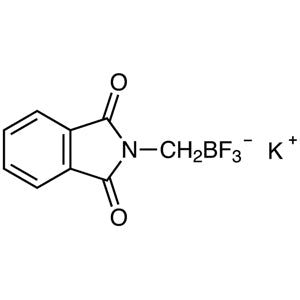
- TCI P2514 1001671-72-2 Potassium (Phthalimidomethyl)trifluoroborate
- TCI B6013 183062-96-6 2-[1-(tert-Butoxycarbonyl)azetidin-3-yl]acetic Acid
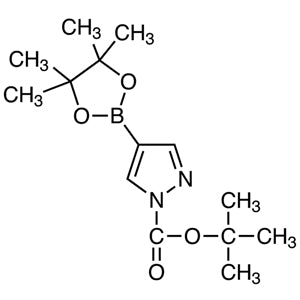
- TCI B5203 552846-17-0 1-(tert-Butoxycarbonyl)-4-(4,4,5,5-tetramethyl-1,3,2-dioxaborolan-2-yl)pyrazole
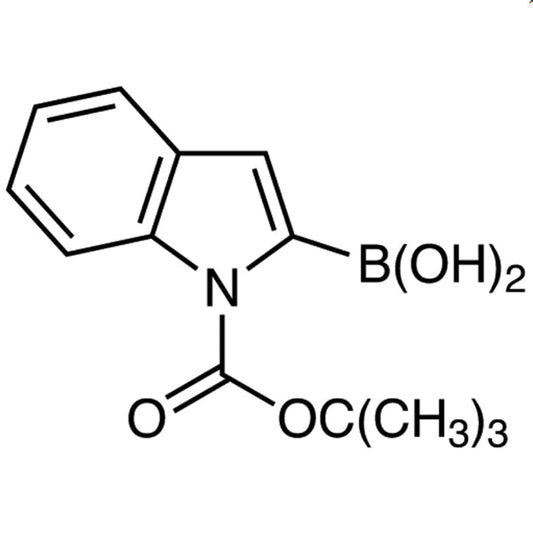
- TCI B5145 213318-44-6 1-(tert-Butoxycarbonyl)indole-2-boronic Acid (contains varying amounts of Anhydride)
- TCI B4063 135884-31-0 1-(tert-Butoxycarbonyl)-2-pyrroleboronic Acid (contains varying amounts of Anhydride)
- TCI B4051 286961-14-6 1-(tert-Butoxycarbonyl)-1,2,3,6-tetrahydro-4-(4,4,5,5-tetramethyl-1,3,2-dioxaborolan-2-yl)pyridine
- Suzuki–Miyaura cross-coupling: the trifluoroborate salt acts as a bench-stable organoboron partner that transfers the Boc-protected (azetidin-3-yl)methyl group onto aryl or heteroaryl halides under metal catalysis.
- Photoredox/nickel dual catalysis: the primary sp3 alkyl trifluoroborate suits modern radical-based coupling methods, which give researchers another route for forming C(sp3)–C(sp2) bonds with azetidine-containing fragments.
- Medicinal chemistry building-block synthesis: the reagent introduces a four-membered azetidine motif, a ring system increasingly used in drug discovery to modify the shape and properties of lead compounds.
- Structure–activity relationship (SAR) studies: chemists can couple the same azetidine fragment onto many different aromatic cores, which helps them compare analogues systematically in a research programme.
- Sequential functionalisation strategies: the Boc protecting group can be removed with acid after coupling to free the azetidine nitrogen for later amidation, alkylation or other derivatisation steps.
| Brand | TCI (product code P3292) |
|---|---|
| CAS number | 2254447-10-2 |
| Molecular formula | — |
| Purity | — |
| Category | Chemistry > Organometallic Reagents > Organoboron |
| Pack sizes | please refer to the available options on the product listing |
| Physical form | please refer to the TCI product documentation |
| Storage | follow the conditions on the TCI label and Safety Data Sheet |
Store this reagent in its original, tightly closed manufacturer container in a cool, dry and well-ventilated place, away from moisture, strong acids and oxidising agents. Always follow the storage temperature on the TCI label and Safety Data Sheet. Trifluoroborate salts are generally more stable to air and moisture than many boronic acids, but you should still close containers promptly after use to keep the reagent in good condition. Handle the material in a fume hood or another well-ventilated area, and wear suitable personal protective equipment, including gloves, safety glasses and a laboratory coat. Avoid creating dust, and avoid contact with the skin, eyes and clothing. Keep in mind that acidic conditions can remove the Boc group. Read the SDS before use, and dispose of residues and contaminated materials according to local chemical waste regulations.
—
Produk Terkait
-
Potassium(Phthalimidomethyl)trifluoroborate TCI P2514
Regular price From Rp 2.625.000,00Regular price -
2-[1-(tert-Butoxycarbonyl)azetidin-3-yl]aceticAcid TCI B6013
Regular price From Rp 848.400,00Regular price -
1-(tert-Butoxycarbonyl)-4-(4,4,5,5-tetramethyl-1,3,2-dioxaborolan-2-yl)pyrazole TCI B5203
Regular price From Rp 1.273.650,00Regular price -
1-(tert-Butoxycarbonyl)indole-2-boronicAcid(containsvaryingamountsofAnhydride) TCI B5145
Regular price Rp 2.411.850,00Regular price -
1-(tert-Butoxycarbonyl)-2-pyrroleboronicAcid(containsvaryingamountsofAnhydride) TCI B4063
Regular price From Rp 1.644.300,00Regular price -
1-(tert-Butoxycarbonyl)-1,2,3,6-tetrahydro-4-(4,4,5,5-tetramethyl-1,3,2-dioxaborolan-2-yl)pyridine TCI B4051
Regular price Rp 2.279.550,00Regular price -
1-(tert-Butoxycarbonyl)-3,5-dimethyl-4-(4,4,5,5-tetramethyl-1,3,2-dioxaborolan-2-yl)pyrazole TCI B6026
Regular price From Rp 1.220.100,00Regular price -
1-(tert-Butoxycarbonyl)-1,2,5,6-tetrahydro-3-(4,4,5,5-tetramethyl-1,3,2-dioxaborolan-2-yl)pyridine TCI B5844
Regular price From Rp 1.193.850,00Regular price
![2-[1-(tert-Butoxycarbonyl)azetidin-3-yl]acetic Acid (CAS 183062-96-6) - TCI B6013 - AMI Scientific](http://amiscientific.com/cdn/shop/files/TCI2510B6013_c2386273-763e-48c3-9410-efd125264916.jpg?v=1767864198&width=533)