

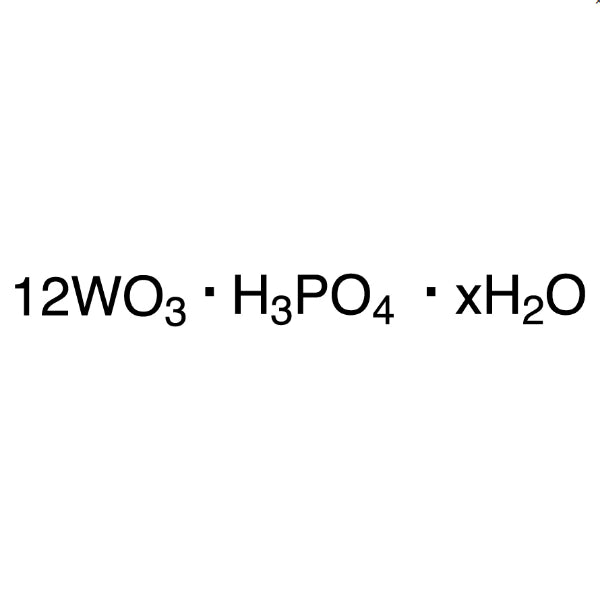
Phosphotungstic Acid Hydrate (TCI P3008) is a chemical compound widely used in laboratory settings for its catalytic and reagent properties. It plays a crucial role in various chemical reactions and catalytic processes, particularly in the fields of inorganic chemistry and transition metal catalysis. This compound is commonly employed in chemical synthesis and analytical procedures where molecular activation or structural modification is required. Its versatility makes it a valuable tool for researchers and chemists working in both academic and industrial environments.
The compound is known for its chemical stability and high reactivity, which are key factors in its popularity among laboratory professionals. It exhibits strong affinity for metal ions, making it effective in catalytic reactions and ion exchange processes. Its solubility in water further enhances its usability, allowing for easy preparation of solutions for various experimental applications. These properties make it a preferred choice for a wide range of chemical and analytical tasks.
In Indonesian laboratories, Phosphotungstic Acid Hydrate is extensively used in chemical research, industrial product development, and educational settings. It is a common reagent in catalytic experiments, analytical chemistry, and the synthesis of new compounds. Its availability and reliability have made it a staple in many research institutions and universities across Indonesia, supporting both basic and applied scientific investigations.
TCI brochures (PDF)
- Transition Metal Catalysts 2026-04-10 · p. 6
- Catalytic Reactions: Phosphotungstic Acid Hydrate is ideal for catalytic processes due to its ability to activate and modify molecular structures, enhancing reaction efficiency.
- Analytical Chemistry: It is used in analytical procedures to alter the reactivity of specific compounds, aiding in the detection and quantification of chemical substances.
- Metal Ion Interactions: Its strong affinity for metal ions makes it suitable for ion exchange and coordination chemistry experiments, supporting various synthetic pathways.
- Industrial Product Development: The compound is employed in the formulation and development of new chemical products, contributing to innovation in the chemical industry.
- Educational Research: It is a valuable tool in academic settings for teaching and conducting experiments in catalysis and inorganic chemistry.
| Brand | TCI |
|---|---|
| CAS number | 12501-23-4 |
| Molecular formula | — |
| Purity | — |
| Category | Chemistry > Catalysis and Inorganic Chemistry > Transition Elements |
| Pack sizes | — |
| Physical form | Solid |
| Storage | Store in a cool, dry place away from moisture and direct sunlight. |
Phosphotungstic Acid Hydrate should be stored in a cool, dry environment to maintain its chemical stability and prevent degradation. It is recommended to keep the compound in a sealed container to avoid exposure to moisture and air, which can affect its reactivity. Suitable storage containers include glass or plastic vessels that are resistant to chemical corrosion. In laboratory settings, it is important to handle the compound with appropriate personal protective equipment, such as gloves and safety goggles, to ensure safety during use and storage. Proper labeling of containers is also essential to prevent accidental misuse. Regular inspection of storage conditions ensures that the compound remains in optimal condition for use in various experimental applications.
—
Produk Terkait
-
Tungsten(IV)Oxide TCI T4005
Regular price From Rp 1.458.450,00Regular priceRp 1.019.550,00Sale price From Rp 1.458.450,00 -
TungstosilicicAcidHydrate TCI I1204
Regular price From Rp 2.359.350,00Regular priceRp 1.649.550,00Sale price From Rp 2.359.350,00


