Potassium Dodecanoate (KDD) is a chemical compound widely used in scientific and industrial applications. As a key reagent in materials science, it plays a vital role in polymer and macromolecule research. Its unique molecular structure makes it particularly valuable for laboratory experiments involving polymer synthesis and modification. In the lab, KDD is often employed as an additive to enhance the properties of polymers, such as their durability and solubility. This compound is essential for researchers aiming to develop advanced materials with tailored characteristics.
One of the primary reasons KDD is preferred is its ability to act as a non-ionic surfactant. It exhibits moderate polarity, which allows it to reduce surface tension and improve solubility in various solvents. These properties make it highly effective in creating stable emulsions and improving the compatibility of different materials. Additionally, KDD’s chemical stability ensures that it remains effective throughout long-term experiments, making it a reliable choice for laboratory use. Its versatility extends to both academic and industrial research settings.
In Indonesian laboratories, KDD is commonly used in polymer science and materials engineering. It is frequently found in research focused on composite materials, polymer additives, and surfactant applications. Due to its stability and functional properties, KDD is a go-to reagent for scientists working on projects that require precise chemical interactions and material performance optimization. Its role in both academic and applied research makes it a staple in many Indonesian research facilities.
TCI brochures (PDF)
- Lipids 2025-12-17 · p. 6
- Polymer synthesis and modification where surfactant properties are required for emulsion stability and material compatibility.
- Development of composite materials that need improved mechanical properties and chemical resistance through additive incorporation.
- Research in surfactant chemistry for applications in cosmetics and pharmaceuticals due to its ability to interact with various substrates.
- Formulation of coatings and adhesives that require enhanced wetting and dispersion characteristics in different media.
- Testing of material stability and performance under varying environmental conditions in materials science experiments.
| Brand | TCI |
|---|---|
| CAS number | 10124-65-9 |
| Molecular formula | — |
| Purity | — |
| Category | Materials Science > Polymer/Macromolecule Reagents > Polymer Additives |
| Pack sizes | As available from supplier |
| Physical form | Solid (as per standard product description) |
| Storage | Store in a cool, dry place away from moisture and direct sunlight. |
Potassium Dodecanoate should be stored in a cool, dry environment to maintain its chemical stability and prevent degradation. It is recommended to keep it in a sealed container to avoid exposure to moisture, which could affect its performance. Suitable storage conditions include a controlled temperature range of 15–25°C with low humidity levels. For long-term storage, it is advisable to use airtight containers made of inert materials such as glass or polyethylene. General laboratory precautions include handling with care to avoid direct contact with skin or inhalation of dust. Proper labeling and storage in designated chemical cabinets are essential to ensure safety and prevent accidental exposure.
—
Product Categories
Produk Terkait
-
Zinc(II)Dodecanoate TCI Z0048
Regular price Rp 1.220.100,00Regular price -
PropylDodecanoate TCI P3211
Regular price From Rp 1.115.100,00Regular price -
IsopropylDodecanoate TCI I1169
Regular price From Rp 3.048.150,00Regular price -
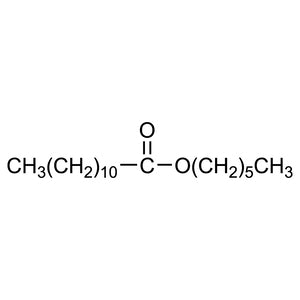
HexylDodecanoate TCI H1907
Regular price From Rp 2.068.500,00Regular price -
tert-Butyl12-Hydroxy-4,7,10-trioxadodecanoate TCI B5587
Regular price From Rp 2.279.550,00Regular price -
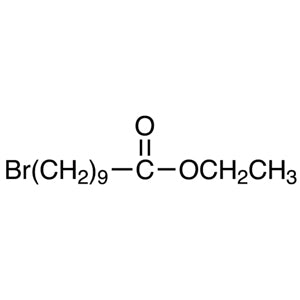
Ethyl10-Bromodecanoate TCI B2265
Regular price Rp 7.287.000,00Regular price -
BenzyldimethyltetradecylammoniumChloride TCI A0208
Regular price From Rp 610.050,00Regular price -
UndecafluorohexanoicAcid TCI U0067
Regular price From Rp 2.227.050,00Regular price