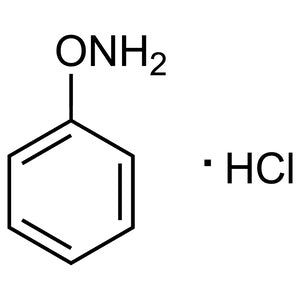
O-Phenylhydroxylamine Hydrochloride from TCI (product code P3245, CAS 6092-80-4) is the hydrochloride salt of a hydroxylamine whose oxygen atom is bonded directly to a phenyl ring. It is an organic synthesis reagent that supplies an aminooxy group (–O–NH2) attached to an aryl group. In synthetic chemistry laboratories, chemists use it to make O-aryl oximes by condensing it with aldehydes or ketones. Those oximes can then be converted into many other molecular frameworks, including high-value heterocyclic compounds for pharmaceutical and materials research.
The hydrochloride salt is easier to handle than the free base and is generally more stable, so it is more practical to weigh, dispense and store in routine lab work. The aminooxy group is nucleophilic toward carbonyl groups and forms fairly robust oxime ether linkages. The N–O bond in the resulting O-aryl oximes can also take part in sigmatropic rearrangements, for example to build benzofuran rings. Because it can react in several useful ways, this compound is an attractive non-heterocyclic building block for synthetic chemists designing new routes.
In Indonesia, this reagent suits university organic chemistry laboratories, pharmaceutical research and development groups, and materials science teams that work on multistep synthesis. Researchers who need reliable access to aryl aminooxy chemistry can use it for exploratory reactions, method development and the preparation of heterocyclic targets. Its TCI origin gives research groups a consistent, well-documented source for academic projects as well as industrial research programmes across the country.
Related TCI products
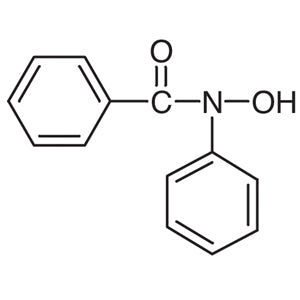
- TCI P0158 304-88-1 N-Benzoyl-N-phenylhydroxylamine
- TCI B4780 85006-25-3 N,O-Bis(tert-butoxycarbonyl)hydroxylamine
- TCI B4589 39684-28-1 O-(tert-Butyl)hydroxylamine Hydrochloride
- TCI B1700 57497-39-9 N-(tert-Butyl)hydroxylamine Hydrochloride
- TCI H1581 5470-11-1 Hydroxylamine Hydrochloride
- TCI H0196 10039-54-0 Hydroxylamine Sulfate
- O-aryl oxime synthesis: it condenses with aldehydes and ketones to give O-aryl oximes, which serve as versatile intermediates for further transformations in organic synthesis.
- Benzofuran ring construction: the N–O bond in the O-aryl oximes it forms can undergo sigmatropic rearrangement, giving a recognised route to benzofuran frameworks.
- Heterocyclic scaffold development: chemists use it to make intermediates that can be converted into high-value heterocyclic compounds for pharmaceutical and materials research programmes.
- Carbonyl derivatization: its nucleophilic aminooxy group reacts with carbonyl groups to form fairly robust oxime ether linkages, which helps when modifying carbonyl-containing substrates.
- Synthetic route design: its range of reactivity makes it a useful non-heterocyclic building block for chemists exploring and optimising new synthetic pathways.
| Brand | TCI (product code P3245) |
|---|---|
| CAS number | 6092-80-4 |
| Molecular formula | — |
| Purity | — |
| Category | Chemistry > Building Blocks > Non-Heterocyclic Building Blocks |
| Pack sizes | available in TCI's standard pack sizes; see the product listing for current options |
| Physical form | hydrochloride salt, supplied as a solid that is easy to weigh |
| Storage | keep tightly closed in a cool, dry place, following the TCI label and Safety Data Sheet |
Keep O-Phenylhydroxylamine Hydrochloride in its original, tightly sealed TCI container in a cool, dry, well-ventilated area, away from moisture, heat sources and incompatible materials such as strong oxidizing agents and strong bases. Close the container promptly after each use so the solid does not absorb moisture. Handle the reagent in a fume hood and wear suitable personal protective equipment, including nitrile gloves, safety glasses and a lab coat. Avoid breathing dust and avoid contact with skin or eyes. Always read the Safety Data Sheet before use, and dispose of residues according to institutional and local chemical waste regulations.
—
Produk Terkait
-
N-Benzoyl-N-phenylhydroxylamine TCI P0158
Regular price From Rp 1.431.150,00Regular price -
N,O-Bis(tert-butoxycarbonyl)hydroxylamine TCI B4780
Regular price From Rp 1.378.650,00Regular price -
O-(tert-Butyl)hydroxylamineHydrochloride TCI B4589
Regular price From Rp 2.597.700,00Regular price -
N-(tert-Butyl)hydroxylamineHydrochloride TCI B1700
Regular price From Rp 1.326.150,00Regular price -
HydroxylamineHydrochloride TCI H1581
Regular price From Rp 477.750,00Regular price -
HydroxylamineSulfate TCI H0196
Regular price From Rp 477.750,00Regular price -
O-(4-Nitrobenzoyl)hydroxylamine TCI N1013
Regular price From Rp 1.220.100,00Regular price -
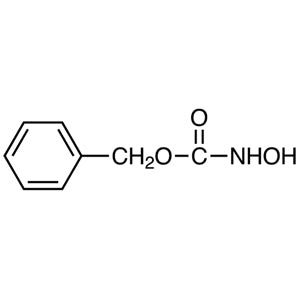
N-Benzyloxycarbonylhydroxylamine TCI C1557
Regular price From Rp 1.060.500,00Regular price