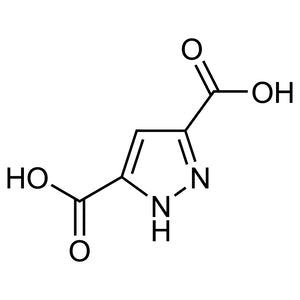
1H-Pyrazole-3,5-dicarboxylic Acid from TCI (product code P3260) is a heterocyclic compound built on a pyrazole ring that carries two carboxylic acid groups at the 3- and 5-positions. Because it combines pyrazole nitrogen atoms with carboxylate groups, it is a widely used multidentate ligand in coordination chemistry. In the laboratory, it is used to build metal complexes, coordination polymers, and metal-organic frameworks (MOFs). It also serves as a building block for synthesizing heterocyclic compounds in pharmaceutical research.
Researchers choose this compound mainly because it offers many coordination sites: two nitrogen atoms on the pyrazole ring and four oxygen atoms from the two carboxyl groups. Depending on how far it is deprotonated and on the reaction conditions, the ligand can bridge several metal ions at once. This allows it to form a wide range of one-, two-, or three-dimensional structures. Its symmetrical, rigid structure helps ordered crystals form. Its carboxyl groups can also be converted into esters, amides, or other derivatives, which broadens its use in organic synthesis.
In Indonesia, this compound is especially relevant to inorganic chemistry, materials chemistry, and crystallography laboratories at universities, research institutes, and industrial R&D centres. Research groups designing new coordination polymers or MOFs can use it as a dependable ligand when exploring new framework structures. Synthetic and medicinal chemistry teams can use it as a starting scaffold for pyrazole-based derivatives. Supplied under the TCI brand, it gives Indonesian researchers a recognised reagent source for reproducible experimental work.
Related TCI products
- TCI T1325 30097-06-4 Thiazolidine-2,4-dicarboxylic Acid
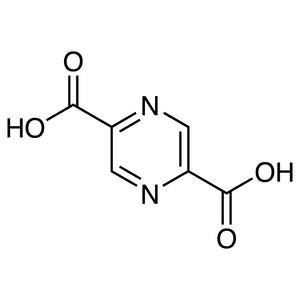
- TCI P2932 122-05-4 Pyrazine-2,5-dicarboxylic Acid
- TCI M2156 19485-38-2 1-Methyl-1H-imidazole-4,5-dicarboxylic Acid
- TCI T3668 1040377-03-4 1-(Tetrahydro-2H-pyran-4-yl)-4-(4,4,5,5-tetramethyl-1,3,2-dioxaborolan-2-yl)-1H-pyrazole
- TCI T3408 449758-17-2 1-(Tetrahydro-2H-pyran-2-yl)-1H-pyrazole
- TCI B5404 63874-95-3 1-Benzyl-1H-pyrazole-4-carboxaldehyde
- Coordination chemistry: the two pyrazole nitrogens and four carboxylate oxygens provide multiple binding sites, which makes this compound an effective multidentate ligand for preparing well-defined metal complexes.
- Metal-organic framework (MOF) synthesis: its rigid, symmetrical structure and ability to bridge several metal ions at once support the construction of ordered, porous framework materials.
- Coordination polymer research: by changing the degree of deprotonation and the reaction conditions, researchers can obtain one-, two-, or three-dimensional polymeric architectures from the same ligand.
- Crystallography and crystal engineering: the molecule's symmetry and rigidity help produce regular crystals, which suits single-crystal growth and structural studies of new metal–ligand assemblies.
- Heterocyclic and pharmaceutical synthesis: the carboxylic acid groups can be converted into esters, amides, or other derivatives, which makes the compound a versatile pyrazole building block for drug discovery research.
| Brand | TCI (product code P3260) |
|---|---|
| CAS number | 3112-31-0 |
| Molecular formula | — |
| Purity | — |
| Category | Chemistry > Building Blocks > Heterocyclic Building Blocks |
| Pack sizes | available in TCI's standard pack sizes; please confirm the available options with AMI Scientific |
| Physical form | refer to the TCI product specification and Certificate of Analysis |
| Storage | keep tightly closed in a cool, dry place, following the manufacturer's label recommendations |
Store 1H-Pyrazole-3,5-dicarboxylic Acid in its original, tightly sealed container in a cool, dry, well-ventilated area, away from direct sunlight, moisture, and incompatible materials such as strong bases and strong oxidising agents. If you transfer the material, use clean, dry, chemically compatible containers with clear labels. Handle it in a fume hood or well-ventilated area and wear appropriate personal protective equipment, including gloves, safety glasses, and a lab coat. Avoid creating or breathing in dust, and prevent contact with the skin and eyes. Always read the TCI Safety Data Sheet before use, and follow your institution's chemical hygiene and waste disposal procedures.
—
Produk Terkait
-
Thiazolidine-2,4-dicarboxylicAcid TCI T1325
Regular price Rp 1.961.400,00Regular price -
Pyrazine-2,5-dicarboxylicAcid TCI P2932
Regular price From Rp 1.326.150,00Regular price -
1-Methyl-1H-imidazole-4,5-dicarboxylicAcid TCI M2156
Regular price From Rp 1.378.650,00Regular price -
1-(Tetrahydro-2H-pyran-4-yl)-4-(4,4,5,5-tetramethyl-1,3,2-dioxaborolan-2-yl)-1H-pyrazole TCI T3668
Regular price From Rp 769.650,00Regular price -
1-(Tetrahydro-2H-pyran-2-yl)-1H-pyrazole TCI T3408
Regular price From Rp 743.400,00Regular price -
1-Benzyl-1H-pyrazole-4-carboxaldehyde TCI B5404
Regular price From Rp 1.273.650,00Regular price -
5-Amino-1-(p-tolyl)pyrazole-4-carbonitrile TCI A3039
Regular price Rp 3.312.750,00Regular price -
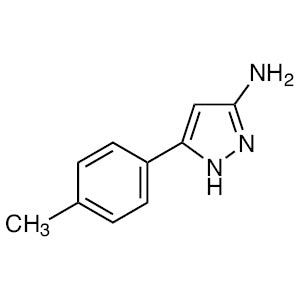
5-Amino-3-(4-methylphenyl)pyrazole TCI A2954
Regular price From Rp 2.625.000,00Regular price