


Benzyl 3-bromopyrrolidine-1-carboxylate (CAS 220212-12-4) from TCI is a pyrrolidine derivative. Its ring nitrogen is protected by a benzyloxycarbonyl (Cbz) group, and it carries a bromine atom at the 3-position. It is a heterocyclic building block used widely in medicinal chemistry, because the pyrrolidine ring is one of the most common frameworks in pharmaceuticals and bioactive compounds. The bromine acts as a leaving group that nucleophiles can displace. This gives researchers a fairly direct way to add a wide range of substituents at the 3-position of the pyrrolidine ring.
The main strength of this material is that it combines a protecting group with a reactive group in one molecule. The Cbz group stops the nitrogen from reacting during substitution steps. It can later be removed by hydrogenolysis over a palladium catalyst, which is generally mild and selective. The secondary bromide at the 3-position can react with amines, thiols, phenols, azides, or carbon nucleophiles. Alkyl bromides like this one are also used more and more in modern coupling methods, such as reductive and photoredox couplings, to form sp3 carbon–carbon bonds.
In Indonesia, medicinal chemistry and organic synthesis laboratories at universities, research institutions, and industrial R&D units can use this compound to build pyrrolidine-containing target molecules. It is well suited to creating compound libraries for structure–activity relationship studies, where one common intermediate is turned into many analogues. It is also useful for teaching and research projects on protecting-group strategy and nucleophilic substitution. Teams working on drug discovery and the synthesis of bioactive heterocycles will find it a convenient starting material.
Related TCI products
- TCI B5271 939793-16-5 tert-Butyl 3-Bromopyrrolidine-1-carboxylate
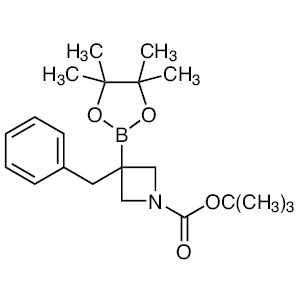
- TCI P2872 2296775-60-3 tert-Butyl 3-Benzyl-3-(4,4,5,5-tetramethyl-1,3,2-dioxaborolan-2-yl)azetidine-1-carboxylate
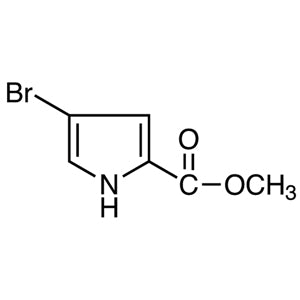
- TCI M2583 934-05-4 Methyl 4-Bromopyrrole-2-carboxylate
- TCI B6237 937046-98-5 7-Bromopyrrolo[2,1-f][1,2,4]triazin-4-amine
- TCI B4100 78818-15-2 Benzyl 3-Oxopiperazine-1-carboxylate
- TCI B5847 167484-18-6 Benzyl Spiro[indoline-3,4'-piperidine]-1'-carboxylate
- Medicinal chemistry analogue synthesis: The reactive 3-bromo position lets chemists add many different substituents to the pyrrolidine core, which is a common framework in drugs and bioactive compounds.
- Nucleophilic substitution reactions: The secondary bromide acts as a leaving group for amines, thiols, phenols, azides, and carbon nucleophiles, giving direct access to 3-substituted pyrrolidines.
- Protecting-group strategies in multistep synthesis: The Cbz group keeps the nitrogen inert during substitution and can later be removed by palladium-catalysed hydrogenolysis under generally mild, selective conditions.
- Modern sp3 carbon–carbon bond formation: As an alkyl bromide, the compound can be used in reductive coupling and photoredox coupling methods to build sp3 carbon–carbon bonds on the pyrrolidine ring.
- Heterocyclic building-block libraries: Its combination of a protected nitrogen and a reactive bromide makes it a practical shared intermediate for making series of pyrrolidine analogues in structure–activity studies.
| Brand | TCI (product code P3287) |
|---|---|
| CAS number | 220212-12-4 |
| Molecular formula | — |
| Purity | — |
| Category | Chemistry > Building Blocks > Heterocyclic Building Blocks |
| Pack sizes | Available in standard TCI pack sizes; please contact us for current options |
| Physical form | Refer to the TCI specification sheet and certificate of analysis supplied with the product |
| Storage | Follow the storage conditions on the TCI label and safety data sheet |
Keep this compound in its original, tightly closed manufacturer's container. Store it in a cool, dry, well-ventilated place away from heat, direct sunlight, and moisture, and follow the storage temperature on the TCI label. Keep it away from strong bases, strong nucleophiles, and oxidising agents, because the alkyl bromide can react with them. Handle it in a fume hood and wear suitable personal protective equipment, including chemical-resistant gloves, safety glasses, and a lab coat. Avoid breathing vapours or dust and avoid contact with skin and eyes. Read the safety data sheet before use, and dispose of waste as halogenated organic waste under local regulations.
—
Produk Terkait
-
tert-Butyl3-Bromopyrrolidine-1-carboxylate TCI B5271
Regular price From Rp 2.889.600,00Regular price -
tert-Butyl3-Benzyl-3-(4,4,5,5-tetramethyl-1,3,2-dioxaborolan-2-yl)azetidine-1-carboxylate TCI P2872
Regular price From Rp 1.565.550,00Regular price -
Methyl4-Bromopyrrole-2-carboxylate TCI M2583
Regular price From Rp 1.035.300,00Regular price -
7-Bromopyrrolo[2,1-f][1,2,4]triazin-4-amine TCI B6237
Regular price From Rp 1.776.600,00Regular price -
Benzyl3-Oxopiperazine-1-carboxylate TCI B4100
Regular price From Rp 1.326.150,00Regular price -
BenzylSpiro[indoline-3,4'-piperidine]-1'-carboxylate TCI B5847
Regular price Rp 7.526.400,00Regular price -
Benzyl7-Oxa-3-azabicyclo[4.1.0]heptane-3-carboxylate TCI B5831
Regular price From Rp 1.881.600,00Regular price -
9-Benzyl-3-bromo-9H-carbazole TCI B5461
Regular price From Rp 1.510.950,00Regular price

![7-Bromopyrrolo[2,1-f][1,2,4]triazin-4-amine (CAS 937046-98-5) - TCI B6237 - AMI Scientific](http://amiscientific.com/cdn/shop/files/TCI2510B6237_50d49c06-ae0e-43a1-9a23-ff780c4a4be2.jpg?v=1767864988&width=533)

![Benzyl Spiro[indoline-3,4'-piperidine]-1'-carboxylate (CAS 167484-18-6) - TCI B5847 - AMI Scientific](http://amiscientific.com/cdn/shop/files/TCI2510B5847.jpg?v=1767092839&width=533)
![Benzyl 7-Oxa-3-azabicyclo[4.1.0]heptane-3-carboxylate (CAS 66207-08-7) - TCI B5831 - AMI Scientific](http://amiscientific.com/cdn/shop/files/TCI2510B5831_ad082cad-83b1-46fb-af03-29caef66c6b4.jpg?v=1767863529&width=533)
