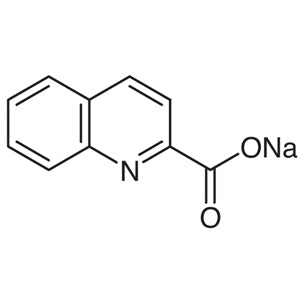
Quinaldic Acid from TCI, product code Q0003, is also known as quinoline-2-carboxylic acid. It is an aromatic heterocyclic compound with a carboxylic acid group at the 2-position of the quinoline ring, and its CAS number is 93-10-7. Laboratories use quinaldic acid in three main ways: as a heterocyclic building block in organic synthesis, as a metal-complexing ligand in coordination chemistry, and as a classic analytical reagent for determining certain metal ions. It works well in research, teaching and routine analytical settings.
The main advantage of quinaldic acid comes from the position of the quinoline ring nitrogen right next to the carboxylic acid group. Because of this arrangement, the molecule can bind metal ions in a bidentate manner and form stable chelate complexes. For this reason it has long been used to precipitate metals such as copper, zinc and cadmium in gravimetric analysis. The carboxylic acid group is also easy to convert into esters, amides and other derivatives, which makes the compound useful in the synthesis of pharmaceutical and agrochemical compounds. In biology, quinaldic acid is also known as a metabolite of the tryptophan pathway.
In Indonesian laboratories, quinaldic acid suits coordination chemistry research groups, analytical chemistry laboratories and synthetic organic chemists. University chemistry departments can use it for research on metal chelation and ligand design. Analytical laboratories can use it in classical gravimetric methods for metal ions. Synthesis teams in pharmaceutical and agrochemical research can use it as a starting material for heterocyclic derivatives. Because it comes from TCI, users can expect consistent quality from one batch to the next.
Related TCI products
- Heterocyclic building block for organic synthesis: the quinoline core and the reactive carboxylic acid group let chemists build more complex heterocyclic structures for research targets.
- Ligand in coordination chemistry: the ring nitrogen sits next to the carboxylate group, so the molecule binds metal ions in a bidentate way and forms stable chelate complexes.
- Gravimetric analysis of metal ions: quinaldic acid is a classic reagent for precipitating metals such as copper, zinc and cadmium as stable complexes that can be filtered and weighed.
- Synthesis of esters, amides and other derivatives: the carboxylic acid group is easy to convert, so the compound is a flexible starting point for pharmaceutical and agrochemical research.
- Biochemical and metabolic studies: quinaldic acid is a known metabolite of the tryptophan pathway, so it can serve as a reference compound in related biological research.
| Brand | TCI (product code Q0003) |
|---|---|
| CAS number | 93-10-7 |
| Molecular formula | — |
| Purity | — |
| Category | Chemistry > Building Blocks > Heterocyclic Building Blocks |
| Pack sizes | please confirm the available pack sizes with AMI Scientific when ordering |
| Physical form | — |
| Storage | keep tightly closed in a cool, dry place; follow the manufacturer's label and Safety Data Sheet |
- Synonym: Quinoline-2-carboxylic acid
Store quinaldic acid in its original, tightly closed container in a cool, dry, well-ventilated area, away from direct sunlight, moisture and incompatible materials such as strong oxidizing agents. Use clean, dry spatulas and glass or chemically resistant containers when you weigh or transfer the material, so it does not get contaminated. Handle it in a fume hood or a well-ventilated area and avoid breathing in dust. Wear standard laboratory protective equipment, including gloves, safety glasses and a lab coat. Label secondary containers clearly with the compound name and CAS number. Always read the manufacturer's Safety Data Sheet before use, and dispose of residues and waste according to local laboratory and environmental regulations.
—
Produk Terkait
-
QuinaldicAcidSodiumSalt TCI Q0004
Regular price From Rp 875.700,00Regular price